Sie sind bereits eingeloggt. Klicken Sie auf 2. tolino select Abo, um fortzufahren.
Bitte loggen Sie sich zunächst in Ihr Kundenkonto ein oder registrieren Sie sich bei bücher.de, um das eBook-Abo tolino select nutzen zu können.
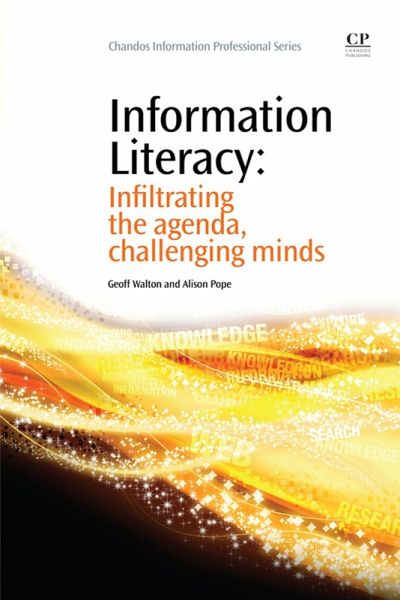
Focusing on important information literacy debates, this new book with contributions from many of the main experts in the field highlights important ideas and practical considerations. Information Literacy takes the reader on a journey across the contemporary information landscape, guided by academics and practitioners who are experts in navigating this ever-changing terrain. - Diversity of content from authors with national and international reputations - Shows professionals how to operate at a strategic level to engender institutional change and have a direct practical application for their…mehr
Focusing on important information literacy debates, this new book with contributions from many of the main experts in the field highlights important ideas and practical considerations. Information Literacy takes the reader on a journey across the contemporary information landscape, guided by academics and practitioners who are experts in navigating this ever-changing terrain. - Diversity of content from authors with national and international reputations - Shows professionals how to operate at a strategic level to engender institutional change and have a direct practical application for their teaching and learning practice - Many of the chapters are based on empirical research ensuring innovative approaches to information literacy
Dieser Download kann aus rechtlichen Gründen nur mit Rechnungsadresse in A, B, BG, CY, CZ, D, DK, EW, E, FIN, F, GR, HR, H, IRL, I, LT, L, LR, M, NL, PL, P, R, S, SLO, SK ausgeliefert werden.
Die Herstellerinformationen sind derzeit nicht verfügbar.
Autorenporträt
Geoff Walton is a Subject and Learning Support Librarian and Research Informed teaching (RiT) Project Co-ordinator at Staffordshire University, with specific subject responsibilities for Psychology and Sport & Exercise Science. As RiT Co-ordinator Geoff is involved in identifying synergies between research, teaching, learning, information literacy, e-learning and inquiry-based learning. He is particularly interested in the cognitive processes involved in becoming information literate. His research interests also include developing the online information literacy tool the Assignment Survival Kit (ASK), developing a process for online peer assessment, investigating academic skills needs in undergraduate students and using inquiry-based methods to facilitate learning.Alison Pope was a Learning and Teaching Fellow at Staffordshire University from 2005 to 2009. Her research in this period focused on the importance of adopting a strategic approach to information literacy in the HE context. She especially focused on the need to embed information literacy within the curriculum. Alison has spoken at many high profile conferences on this topic and has also published widely. She is Senior Subject and Learning Support Librarian at Staffordshire University with specific responsibility for the Schools of Law and Business. Alison leads the team at Staffordshire responsible for the development of the Assignment Survival Kit (ASK) and is currently engaged in empirical research to develop further the ASK software in a Web 2.0 environment.
Inhaltsangabe
List of figures and tables
Acknowledgments
About the authors
Chapter 1: Introduction
Abstract:
But who were the community of practice?
Change of key: change of outlook
Our call to arms .
Part 1: Collaboration, Curriculum and Courses
Chapter 2: Information literate pedagogy: developing a levels framework for the Open University
Abstract:
Introduction
Background
Previous work
The rationale for the IL Levels Framework
Development of the IL Levels Framework
Putting it into practice
What support might people need to use it?
How we will test it: case studies
Possible issues
Future developments
Conclusion
Chapter 3: Information literacy in the workplace and the employability agenda
Abstract:
A background of issues
Information literacy in the workplace and employability defined?
Information literacy and the skills agenda
Organisations and information
Inside the organisation
Information needs and sources used
Training issues
Examples of good practice
Chapter 4: Information literacy in the context of contemporary teaching methods in higher education
Abstract:
Introduction
Enquiry based learning and the IL perspective
Dialectic facilitation approaches: an alternative approach to IL development
A new dimension .
Conclusion
Part 2: Development, Dialogue and Design
Chapter 5: 'Enquiring Minds' and the role of information literacy in the design, management and assessment of student research tasks
Abstract:
Introduction
The Enquiring Minds (EM) project
IL, the teaching-research nexus and EBL
External standards: QAA
The EM People, Diversity & Work pilot
Bringing IL into the Law curriculum
From theory into practice: implementation
IL competences and 'standards'
IL and the limitations of 'learning outcomes'
'Competency standards' in Law skills assessment
Presentation, reward and 'communication' aspects
Competency standards for 'communication' and the 'ethical' dimension
The 'ethical' dimension in 'communication'
Conclusions
Chapter 6: Are we sharing our toys in the sandpit? Issues surrounding the design, creation, reuse re-purposing of learning objects to support information skills teaching
Abstract:
Introduction
Literature review
Design of RLOs for information skills
Sharing your content
Conclusion
Appendix Reuse logbook
Chapter 7: Spielberg your way to information literacy: producing educational movies and videos
Abstract:
Introduction
Using videos
Pre-production
Planning
Scripting
Filming
Editing
Reviewing and evaluating
Next steps
Final thoughts
Glossary
Part 3: Obesity, Overload and Opportunity
Chapter 8: Information literacy and noöpolitics
Abstract:
Introduction
Information abundance and information obesity
From geopolitics to noöpolitics
Competing forms of value
A politically aware information literacy education?
Conclusion
Chapter 9: Contemporary technologies' influence on learning as a social practice
Abstract:
Contemporary technology
What makes the Internet such a radical and disruptive technology for education?
Social learning is nothing new
The Internet as the modern wireless 'Penny University'
Knowing stuff: what we now do with information
The cult of the amateur and the rise of the informal learner and expert
Pedagogy 2.0? Opportunities and threats of contemporary social learning
Information literacy
Conclusions
Chapter 10: Understanding the information literacy
Chapter 2: Information literate pedagogy: developing a levels framework for the Open University
Abstract:
Introduction
Background
Previous work
The rationale for the IL Levels Framework
Development of the IL Levels Framework
Putting it into practice
What support might people need to use it?
How we will test it: case studies
Possible issues
Future developments
Conclusion
Chapter 3: Information literacy in the workplace and the employability agenda
Abstract:
A background of issues
Information literacy in the workplace and employability defined?
Information literacy and the skills agenda
Organisations and information
Inside the organisation
Information needs and sources used
Training issues
Examples of good practice
Chapter 4: Information literacy in the context of contemporary teaching methods in higher education
Abstract:
Introduction
Enquiry based learning and the IL perspective
Dialectic facilitation approaches: an alternative approach to IL development
A new dimension .
Conclusion
Part 2: Development, Dialogue and Design
Chapter 5: 'Enquiring Minds' and the role of information literacy in the design, management and assessment of student research tasks
Abstract:
Introduction
The Enquiring Minds (EM) project
IL, the teaching-research nexus and EBL
External standards: QAA
The EM People, Diversity & Work pilot
Bringing IL into the Law curriculum
From theory into practice: implementation
IL competences and 'standards'
IL and the limitations of 'learning outcomes'
'Competency standards' in Law skills assessment
Presentation, reward and 'communication' aspects
Competency standards for 'communication' and the 'ethical' dimension
The 'ethical' dimension in 'communication'
Conclusions
Chapter 6: Are we sharing our toys in the sandpit? Issues surrounding the design, creation, reuse re-purposing of learning objects to support information skills teaching
Abstract:
Introduction
Literature review
Design of RLOs for information skills
Sharing your content
Conclusion
Appendix Reuse logbook
Chapter 7: Spielberg your way to information literacy: producing educational movies and videos
Abstract:
Introduction
Using videos
Pre-production
Planning
Scripting
Filming
Editing
Reviewing and evaluating
Next steps
Final thoughts
Glossary
Part 3: Obesity, Overload and Opportunity
Chapter 8: Information literacy and noöpolitics
Abstract:
Introduction
Information abundance and information obesity
From geopolitics to noöpolitics
Competing forms of value
A politically aware information literacy education?
Conclusion
Chapter 9: Contemporary technologies' influence on learning as a social practice
Abstract:
Contemporary technology
What makes the Internet such a radical and disruptive technology for education?
Social learning is nothing new
The Internet as the modern wireless 'Penny University'
Knowing stuff: what we now do with information
The cult of the amateur and the rise of the informal learner and expert
Pedagogy 2.0? Opportunities and threats of contemporary social learning
Information literacy
Conclusions
Chapter 10: Understanding the information literacy
Rezensionen
"This book contains a lot of fuel for information literacy practitioners in any 21st-century library, and the call to action is relevant across cash-strapped nations." --College and Research Libraries
"The breadth of coverage should mean this volume will have articles of interest to information literacy teachers and practitioners irrespective of their library sector." --Journal of Information Literacy
Es gelten unsere Allgemeinen Geschäftsbedingungen: www.buecher.de/agb
Impressum
www.buecher.de ist ein Internetauftritt der buecher.de internetstores GmbH
Geschäftsführung: Monica Sawhney | Roland Kölbl | Günter Hilger
Sitz der Gesellschaft: Batheyer Straße 115 - 117, 58099 Hagen
Postanschrift: Bürgermeister-Wegele-Str. 12, 86167 Augsburg
Amtsgericht Hagen HRB 13257
Steuernummer: 321/5800/1497
USt-IdNr: DE450055826