41,95 €
41,95 €
inkl. MwSt.
Sofort per Download lieferbar

21 °P sammeln
41,95 €
Als Download kaufen
41,95 €
inkl. MwSt.
Sofort per Download lieferbar
21 °P sammeln
Jetzt verschenken
Alle Infos zum eBook verschenken
41,95 €
inkl. MwSt.
Sofort per Download lieferbar
Alle Infos zum eBook verschenken
21 °P sammeln

Andere Kunden interessierten sich auch für
") Inmate Radicalisation and Recruitment in Prisons (eBook, ePUB)41,95 €
Inmate Radicalisation and Recruitment in Prisons (eBook, ePUB)41,95 €") Think Like a Terrorist to Combat Terrorism and Radicalization in Prison (eBook, PDF)47,95 €
Think Like a Terrorist to Combat Terrorism and Radicalization in Prison (eBook, PDF)47,95 €") Mass Incarceration in the 21st Century (eBook, PDF)39,95 €
Mass Incarceration in the 21st Century (eBook, PDF)39,95 €") The Effects of Imprisonment (eBook, PDF)46,95 €
The Effects of Imprisonment (eBook, PDF)46,95 €") Preventing Prison Violence (eBook, PDF)0,00 €
Preventing Prison Violence (eBook, PDF)0,00 €") Arts in Corrections (eBook, PDF)36,95 €
Arts in Corrections (eBook, PDF)36,95 €") Prisons and Community Corrections (eBook, PDF)41,95 €
Prisons and Community Corrections (eBook, PDF)41,95 €






It is traditionally viewed that vulnerable inmates form captive audiences for violent terrorist offenders who, in turn, are destined to turn prisons into training grounds for militant activities; all the while forming alliances with more hardened criminals to produce an even greater threat. However, there is limited empirical grounding to underpin these assertions.
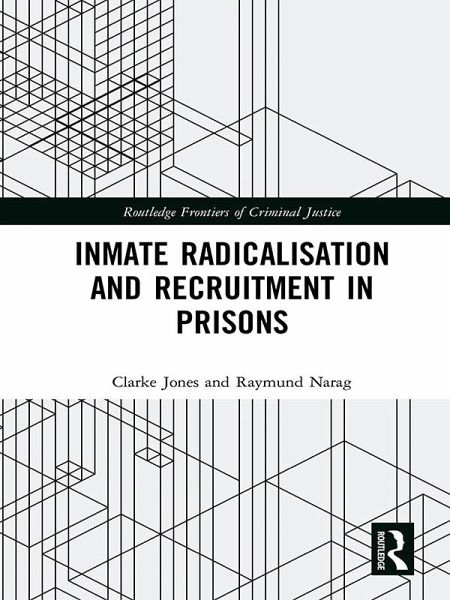
Inmate Radicalisation and Recruitment in Prisons challenges existing perceptions about prison radicalisation. Whilst not downplaying the seriousness of the prison radicalisation threat, it seeks a more balanced interpretation of current discussion. Drawing on original research in the Philippines and case studies from Australia, the US, Canada, Indonesia, the UK, France, the Netherlands, and Belgium, the authors posit an alternative view that suggests that the imprisonment of a terrorist may mark the beginning of physical disengagement and psychological de-radicalisation.
Offering evidence-based insights to help determine how best to house terrorist offenders, this volume will appeal to students and researchers interested in fields such as Criminology and Criminal Justice, Terrorism, Prisons, and Organised Crime.
Inmate Radicalisation and Recruitment in Prisons challenges existing perceptions about prison radicalisation. Whilst not downplaying the seriousness of the prison radicalisation threat, it seeks a more balanced interpretation of current discussion. Drawing on original research in the Philippines and case studies from Australia, the US, Canada, Indonesia, the UK, France, the Netherlands, and Belgium, the authors posit an alternative view that suggests that the imprisonment of a terrorist may mark the beginning of physical disengagement and psychological de-radicalisation.
Offering evidence-based insights to help determine how best to house terrorist offenders, this volume will appeal to students and researchers interested in fields such as Criminology and Criminal Justice, Terrorism, Prisons, and Organised Crime.
Dieser Download kann aus rechtlichen Gründen nur mit Rechnungsadresse in A, B, BG, CY, CZ, D, DK, EW, E, FIN, F, GR, HR, H, IRL, I, LT, L, LR, M, NL, PL, P, R, S, SLO, SK ausgeliefert werden.