Sie sind bereits eingeloggt. Klicken Sie auf 2. tolino select Abo, um fortzufahren.
Bitte loggen Sie sich zunächst in Ihr Kundenkonto ein oder registrieren Sie sich bei bücher.de, um das eBook-Abo tolino select nutzen zu können.
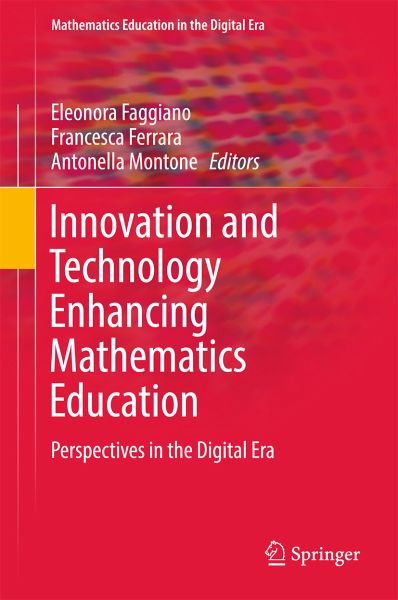
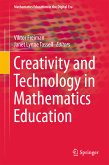
Exploits the issue of innovation from different points of view Considers the potential of "cutting-edge" technologies Pursues new visions for the use of technology within Mathematics Education Supports the current changes within the various communities of practice
Exploits the issue of innovation from different points of view
Considers the potential of "cutting-edge" technologies
Pursues new visions for the use of technology within Mathematics Education
Supports the current changes within the various communities of practice
Dieser Download kann aus rechtlichen Gründen nur mit Rechnungsadresse in A, B, BG, CY, CZ, D, DK, EW, E, FIN, F, GR, HR, H, IRL, I, LT, L, LR, M, NL, PL, P, R, S, SLO, SK ausgeliefert werden.
Die Herstellerinformationen sind derzeit nicht verfügbar.
Autorenporträt
Eleonora Faggiano is Assistant Professor of Mathematics Education in the Department of Mathematics, at Università di Bari Aldo Moro, Italy. She has a PhD in Computer Science centred on a framework to design, develop and evaluate a Web-based cooperative learning environment and its application to mathematics education. She is involved in several pre-service and in-service mathematics teacher-training programs. Her research focuses on the teaching and learning of mathematics with digital technology and includes the study of dynamic geometry in primary school classrooms. In particular, she investigates aspects of innovative practices that can lead to the construction of mathematical meanings in technology rich environments, from task design to the role of the teacher. Francesca Ferrara is Associate Professor of Mathematics Education in the Department of Mathematics, at Università di Torino, Italy. Her research focuses on the role and uses of technology in mathematics teaching and learning; how theories of embodiment have informed and changed our ways of doing research in the field; the role of visualization and imagination in mathematics thinking; and mathematical inventiveness. Her recent work also examines how new materialist perspectives offer reflections on mathematical practice, and gamification paradigms applied to mathematics education. She is one of the authors of the Italian translation of the book Lakoff, G. & Nunez, R.E (2000) Where Mathematics Comes From: How The Embodied Mind Brings Mathematics Into being. New York, NY: Basic Books, and editor of the volume Emerging Perspectives on Gesture and Embodiment in Mathematics. Charlotte, NC: Information Age Publishing. Antonella Montone is Assistant Professor of Mathematics Education in the Department of Mathematics, at Università di Bari Aldo Moro, Italy. She is coordinator of the Mathematics Education research group of the Department and is involved in several pre-service and in-service mathematics teacher-training programs. Her research focuses on two main aspects closely related to each other: the use of technology in mathematics teaching and learning, and the study of innovative practices for the construction of mathematical meanings with digital and manipulative artefacts. In particular, she investigates the role of the teacher as designer of tasks and orchestrator of discussions.
Inhaltsangabe
INTRODUCTION.- Innovative spaces for mathematics education with technology: Eleonora Faggiano, Francesca Ferrara and Antonella Montone.- OPENING SCENERY.- Chapter 1. From acorns to oak trees: Charting innovation within technology in mathematics education: Susana Carreira, Alison Clark-Wilson, Eleonora Faggiano and Antonella Montone.- I Part: NEW SPACES FOR RESEARCH - focus on learning.- Chapter 2. Returning to ordinality in early number sense: Neurological, technological and pedagogical considerations: Nathalie Sinclair and Alf Coles.- Chapter 3. The coordinated movements of a learning assemblage: Secondary school students exploring Wii graphing technology: Elizabeth de Freitas, Francesca Ferrara, Giulia Ferrari .- Chapter 4. Using digital environments to address students' mathematical learning difficulties: Elisabetta Robotti and Anna Baccaglini-Frank.- II Part: NEW TECHNOLOGICAL SPACES - focus on technological environments.- Chapter 5. Innovative uses of digital technology in undergraduate mathematics: Mike Thomas, Ye Yoon Hong and Greg Oates.- Chapter 6. The duo "pascaline and e-pascaline": An example of using material and digital artefacts at primary school: Michela Maschietto and Sophie Soury-Lavergne.- Chapter 7. What is or what might be the benefit of using computer algebra systems in the learning and teaching of Calculus?: Hans-Georg Weigand.- III Part: NEW SPACES FOR TEACHERS (NEW TEACHING SPACES) - focus on teaching.- Chapter 8. Constructionist mathematics with institutionalized infrastructures: The case of Dimitris and his students: Chronis Kynigos.- Chapter 9. Studying the practice of high school mathematics teachers in a single computer setting: Michal Tabach and Galit Slutzky.- CLOSING SCENERY.- Chapter 10. Digital mazes and spatial reasoning: Using colour and movement to explore the 4th dimension: Elizabeth de Freitas.
INTRODUCTION.- Innovative spaces for mathematics education with technology: Eleonora Faggiano, Francesca Ferrara and Antonella Montone.- OPENING SCENERY.- Chapter 1. From acorns to oak trees: Charting innovation within technology in mathematics education: Susana Carreira, Alison Clark-Wilson, Eleonora Faggiano and Antonella Montone.- I Part: NEW SPACES FOR RESEARCH - focus on learning.- Chapter 2. Returning to ordinality in early number sense: Neurological, technological and pedagogical considerations: Nathalie Sinclair and Alf Coles.- Chapter 3. The coordinated movements of a learning assemblage: Secondary school students exploring Wii graphing technology: Elizabeth de Freitas, Francesca Ferrara, Giulia Ferrari .- Chapter 4. Using digital environments to address students' mathematical learning difficulties: Elisabetta Robotti and Anna Baccaglini-Frank.- II Part: NEW TECHNOLOGICAL SPACES - focus on technological environments.- Chapter 5. Innovative uses of digital technology in undergraduate mathematics: Mike Thomas, Ye Yoon Hong and Greg Oates.- Chapter 6. The duo "pascaline and e-pascaline": An example of using material and digital artefacts at primary school: Michela Maschietto and Sophie Soury-Lavergne.- Chapter 7. What is or what might be the benefit of using computer algebra systems in the learning and teaching of Calculus?: Hans-Georg Weigand.- III Part: NEW SPACES FOR TEACHERS (NEW TEACHING SPACES) - focus on teaching.- Chapter 8. Constructionist mathematics with institutionalized infrastructures: The case of Dimitris and his students: Chronis Kynigos.- Chapter 9. Studying the practice of high school mathematics teachers in a single computer setting: Michal Tabach and Galit Slutzky.- CLOSING SCENERY.- Chapter 10. Digital mazes and spatial reasoning: Using colour and movement to explore the 4th dimension: Elizabeth de Freitas.
Es gelten unsere Allgemeinen Geschäftsbedingungen: www.buecher.de/agb
Impressum
www.buecher.de ist ein Internetauftritt der buecher.de internetstores GmbH
Geschäftsführung: Monica Sawhney | Roland Kölbl | Günter Hilger
Sitz der Gesellschaft: Batheyer Straße 115 - 117, 58099 Hagen
Postanschrift: Bürgermeister-Wegele-Str. 12, 86167 Augsburg
Amtsgericht Hagen HRB 13257
Steuernummer: 321/5800/1497
USt-IdNr: DE450055826