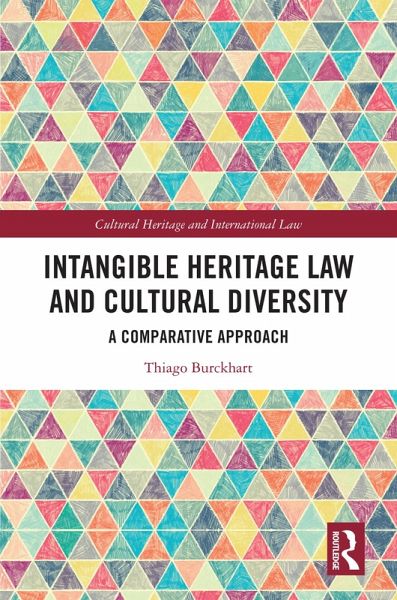
45,95 €
inkl. MwSt.
Sofort per Download lieferbar
23 °P sammeln

Andere Kunden interessierten sich auch für
") Intangible Heritage Law and Cultural Diversity (eBook, ePUB)45,95 €
Intangible Heritage Law and Cultural Diversity (eBook, ePUB)45,95 €") Transboundary Heritage and Intellectual Property Law (eBook, PDF)41,95 €
Transboundary Heritage and Intellectual Property Law (eBook, PDF)41,95 €") The Legal Protection of the Intangible Cultural Heritage (eBook, PDF)128,95 €
The Legal Protection of the Intangible Cultural Heritage (eBook, PDF)128,95 €") Cultural Heritage Rights (eBook, PDF)41,95 €
Cultural Heritage Rights (eBook, PDF)41,95 €") Between Cultural Diversity and Common Heritage (eBook, PDF)44,95 €
Between Cultural Diversity and Common Heritage (eBook, PDF)44,95 €") International Perspectives on Disability Exceptions in Copyright Law and the Visual Arts (eBook, PDF)44,95 €
International Perspectives on Disability Exceptions in Copyright Law and the Visual Arts (eBook, PDF)44,95 €") The Protection of Cultural Heritage During Armed Conflict (eBook, PDF)25,95 €
The Protection of Cultural Heritage During Armed Conflict (eBook, PDF)25,95 €





This book explores the intricate relationship between intangible cultural heritage (ICH) and cultural diversity (CD), focusing on the challenges arising from the integration of CD within legal and policy frameworks for ICH safeguarding.
As groups, communities and individuals increasingly advocate for the recognition of their cultural practices, the governance of CD in ICH law reveals significant tensions. These tensions are particularly apparent in countries with varied legal traditions and political landscapes, such as Brazil and France. Despite valuable sociological and anthropological insights into this intersection, legal analysis of the ICH-CD relationship remains underdeveloped at both international and national levels. Through a comparative analysis, the book examines three primary mechanisms outlined in the 2003 UNESCO Convention on the Safeguarding of Intangible Cultural Heritage: the creation of national inventories, the engagement of communities in safeguarding processes and the implementation of safeguarding measures. These mechanisms are tested within each country's legal context to understand how CD shapes the effectiveness of ICH law at both national and international levels. By focusing on Brazil and France, this book contributes to the theoretical and practical development of cultural heritage law, offering a model for fostering cultural diversity and empowering communities to take an active role in the management and preservation of their intangible cultural heritage.
This book will be of interest to researchers in the field of comparative law, public international law, cultural heritage studies and public policy.
As groups, communities and individuals increasingly advocate for the recognition of their cultural practices, the governance of CD in ICH law reveals significant tensions. These tensions are particularly apparent in countries with varied legal traditions and political landscapes, such as Brazil and France. Despite valuable sociological and anthropological insights into this intersection, legal analysis of the ICH-CD relationship remains underdeveloped at both international and national levels. Through a comparative analysis, the book examines three primary mechanisms outlined in the 2003 UNESCO Convention on the Safeguarding of Intangible Cultural Heritage: the creation of national inventories, the engagement of communities in safeguarding processes and the implementation of safeguarding measures. These mechanisms are tested within each country's legal context to understand how CD shapes the effectiveness of ICH law at both national and international levels. By focusing on Brazil and France, this book contributes to the theoretical and practical development of cultural heritage law, offering a model for fostering cultural diversity and empowering communities to take an active role in the management and preservation of their intangible cultural heritage.
This book will be of interest to researchers in the field of comparative law, public international law, cultural heritage studies and public policy.
Dieser Download kann aus rechtlichen Gründen nur mit Rechnungsadresse in A, B, BG, CY, CZ, D, DK, EW, E, FIN, F, GR, HR, H, IRL, I, LT, L, LR, M, NL, PL, P, R, S, SLO, SK ausgeliefert werden.