27,95 €
27,95 €
inkl. MwSt.
Sofort per Download lieferbar

14 °P sammeln
27,95 €
Als Download kaufen
27,95 €
inkl. MwSt.
Sofort per Download lieferbar
14 °P sammeln
Jetzt verschenken
Alle Infos zum eBook verschenken
27,95 €
inkl. MwSt.
Sofort per Download lieferbar
Alle Infos zum eBook verschenken
14 °P sammeln

Andere Kunden interessierten sich auch für
") Intentional Practice for Museums (eBook, PDF)27,95 €
Intentional Practice for Museums (eBook, PDF)27,95 €") Leadership Matters (eBook, ePUB)27,95 €
Leadership Matters (eBook, ePUB)27,95 €") Leading Museums Today (eBook, ePUB)27,95 €
Leading Museums Today (eBook, ePUB)27,95 €") Museums 101 (eBook, ePUB)28,95 €
Museums 101 (eBook, ePUB)28,95 €") Mission Matters (eBook, ePUB)34,95 €
Mission Matters (eBook, ePUB)34,95 €") Reinventing the Museum (eBook, ePUB)40,95 €
Reinventing the Museum (eBook, ePUB)40,95 €") Sustainable Revenue for Museums (eBook, ePUB)64,95 €
Sustainable Revenue for Museums (eBook, ePUB)64,95 €



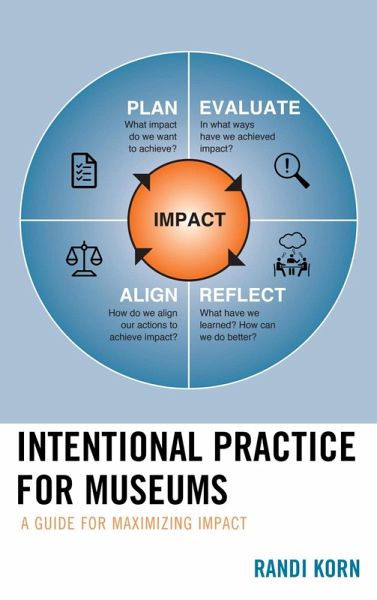
Intentional practice is an impact-driven way of thinking and working that places a museum's raison d'être-achieving impact-at the center of its work. A prerequisite to achieving impact is articulating the kind of impact the museum would like to achieve. An impact statement embodies three essential ideas: staff members' passions for their work, the museum's distinct qualities, and notions of what is relevant to audiences. The statement, as well as other work generated from intentional practice, becomes part of an Impact Framework that serves as a guidepost for all subsequent work, as any and all museum work should focus on achieving its intended impact. If the museum chooses work that moves it away from its central purpose, it is wasting resources-dollars and staff time. Intentional Practice for Museums: A Guide for Maximizing Impact first explains how the idea of intentional practice grew from a confluence of political concerns, observations of museum in the marketplace, and the increasingly-deafening call for museums to be accountable. The book presents and deconstructs the Cycle of Intentional Practice, which includes four quadrants with actions and corresponding questions situated around the centerpiece-impact. In no particular order: The Plan quadrant asks "What impact do you want to achieve?"; The Evaluate quadrant asks "In what ways have you achieved impact?"; The Reflect quadrant asks "What have you learned? What can you do better?"; and, The Align quadrant asks "How do we align our actions to achieve impact?" The Cycle is symbolic, too, as impact-driven work is ongoing, and museums that choose to pursue impact through intentional practice will benefit-as will their audiences; both will continually learn, albeit through very different means. Intended for intentionally-minded museum professionals, the book also describes the seven principles of intentional practice and provides basic intentional-practice strategies, exercises, and facilitation questions so they can begin facilitating impact-driven workshops at their museums.