Sie sind bereits eingeloggt. Klicken Sie auf 2. tolino select Abo, um fortzufahren.
Bitte loggen Sie sich zunächst in Ihr Kundenkonto ein oder registrieren Sie sich bei bücher.de, um das eBook-Abo tolino select nutzen zu können.
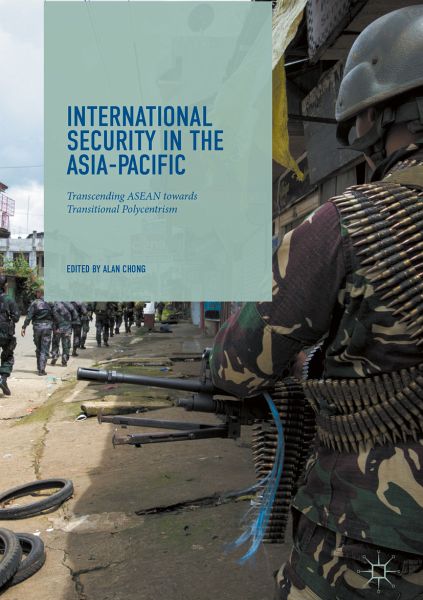
Examines Asian security using a holistic thematic framework Offers a wealth of 'grounded' experience to this area of academic scholarship Many of the authors are practitioners in the field
Examines Asian security using a holistic thematic framework
Offers a wealth of 'grounded' experience to this area of academic scholarship
Many of the authors are practitioners in the field
Dieser Download kann aus rechtlichen Gründen nur mit Rechnungsadresse in A, B, BG, CY, CZ, D, DK, EW, E, FIN, F, GR, HR, H, IRL, I, LT, L, LR, M, NL, PL, P, R, S, SLO, SK ausgeliefert werden.
Die Herstellerinformationen sind derzeit nicht verfügbar.
Autorenporträt
Alan Chong is Associate Professor at the S. Rajaratnam School of International Studies, Singapore. He has published widely on the notion of soft power and the role of ideas in constructing the international relations of Singapore and Asia.
Inhaltsangabe
Chapter 1: Southeast Asia : a Global Periphery No More - Dr Ooi Kee Beng, Institute of Southeast Asian Studies, Singapore.- Chapter 2: ASEAN Centrality in Defense and Security Cooperation in East Asia - Professor See Seng Tan, S. Rajaratnam School of International Studies, Singapore.- Chapter 3: ASEAN's Limits with respect to Conflict Resolution in the Region - Professor Kriengsak Chareonwongsak, Institute of Future Studies for Development, Thailand.- Chapter 4: Animating Transitional Polycentrism: the Role of China - Assistant Professor Hoo Tiang Boon, China Programme, S. Rajaratnam School of International Studies, Singapore.- Chapter 5: The Emerging Security Landscape in the Asia-Pacific: Where ASEAN fits - Professor Huang Xiaoming, Victoria University of Wellington, New Zealand.- Chapter 6: ASEAN in the Era of Japan-China Tensions: Diplomatic Opportunities or Strategic Dilemmas? - Associate Professor Takeshi Yuzawa, Hosei University, Japan.- Chapter 7: The Role of the US' Quasi-Alliances in Asia: Shadow Puppetry or Hard Alliances? - Assistant Professor Charmaine Misalucha, De La Salle University, Philippines.- Chapter 8: Order in South Asia and the Indian Ocean Region: Indian Hegemony or Indian Primacy? - Dr. Manjeet S. Pardesi, Lecturer in International Relations, Victoria University of Wellington, New Zealand.- Chapter 9: Fostering Military Diplomacy with America's Bilateral Allies: The Philippine Policy of Linking Spokes Together - Professor Renato Cruz de Castro, De La Salle University, Philippines.- Chapter 10: Reasons for Optimism? China, Japan and Unilateral Naval Restraint in the East China Sea - Dr Collin Koh, Maritime Programme, S. Rajaratnam School of International Studies, Singapore.- Chapter 11: The Asia-Pacific Diplomacy of Counter-Terrorism in Tackling the Threat from the Islamic State - Associate Professor Bilveer Singh, Department of Political Science, National University of Singapore, Singapore.- Chapter 12: Climate Change and Food Insecurities - Destabilizers of ASEAN Centrality? - Dr Tamara Nair, Centre for Non-Traditional Security, S. Rajaratnam School of International Studies, Singapore.- Chapter 13: Subnational Conflict Mitigation: Networks, innovations, and the uncertain place of ASEAN - Assistant Professor Linda Quayle, The University of Nottingham (Malaysia Campus), Malaysia.- Chapter 14: Silos, Synergies and Prospects for Cooperation in the Asia-Pacific: Humanitarian Assistance and Disaster Relief - Dr Alistair D.B. Cook, Centre for Non-Traditional Security, S. Rajaratnam School of International Studies, Singapore.- Chapter 15: Asia's Military Competition by Proxy: Competitive HADR as a Respectable Arena? - Associate Professor Alan Chong, S. Rajaratnam School of International Studies, Singapore.- Chapter 16: Re-conceptualizing the Role of the Military for International Disaster Relief: Exploring the Factors Conditioning Responses by the Militaries of Japan, Taiwan, China, and South Korea - Mr Jeffrey Engstrom, RAND Corporation, USA.
Chapter 1: Southeast Asia : a Global Periphery No More - Dr Ooi Kee Beng, Institute of Southeast Asian Studies, Singapore.- Chapter 2: ASEAN Centrality in Defense and Security Cooperation in East Asia - Professor See Seng Tan, S. Rajaratnam School of International Studies, Singapore.- Chapter 3: ASEAN's Limits with respect to Conflict Resolution in the Region - Professor Kriengsak Chareonwongsak, Institute of Future Studies for Development, Thailand.- Chapter 4: Animating Transitional Polycentrism: the Role of China - Assistant Professor Hoo Tiang Boon, China Programme, S. Rajaratnam School of International Studies, Singapore.- Chapter 5: The Emerging Security Landscape in the Asia-Pacific: Where ASEAN fits - Professor Huang Xiaoming, Victoria University of Wellington, New Zealand.- Chapter 6: ASEAN in the Era of Japan-China Tensions: Diplomatic Opportunities or Strategic Dilemmas? - Associate Professor Takeshi Yuzawa, Hosei University, Japan.- Chapter 7: The Role of the US' Quasi-Alliances in Asia: Shadow Puppetry or Hard Alliances? - Assistant Professor Charmaine Misalucha, De La Salle University, Philippines.- Chapter 8: Order in South Asia and the Indian Ocean Region: Indian Hegemony or Indian Primacy? - Dr. Manjeet S. Pardesi, Lecturer in International Relations, Victoria University of Wellington, New Zealand.- Chapter 9: Fostering Military Diplomacy with America's Bilateral Allies: The Philippine Policy of Linking Spokes Together - Professor Renato Cruz de Castro, De La Salle University, Philippines.- Chapter 10: Reasons for Optimism? China, Japan and Unilateral Naval Restraint in the East China Sea - Dr Collin Koh, Maritime Programme, S. Rajaratnam School of International Studies, Singapore.- Chapter 11: The Asia-Pacific Diplomacy of Counter-Terrorism in Tackling the Threat from the Islamic State - Associate Professor Bilveer Singh, Department of Political Science, National University of Singapore, Singapore.- Chapter 12: Climate Change and Food Insecurities - Destabilizers of ASEAN Centrality? - Dr Tamara Nair, Centre for Non-Traditional Security, S. Rajaratnam School of International Studies, Singapore.- Chapter 13: Subnational Conflict Mitigation: Networks, innovations, and the uncertain place of ASEAN - Assistant Professor Linda Quayle, The University of Nottingham (Malaysia Campus), Malaysia.- Chapter 14: Silos, Synergies and Prospects for Cooperation in the Asia-Pacific: Humanitarian Assistance and Disaster Relief - Dr Alistair D.B. Cook, Centre for Non-Traditional Security, S. Rajaratnam School of International Studies, Singapore.- Chapter 15: Asia's Military Competition by Proxy: Competitive HADR as a Respectable Arena? - Associate Professor Alan Chong, S. Rajaratnam School of International Studies, Singapore.- Chapter 16: Re-conceptualizing the Role of the Military for International Disaster Relief: Exploring the Factors Conditioning Responses by the Militaries of Japan, Taiwan, China, and South Korea - Mr Jeffrey Engstrom, RAND Corporation, USA.
Es gelten unsere Allgemeinen Geschäftsbedingungen: www.buecher.de/agb
Impressum
www.buecher.de ist ein Internetauftritt der buecher.de internetstores GmbH
Geschäftsführung: Monica Sawhney | Roland Kölbl | Günter Hilger
Sitz der Gesellschaft: Batheyer Straße 115 - 117, 58099 Hagen
Postanschrift: Bürgermeister-Wegele-Str. 12, 86167 Augsburg
Amtsgericht Hagen HRB 13257
Steuernummer: 321/5800/1497
USt-IdNr: DE450055826