Sie sind bereits eingeloggt. Klicken Sie auf 2. tolino select Abo, um fortzufahren.
Bitte loggen Sie sich zunächst in Ihr Kundenkonto ein oder registrieren Sie sich bei bücher.de, um das eBook-Abo tolino select nutzen zu können.
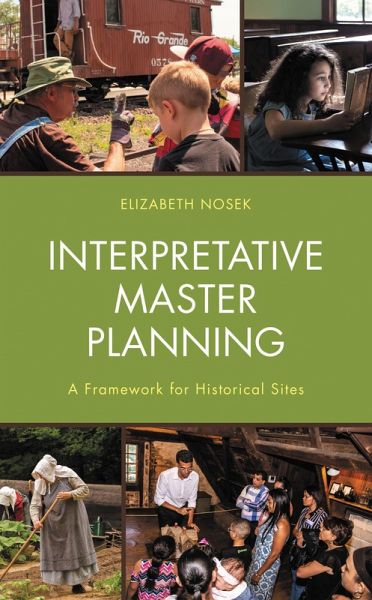
Interpretative Master Planning: A Framework for Historical Sites begins with the basics of any planning experience: why do an interpretative master plan (IMP) and is your institution ready to undergo such a process? These chapters are followed with straightforward guidance on how to go about organizing the necessary funding to pay for an IMP's development, the core members of your planning team, choosing stakeholders, hosting focus groups, and using all the information gathered to develop an engaging interpretative master plan that is unique to your museum, historic site, or organization. The…mehr
Interpretative Master Planning: A Framework for Historical Sites begins with the basics of any planning experience: why do an interpretative master plan (IMP) and is your institution ready to undergo such a process? These chapters are followed with straightforward guidance on how to go about organizing the necessary funding to pay for an IMP's development, the core members of your planning team, choosing stakeholders, hosting focus groups, and using all the information gathered to develop an engaging interpretative master plan that is unique to your museum, historic site, or organization. The book features five case studies highlighting organizations that have undergone the interpretative master planning process. Each case study offers a unique point of view about the process and provides the organization's conclusions as to what they would or would not do again if they had the choice. The end results showcase the wealth of useful information that can be garnered from an Interpretative Master Planning experience. Interpretative Master Planning: A Framework for Historical Sites offers a complete framework complemented by real-world examples for creating a blueprint that will strengthen any organization's interpretation.
Die Herstellerinformationen sind derzeit nicht verfügbar.
Autorenporträt
Elizabeth Nosek holds degrees in cultural anthropology from Hamline University and history museum studies from the Cooperstown Graduate Program. For over 30 years, she has worked in museum education/interpretation for local historical societies, natural history museums, the National Park Service, living history museums, children's museums, art museums, and galleries all over the country. Whether it was discussing Thompsonian medicine in Old Sturbridge Village's medicinal garden, developing interpretive site manuals for both the Littleton History Museum and Lakewood's Heritage Center in Colorado, or creating a long-range education plan for the Mission Houses Museum in Honolulu, Nosek has been on the front lines. She used her intrinsic knowledge to author several articles on guest service and museum education for the Docent Educator and ALHFAM Bulletin and has taught museum education at St. Mary's college. Her most recent experience of shepherding her institution's interpretive master plan through from start to finish is the inspiration for this book.
Inhaltsangabe
Preface Acknowledgements Chapter 1 - Just What is Interpretation? Chapter 2 - Are We Ready to Create an Interpretive Master Plan? Chapter 3 - How Do We Do a Self Study? Chapter 4 - How Do We Form Our Planning Team? Chapter 5 - What Are the Best Ways to Facilitating Focus Groups? Chapter 6 - How Do We Define Our Interpretive Themes? Chapter 7 - How Do We Pull It All Together? Chapter 8 - How Do We Implement the Master Plan? Appendix Five Interpretative Master Plan Case Studies Appendix 1: Introduction to Case Studies Appendix 2: House of Seven Gables Appendix 3: Silos & Smokestacks Appendix 4: Cumbres & Toltec Scenic Railroad Appendix 5: Old Sturbridge Village Appendix 6: Iolani Palace About the Author
Preface Acknowledgements Chapter 1 - Just What is Interpretation? Chapter 2 - Are We Ready to Create an Interpretive Master Plan? Chapter 3 - How Do We Do a Self Study? Chapter 4 - How Do We Form Our Planning Team? Chapter 5 - What Are the Best Ways to Facilitating Focus Groups? Chapter 6 - How Do We Define Our Interpretive Themes? Chapter 7 - How Do We Pull It All Together? Chapter 8 - How Do We Implement the Master Plan? Appendix Five Interpretative Master Plan Case Studies Appendix 1: Introduction to Case Studies Appendix 2: House of Seven Gables Appendix 3: Silos & Smokestacks Appendix 4: Cumbres & Toltec Scenic Railroad Appendix 5: Old Sturbridge Village Appendix 6: Iolani Palace About the Author
Es gelten unsere Allgemeinen Geschäftsbedingungen: www.buecher.de/agb
Impressum
www.buecher.de ist ein Internetauftritt der buecher.de internetstores GmbH
Geschäftsführung: Monica Sawhney | Roland Kölbl | Günter Hilger
Sitz der Gesellschaft: Batheyer Straße 115 - 117, 58099 Hagen
Postanschrift: Bürgermeister-Wegele-Str. 12, 86167 Augsburg
Amtsgericht Hagen HRB 13257
Steuernummer: 321/5800/1497
USt-IdNr: DE450055826