33,95 €
inkl. MwSt.
Sofort per Download lieferbar
17 °P sammeln

Andere Kunden interessierten sich auch für
") Critical Mentoring (eBook, ePUB)27,95 €
Critical Mentoring (eBook, ePUB)27,95 €") Lad Culture in Higher Education (eBook, ePUB)39,95 €
Lad Culture in Higher Education (eBook, ePUB)39,95 €") The Case for Affirmative Action on Campus (eBook, ePUB)31,95 €
The Case for Affirmative Action on Campus (eBook, ePUB)31,95 €") The Role of Coloniality, Decoloniality, and Education in Shaping Perspectives on Extremism (eBook, ePUB)44,95 €
The Role of Coloniality, Decoloniality, and Education in Shaping Perspectives on Extremism (eBook, ePUB)44,95 €") Faces of Discrimination in Higher Education in India (eBook, ePUB)48,95 €
Faces of Discrimination in Higher Education in India (eBook, ePUB)48,95 €") Educating About Religious Diversity and Interfaith Engagement (eBook, ePUB)35,95 €
Educating About Religious Diversity and Interfaith Engagement (eBook, ePUB)35,95 €") English Tertiary Education in Vietnam (eBook, ePUB)39,95 €
English Tertiary Education in Vietnam (eBook, ePUB)39,95 €




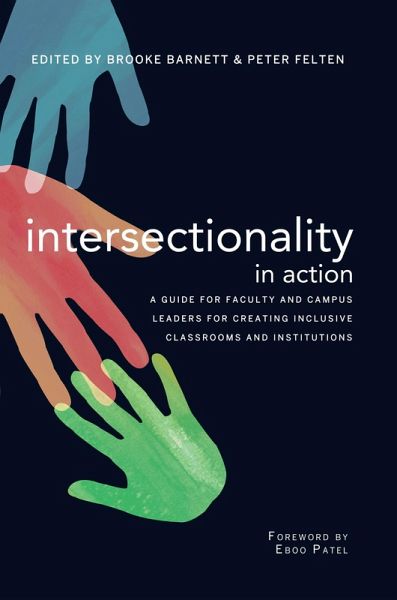
Colleges and universities silo diversity and inclusion by creating specific courses to address them, or programs to welcome and support people with a range of identities, whereas in reality students, faculty and staff do not encounter diversity in the fractured ways that match the organizational structures of our institutions. We all simultaneously embody a variety of identities with different saliency in different circumstances and times.This book offers models for institutions to move intentionally toward intersections - of study abroad and multiculturalism, of race and gender and religion, and of other essential aspects of our educational programs and our students' identities - to open doors to new possibilities that better prepare our students for life in a diverse world, and that allow our institutions to become more efficient and effective as we strive to not simply do things better in our own separate spheres, but to do better things by working together across difference.Each chapter offers action-oriented analysis focusing on particular campus intersections, rather than attending to specific demographic groups. Chapter authors also build on their own local expertise of doing this work on campuses that often do not have deep pockets or rich histories of such efforts.The book is organized into three sections:* People focuses on diversity broadly defined, considering questions about how we recruit and engage the students, faculty, and staff in the campus community, and how we work with governing boards and others to promote inclusive excellence.* Environment focuses on inclusion, including residence life, the local community, the working and learning environment, and external factors and events such as national and international news or town gown relationships.* Learning focuses on perspective taking and learning about difference in the core curriculum, the disciplines, and the co-curriculum, as well as professional development for faculty and staff.This ground reaking book helps readers, no matter what position they occupy on campus, to develop the knowledge and capacities necessary to create inclusive classrooms and is premised on the understanding that identity, oppression, power and marginalization cannot be addressed by looking solely at single identities.
Dieser Download kann aus rechtlichen Gründen nur mit Rechnungsadresse in A, B, BG, CY, CZ, D, DK, EW, E, FIN, F, GR, HR, H, IRL, I, LT, L, LR, M, NL, PL, P, R, S, SLO, SK ausgeliefert werden.