Sie sind bereits eingeloggt. Klicken Sie auf 2. tolino select Abo, um fortzufahren.
Bitte loggen Sie sich zunächst in Ihr Kundenkonto ein oder registrieren Sie sich bei bücher.de, um das eBook-Abo tolino select nutzen zu können.
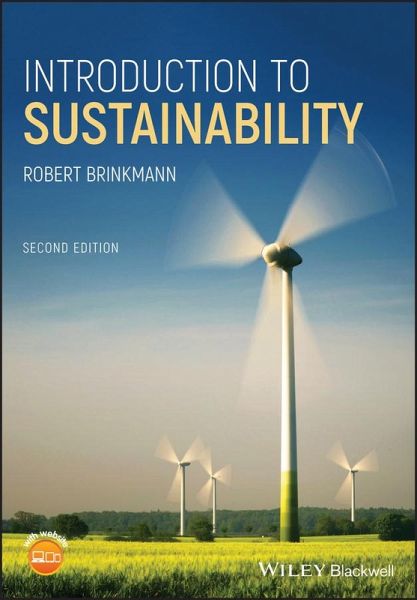
Introduction to Sustainability, Second Edition,reviews all the major themes in the cutting-edge field of sustainability. The book is suitable for introductory interdisciplinary courses on sustainability, as well as those in the fields of geography, geology, sociology, planning, political science, and anthropology. Allowing students to see the world in new ways while also encouraging them to become part of the change needed to ensure the long-term sustainability of the planet, this book is an invaluable introduction to this multifaceted and ever-changing subject. Now fully revised and updated,…mehr
Introduction to Sustainability, Second Edition,reviews all the major themes in the cutting-edge field of sustainability. The book is suitable for introductory interdisciplinary courses on sustainability, as well as those in the fields of geography, geology, sociology, planning, political science, and anthropology. Allowing students to see the world in new ways while also encouraging them to become part of the change needed to ensure the long-term sustainability of the planet, this book is an invaluable introduction to this multifaceted and ever-changing subject. Now fully revised and updated, this second edition includes new material on the most recent developments in the field of sustainability; environmental sustainability issues like water, food, and energy; social sustainability themes like environmental justice and transportation; and economic sustainability topics like green businesses and economic development. The book concludes with a chapter on sustainability issues in college and universities. Brinkmann intersperses many fascinating case studies and text boxes that encourage students to deeply explore the material. This is a book that not only organizes the complex field of sustainability, but also encourages students to take action to make the world a better place.
Dieser Download kann aus rechtlichen Gründen nur mit Rechnungsadresse in D ausgeliefert werden.
Die Herstellerinformationen sind derzeit nicht verfügbar.
Autorenporträt
ROBERT (BOB) BRINKMANN is the Dean of the College of Liberal Arts and Sciences at Northern Illinois University where he is also a Professor in the Department of Geology and Environment and is the author of many books and research articles in the field of sustainability. Bob has served as an officer in many organizations including Chair of the Board of the National Cave and Karst Research Institute.
Inhaltsangabe
Acknowledgments xv
About the Author xvii
About the Companion Website xix
1 Roots of the Modern Sustainability Movement 1
Meaning of Sustainability 1
Nineteenth Century Environmentalism 3
Pinchot, Roosevelt, and Muir 5
Aldo Leopold and the Land Ethic 6
Better Living Through Chemistry, The Great Smog of 1952, and Rachel Carson 8
Environmental Activism of the 1960s and 1970s and the Development of Environmental Policy 10
The Growth of Environmental Laws in the 1960s and 1970s 13
The First Earth Day 14
International Concerns 14
Ozone and the World Comes Together 15
Globalization and the Brundtland Report 16
Deep Ecology 18
Environmental Justice 19
Measuring Sustainability 21
The Climate Change Challenge 23
The Road Ahead 24
Organization 26
2 Understanding Natural Systems 29
The Earth, its Layers, and the Rock Cycle 29
The Rock Cycle 32
Biogeochemical Cycles 33
Water and the Water Cycle 34
The Carbon Cycle and Global Climate Change 37
Global Climate Change and the Carbon Cycle 38
The Sulfur Cycle 40
The Nitrogen and Phosphorus Cycles 42
Nitrate Pollution of groundwater 45
Organisms and Ecosystems 46
Urban Ecosystems 49
Understanding the Anthropocene 53
3 Measuring Sustainability 57
The United Nations Millennium Goals 58
The United Nations Sustainable Development Goals 59
National sustainability planning 60
Canada 64
Bhutan 67
Regional sustainability planning 69
Local sustainability measurement 73
Green local governments in Florida 75
Specific community plans 79
PlaNYC 79
London and sustainability 81
Small towns and sustainability 84
Business sustainability 85
4 Energy 89
World Energy Production and Consumption 89
Traditional or "Dirty" Energy Resources 91
Oil 91
Oil shale and tar sands 93
Natural gas 95
Coal 97
Coal mining 98
Pollution from coal 99
Green energy 100
Biomass 100
Biomass: wood, manure, peat, and other organic sources 100
Burning of garbage: waste-to-energy 101
Conversion of biomass to liquid or gas fuel 102
Wind energy 103
Solar energy 105
Passive solar energy 105
Active solar energy 106
Concentrated solar power 107
Critiques of solar power 107
Nuclear energy 107
Other innovations 110
Energy efficiency 110
Living off the grid 112
5 Global Climate Change and Greenhouse Gas Management 113
The end of nature? 113
The science of global climate change: The greenhouse effect 114
Water vapor 116
Carbon dioxide 116
Methane 118
Sinks of carbon 120
Forests 120
Reefs 120
The IPCC and evidence for climate change, and the future of our planet 121