Sie sind bereits eingeloggt. Klicken Sie auf 2. tolino select Abo, um fortzufahren.
Bitte loggen Sie sich zunächst in Ihr Kundenkonto ein oder registrieren Sie sich bei bücher.de, um das eBook-Abo tolino select nutzen zu können.
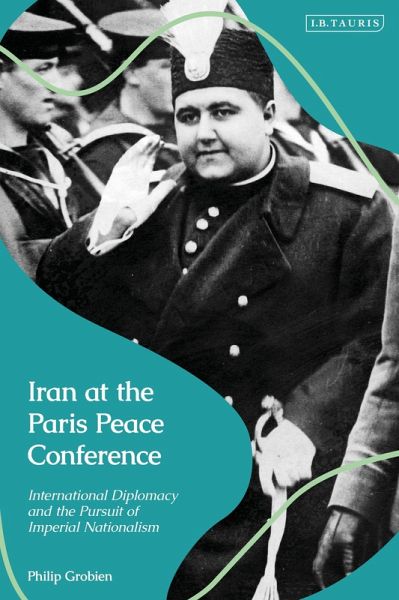
The end of the Qajar era in Iran, despite the accepted narrative of decline, was in fact an occasion of modern and forward-thinking nationalism. Iran developed an imperial nationalism, which was informed by its experiences under British and Russian hegemony and the absorption of Western modern ideas and practices, and which now looked towards a future as a sovereign and independent state within the foundational framework of its previous Empire. Emboldened by post-WWI notions of self-determination and the development of international institutions devoted to peace, Iran spearheaded its new-found…mehr
The end of the Qajar era in Iran, despite the accepted narrative of decline, was in fact an occasion of modern and forward-thinking nationalism. Iran developed an imperial nationalism, which was informed by its experiences under British and Russian hegemony and the absorption of Western modern ideas and practices, and which now looked towards a future as a sovereign and independent state within the foundational framework of its previous Empire. Emboldened by post-WWI notions of self-determination and the development of international institutions devoted to peace, Iran spearheaded its new-found diplomacy by sending a delegation to the peace talks in Paris in 1919. This book shows how Iran''s immediate post-war diplomacy came about, the conduct of Iran''s delegation to Paris, frustrations with the Anglo-Persian Agreement, and ultimately how Iran''s progress became the victim of British imperialism. Throwing a spotlight on an under-researched period of Iranian history, it will be of interest to readers of Iranian history, and those interested in the Paris Peace Conference of 1919.
Die Herstellerinformationen sind derzeit nicht verfügbar.
Autorenporträt
Philip Grobien holds a PhD from the University of St Andrews. His published work to date reflects his interest in the development of Iran's territorial nationalism during the Qajar dynasty.
Inhaltsangabe
Prologue: The Paris Peace Conference Acknowledgements Transliteration and Dates Abbreviations List of maps Introduction: Iran at the crossroads Conceptualizing Iran's Outlook Imperial Nationalism Paris: Policies and personalities Historiography and sources Chapter 1: The nineteenth century, the Great Game and the squeezing of Iran Encounters and the advent of Russian confrontation Britain: a symbolic toe in the water Economic hegemony and the Qajar playbook Chapter 2: An Enlightenment Intellectual inheritance Direct action More contemporary foundations Occupation and war The question of International law Chapter 3: A new dawn Iran and the preparation for peace The delegation Foreign reaction to Iran's delegation and plans The delegation goes to Paris Chapter 4: Springtime in Paris January and February March and April Controlling the narrative Chapter 5: The cauterisation of independence May The Triumvirate The Anglo-Persian Agreement June, July and August Criticism of the agreement Chapter 6: The persistence of Nosrat al-Dowleh Nosrat al-Dowleh Countering the narrative Squaring the circle Round two Russia and the endgame Conclusion: A reassessment Notes Appendix Bibliography Index
Es gelten unsere Allgemeinen Geschäftsbedingungen: www.buecher.de/agb
Impressum
www.buecher.de ist ein Internetauftritt der buecher.de internetstores GmbH
Geschäftsführung: Monica Sawhney | Roland Kölbl | Günter Hilger
Sitz der Gesellschaft: Batheyer Straße 115 - 117, 58099 Hagen
Postanschrift: Bürgermeister-Wegele-Str. 12, 86167 Augsburg
Amtsgericht Hagen HRB 13257
Steuernummer: 321/5800/1497
USt-IdNr: DE450055826