20,95 €
20,95 €
inkl. MwSt.
Sofort per Download lieferbar

10 °P sammeln
20,95 €
Als Download kaufen
20,95 €
inkl. MwSt.
Sofort per Download lieferbar
10 °P sammeln
Jetzt verschenken
Alle Infos zum eBook verschenken
20,95 €
inkl. MwSt.
Sofort per Download lieferbar
Alle Infos zum eBook verschenken
10 °P sammeln

Andere Kunden interessierten sich auch für
") Crossing Boundaries (eBook, PDF)18,95 €
Crossing Boundaries (eBook, PDF)18,95 €") The German-American Encounter (eBook, PDF)20,95 €
The German-American Encounter (eBook, PDF)20,95 €") Emplaced Belief (eBook, PDF)18,95 €
Emplaced Belief (eBook, PDF)18,95 €") Rethinking White Societies in Southern Africa (eBook, PDF)0,00 €
Rethinking White Societies in Southern Africa (eBook, PDF)0,00 €") The Holocaust and European Societies (eBook, PDF)80,95 €
The Holocaust and European Societies (eBook, PDF)80,95 €") Iron Men (eBook, PDF)19,95 €
Iron Men (eBook, PDF)19,95 €") The Business of Marketing, Entrepreneurship, and Architecture of Communal Societies in the 1960s and 1970s (eBook, PDF)96,95 €
The Business of Marketing, Entrepreneurship, and Architecture of Communal Societies in the 1960s and 1970s (eBook, PDF)96,95 €







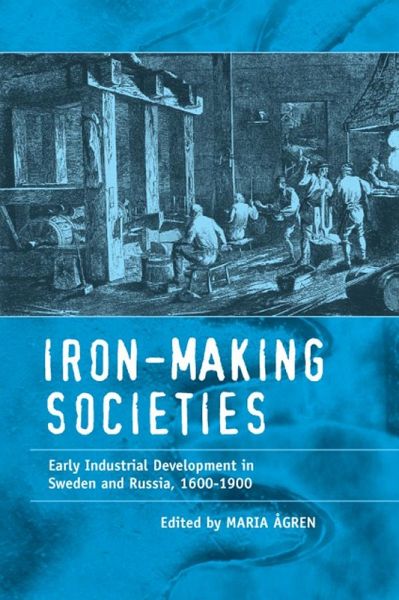
The title of this book has a double meaning: on the one hand, it deals with two very different societies both of which made iron in the early modern period. On the other hand, iron "made" these societies: the needs of iron production and the resistance to these demands from local peasant communities gave the societies a special kind of cohesion and rationality.
This volume presents the findings of a joint team of Swedish and Russian scholars examining the social organization of work in early modern iron industry and their respective societies. The comparison was carried out against the backdrop of the international discussion on proto-industrialization, its prerequisites and consequences. There has, however, been a certain bias in much of that debate, the focus being mainly on Western Europe, particularly on Britain, and on textile trades. This book offers an important contribution to the debate in that it widens the perspective by discussing Northern and Eastern Europe and by studying the iron industry. More particularly it examines actual production processes, the organization of work, social conflict, questions of ownership and its evolution, as well as the diffusion and organization of technical knowledge. The comparative approach is consistently applied throughout, with each chapter closely integrating the results relating to the two selected geographical areas, thus showing ways of solving some of the problems arising from comparative history.
This volume presents the findings of a joint team of Swedish and Russian scholars examining the social organization of work in early modern iron industry and their respective societies. The comparison was carried out against the backdrop of the international discussion on proto-industrialization, its prerequisites and consequences. There has, however, been a certain bias in much of that debate, the focus being mainly on Western Europe, particularly on Britain, and on textile trades. This book offers an important contribution to the debate in that it widens the perspective by discussing Northern and Eastern Europe and by studying the iron industry. More particularly it examines actual production processes, the organization of work, social conflict, questions of ownership and its evolution, as well as the diffusion and organization of technical knowledge. The comparative approach is consistently applied throughout, with each chapter closely integrating the results relating to the two selected geographical areas, thus showing ways of solving some of the problems arising from comparative history.
Dieser Download kann aus rechtlichen Gründen nur mit Rechnungsadresse in A, D ausgeliefert werden.