14,95 €
14,95 €
inkl. MwSt.
Sofort per Download lieferbar

7 °P sammeln
14,95 €
Als Download kaufen
14,95 €
inkl. MwSt.
Sofort per Download lieferbar
7 °P sammeln
Jetzt verschenken
Alle Infos zum eBook verschenken
14,95 €
inkl. MwSt.
Sofort per Download lieferbar
Alle Infos zum eBook verschenken
7 °P sammeln

Andere Kunden interessierten sich auch für
") The U.S. Steel Industry in Recurrent Crisis (eBook, PDF)15,95 €
The U.S. Steel Industry in Recurrent Crisis (eBook, PDF)15,95 €") God and Money (eBook, PDF)36,95 €
God and Money (eBook, PDF)36,95 €") Economics and the Public Good (eBook, PDF)28,95 €
Economics and the Public Good (eBook, PDF)28,95 €") The Merits of Flexible Exchange Rates (eBook, PDF)41,95 €
The Merits of Flexible Exchange Rates (eBook, PDF)41,95 €") The National Road and the Difficult Path to Sustainable National Investment (eBook, PDF)80,95 €
The National Road and the Difficult Path to Sustainable National Investment (eBook, PDF)80,95 €") The Rise of the Global Middle Class (eBook, PDF)17,95 €
The Rise of the Global Middle Class (eBook, PDF)17,95 €") The Rise of Big Government (eBook, PDF)38,95 €
The Rise of Big Government (eBook, PDF)38,95 €



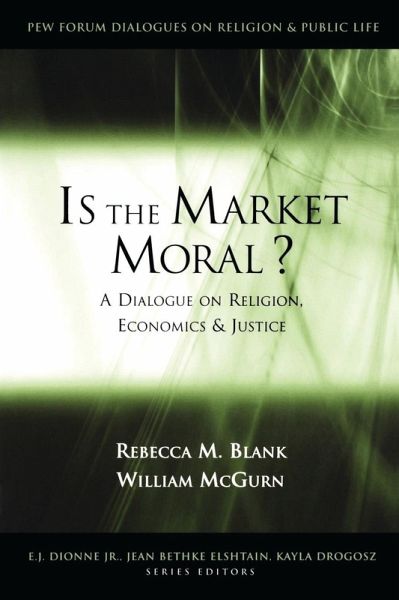
In the great tradition of moral argument about the nature of the economic market, Rebecca Blank and William McGurn join to debate the fundamental questions¿equality and efficiency, productivity and social justice, individual achievement and personal rights in the workplace, and the costs and benefits of corporate and entrepreneurial capitalism. Their arguments are grounded in both economic sophistication and religious commitment. Rebecca Blank is an economist by training and describes herself as ""culturally Protestant in the habits of mind and heart."" She has also chaired the committee that wrote the statement on Christian faith and economic life adopted by the United Church of Christ. Addressing market failure, for her, requires that sometimes ""freedom to choose"" give way to other human values. William McGurn, a journalist and a Roman Catholic, uses his expertise in economics to reflect on the teachings of the church concerning the morality of the market. For McGurn, humans reach their fullest potential when they are free from the constraints of others. He writes that ""our quarrel is not so much with Adam Smith or Milton Friedman but with the Providence that so clearly designed man to be his most prosperous at his most free."" This book grapples with the new imperatives of a global economy while working in the classic tradition of political economy which always treated seriously the questions of morality, justice, productivity, and freedom.