70,95 €
70,95 €
inkl. MwSt.
Erscheint vor. 05.02.26

35 °P sammeln
70,95 €
Als Download kaufen
70,95 €
inkl. MwSt.
Erscheint vor. 05.02.26
35 °P sammeln
Jetzt verschenken
Alle Infos zum eBook verschenken
70,95 €
inkl. MwSt.
Erscheint vor. 05.02.26
Alle Infos zum eBook verschenken
35 °P sammeln

Andere Kunden interessierten sich auch für
") The House of War (eBook, PDF)14,95 €
The House of War (eBook, PDF)14,95 €") Making the Modern Turkish Citizen (eBook, PDF)24,95 €
Making the Modern Turkish Citizen (eBook, PDF)24,95 €") Armies of the Italian-Turkish War (eBook, PDF)9,95 €
Armies of the Italian-Turkish War (eBook, PDF)9,95 €") The Politics of Naming the Armenian Genocide (eBook, PDF)16,95 €
The Politics of Naming the Armenian Genocide (eBook, PDF)16,95 €") Travel and Artisans in the Ottoman Empire (eBook, PDF)21,95 €
Travel and Artisans in the Ottoman Empire (eBook, PDF)21,95 €") Competing Ideologies in the Late Ottoman Empire and Early Turkish Republic (eBook, PDF)25,95 €
Competing Ideologies in the Late Ottoman Empire and Early Turkish Republic (eBook, PDF)25,95 €") Atatürk (eBook, PDF)16,95 €
Atatürk (eBook, PDF)16,95 €


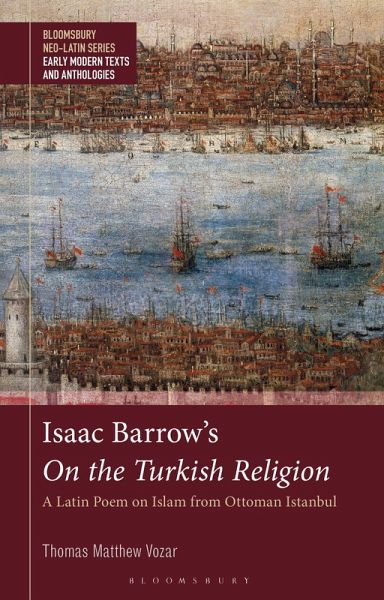
This edition offers a novel perspective on seventeenth-century European-Islamic encounters by making accessible the Neo-Latin poem On the Turkish Religion (De Religione Turcica). Written by the Cambridge scholar Isaac Barrow during a visit to Istanbul in 1658, this poem shows how the knowledge and use of Latin contributed to the rise of early modern European oriental studies, both as a medium of information and as a vehicle of representation.
As well as including an accessible translation and full text with commentary, Vozar lays out for the reader a detailed introduction explaining the background of Barrow's travels, especially his meeting with the Polish-born Ottoman dragoman Ali Ufki, whose Latin Epitome of Islamic doctrine constituted Barrow's main source. Comparison between the two texts reveals some of the ways in which Barrow converted Ufki's work to polemical purposes in his Lucretian diatribe against the religion. As further elucidation of the context of Barrow's poem, Vozar includes in this edition a text and translation of a Latin letter that Barrow wrote to his Cambridge colleagues around the same time, in which he discusses the genesis of the poem as well as current affairs at the Ottoman court.
As well as including an accessible translation and full text with commentary, Vozar lays out for the reader a detailed introduction explaining the background of Barrow's travels, especially his meeting with the Polish-born Ottoman dragoman Ali Ufki, whose Latin Epitome of Islamic doctrine constituted Barrow's main source. Comparison between the two texts reveals some of the ways in which Barrow converted Ufki's work to polemical purposes in his Lucretian diatribe against the religion. As further elucidation of the context of Barrow's poem, Vozar includes in this edition a text and translation of a Latin letter that Barrow wrote to his Cambridge colleagues around the same time, in which he discusses the genesis of the poem as well as current affairs at the Ottoman court.