44,95 €
inkl. MwSt.
Sofort per Download lieferbar
22 °P sammeln

Andere Kunden interessierten sich auch für
") Islam, Constitutional Law and Human Rights (eBook, ePUB)44,95 €
Islam, Constitutional Law and Human Rights (eBook, ePUB)44,95 €") Religious Minorities, Islam and the Law (eBook, PDF)40,95 €
Religious Minorities, Islam and the Law (eBook, PDF)40,95 €") Religious Minorities, Islam and the Law (eBook, ePUB)40,95 €
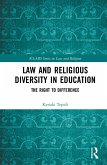
Religious Minorities, Islam and the Law (eBook, ePUB)40,95 €") Law and Religious Diversity in Education (eBook, PDF)44,95 €
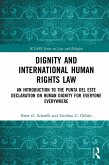
Law and Religious Diversity in Education (eBook, PDF)44,95 €") Dignity and International Human Rights Law (eBook, PDF)44,95 €
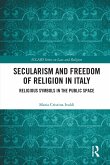
Dignity and International Human Rights Law (eBook, PDF)44,95 €") Secularism and Freedom of Religion in Italy (eBook, PDF)45,95 €
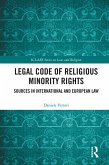
Secularism and Freedom of Religion in Italy (eBook, PDF)45,95 €") Legal Code of Religious Minority Rights (eBook, PDF)44,95 €
Legal Code of Religious Minority Rights (eBook, PDF)44,95 €
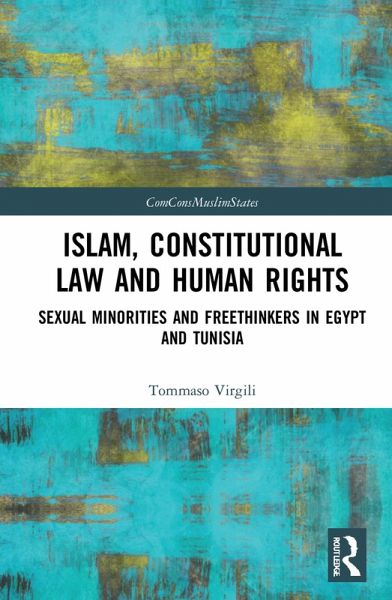
This book focuses on Islamic constitutionalism, and in particular on the relation between religion and the protection of individual liberties potentially clashing with shari¿a and the Islamic ethos. The analysis goes from general to particular, starting with a theoretical overview on constitutionalism, human rights and Islam, moving to the assessment of the post-Arab Spring Constitutions of Egypt and Tunisia, and concluding with a specific focus on the rights of sexual minorities and freethinkers.
Part I provides a theoretical account of the conception of constitutionalism and human rights in Islam, compared and contrasted with Western constitutionalism. A set of issues where the tension between shari¿a and human rights is accentuated is analysed against the backdrop of the main Islamic charters of rights. Part II conducts a similar assessment based on the Constitutions of Tunisia and Egypt - the two main epicentres of the Arab Spring. Part III moves to two specific rights in the same countries, from the twofold perspective of the Constitutions and international law: the freedom from interference in one's intimate life, with particular regard to homosexuality; and the freedom of holding and expressing nonconventional beliefs, deemed unacceptable from the point of view of traditional Islam. These issues have been chosen as representative of the most controversial, still considered taboo in both legal and social terms, hence at the fringes of the debate on individual freedoms. Focusing on two overlooked and underexplored issues, the work thus pushes the boundaries of the human rights discourse in Muslim contexts.
Part I provides a theoretical account of the conception of constitutionalism and human rights in Islam, compared and contrasted with Western constitutionalism. A set of issues where the tension between shari¿a and human rights is accentuated is analysed against the backdrop of the main Islamic charters of rights. Part II conducts a similar assessment based on the Constitutions of Tunisia and Egypt - the two main epicentres of the Arab Spring. Part III moves to two specific rights in the same countries, from the twofold perspective of the Constitutions and international law: the freedom from interference in one's intimate life, with particular regard to homosexuality; and the freedom of holding and expressing nonconventional beliefs, deemed unacceptable from the point of view of traditional Islam. These issues have been chosen as representative of the most controversial, still considered taboo in both legal and social terms, hence at the fringes of the debate on individual freedoms. Focusing on two overlooked and underexplored issues, the work thus pushes the boundaries of the human rights discourse in Muslim contexts.
Dieser Download kann aus rechtlichen Gründen nur mit Rechnungsadresse in A, B, BG, CY, CZ, D, DK, EW, E, FIN, F, GR, HR, H, IRL, I, LT, L, LR, M, NL, PL, P, R, S, SLO, SK ausgeliefert werden.