7,99 €
7,99 €
inkl. MwSt.
Sofort per Download lieferbar

4 °P sammeln
7,99 €
Als Download kaufen
7,99 €
inkl. MwSt.
Sofort per Download lieferbar
4 °P sammeln
Jetzt verschenken
Alle Infos zum eBook verschenken
7,99 €
inkl. MwSt.
Sofort per Download lieferbar
Alle Infos zum eBook verschenken
4 °P sammeln

Andere Kunden interessierten sich auch für
![Kitab Al-Siyar Al-Saghir [The Shorter Book on Muslim International Law] (eBook, ePUB)]( "Kitab Al-Siyar Al-Saghir [The Shorter Book on Muslim International Law] (eBook, ePUB)") Kitab Al-Siyar Al-Saghir [The Shorter Book on Muslim International Law] (eBook, ePUB)6,99 €
Kitab Al-Siyar Al-Saghir [The Shorter Book on Muslim International Law] (eBook, ePUB)6,99 €") Islamization: Reforming Contemporary Knowledge (eBook, ePUB)2,99 €
Islamization: Reforming Contemporary Knowledge (eBook, ePUB)2,99 €") Fiqh Us Seerah (eBook, ePUB)9,95 €
Fiqh Us Seerah (eBook, ePUB)9,95 €") Stories of the Prophets for Young Hearts (eBook, ePUB)2,99 €
Stories of the Prophets for Young Hearts (eBook, ePUB)2,99 €") The Story of Al-Tirmidhi (eBook, ePUB)2,99 €
The Story of Al-Tirmidhi (eBook, ePUB)2,99 € (eBook, ePUB)") How to Fast - Easy Fiqh of Fasting in Islam (Takhrij al-Hadith Publications) (eBook, ePUB)4,49 €
How to Fast - Easy Fiqh of Fasting in Islam (Takhrij al-Hadith Publications) (eBook, ePUB)4,49 €") The Brief Guide to Da'wah (eBook, ePUB)5,99 €
The Brief Guide to Da'wah (eBook, ePUB)5,99 €
![Kitab Al-Siyar Al-Saghir [The Shorter Book on Muslim International Law] (eBook, ePUB)](https://bilder.buecher.de/produkte/75/75987/75987852m.jpg "Kitab Al-Siyar Al-Saghir [The Shorter Book on Muslim International Law] (eBook, ePUB)")



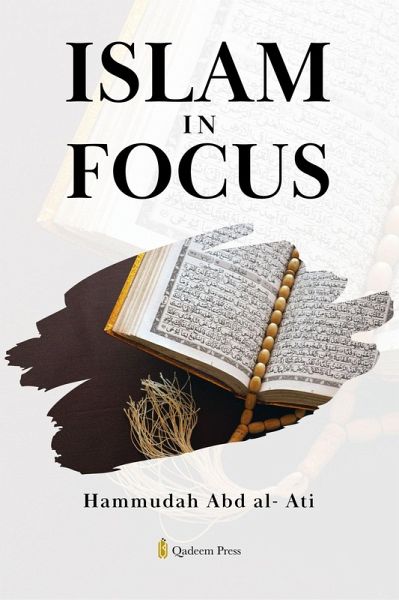
Islam in Focus stands as one of the most
comprehensive and enduring English-language introductions to Islamic faith and
practice. Written by the distinguished scholar Dr. Hammudah Abd al-Ati,
this meticulously crafted work addresses the full spectrum of Islamic
teachingsfrom foundational theology to practical worship, from personal ethics
to social organization, from family law to international relations.
Foundation in Primary Sources
Dr. Abd al-Ati grounds every discussion firmly in Islam's primary sources: the Qur'an and authentic hadith traditions of Prophet Muhammad. Rather than presenting his personal interpretations or sectarian perspectives, he articulates mainstream Islamic teachings as understood by centuries of scholarship. The author's training at Al-Azhar University, combined with his sociological expertise from Princeton, enables him to present traditional Islamic learning through frameworks accessible to contemporary readers.
Throughout the text, Qur'anic verses appear in careful translation, with Arabic transliterations provided for key terms. This scholarly approach ensures that readers encounter Islam as Muslims themselves understand it, rather than through the distorting lens of cultural stereotypes or theological polemics.
The Ideological Foundations
The book opens by establishing Islam's theological core: monotheism (tawhid). Dr. Abd al-Ati explores the Islamic understanding of GodHis attributes, His relationship with creation, and His communication through prophets and revelation. The discussion moves beyond abstract theology to demonstrate how belief in God shapes Muslim consciousness and conduct.
The Articles of Faithbelief in God, angels, revealed books, prophets, the Last Day, and divine decreereceive thorough examination. Dr. Abd al-Ati clarifies common misunderstandings, such as the Islamic doctrine of qadar (divine decree), which neither negates human free will nor reduces believers to fatalism. Each article is explained with attention to its logical foundations, scriptural evidence, and practical implications for daily life.
From Belief to Practice
Islam in Focus excels in connecting theological principles to lived experience. The section on the Five Pillarsshahada (testimony of faith), salah (prayer), zakah (almsgiving), sawm (fasting), and hajj (pilgrimage)provides both spiritual insight and practical instruction.
The chapter on prayer offers exceptional detail: proper ablution procedures, prayer times and their calculation, the Arabic texts with phonetic transliterations, step-by-step descriptions of physical postures, and the spiritual significance of each element. Readers learn not only how Muslims pray but why these specific forms emerged and what spiritual states they cultivate. The discussion extends to congregational prayers, Friday services, funeral prayers, and special occasion prayersmaking this a comprehensive prayer manual as well as theological text.
The treatment of fasting during Ramadan similarly balances practical guidance with spiritual depth. Dr. Abd al-Ati explains who must fast, exemptions and compensations, the proper etiquette of fasting, and the profound spiritual and social benefits this practice yields. A comparative analysis demonstrates how Islamic fasting differs from other religious traditions, revealing its unique character as both individual spiritual discipline and communal solidarity.
Zakah (almsgiving) receives treatment as both worship obligation and social welfare system. The book details calculation methods, eligible recipients, and the profound philosophy underlying mandatory wealth redistribution. Dr. Abd al-Ati demonstrates how zakah functions to purify wealth, prevent economic inequality, and create social cohesion.
The chapter on hajj conveys both the logistical aspects of pilgrimage and its powerful spiritual dimensionsthe gathering of millions in simple white garments, transcending nationality and social class in unified worship, commemorating prophetic tradition, and experiencing the global unity of the ummah (Muslim community).
Islam as Complete Way of Life
What distinguishes Islam in Focus from many introductory texts is its demonstration of Islam's comprehensiveness. Dr. Abd al-Ati devotes substantial attention to family lifemarriage contracts, spousal rights and responsibilities, parent-child relationships, inheritance, divorce procedures. He explains Islamic principles governing economic activityprohibition of usury (riba), requirements for honest commerce, property rights, and the moral framework constraining pursuit of wealth.
The discussion of political philosophy reveals Islam's unique approachsovereignty belonging ultimately to God, government as trusteeship, consultation (shura) as obligation, justice as paramount objective. This section demonstrates how Islamic political thought differs from both Western democratic theory and authoritarian models.
Social ethics receive careful attentiontreatment of neighbors, obligations to community, principles of mutual aid, hospitality, truthfulness in speech, justice in judgment. Dr. Abd al-Ati shows how Islamic teachings create dense networks of mutual obligation that strengthen social fabric and prevent the atomization characteristic of modern individualism.
Addressing Controversial Topics
Perhaps the book's greatest service lies in its direct engagement with topics frequently misunderstood or misrepresented. The chapter titled "Distortions about Islam" confronts several contentious issues:
Jihad receives extensive treatment dispelling the notion of Islam spreading "by the sword." Dr. Abd al-Ati carefully distinguishes defensive from aggressive warfare, explains just war principles in Islamic law, and demonstrates that jihad encompasses a broad range of struggles for justiceof which armed conflict is the rarest and most restricted form. He provides historical context for early Muslim military campaigns, showing them as defensive measures or responses to persecution rather than religious imperialism.
The section on Jesus in Islam clarifies Muslim reverence for Jesus as mighty prophet while explaining why Muslims reject doctrines of divinity, crucifixion, and salvific atonement. Dr. Abd al-Ati's treatment is neither polemical nor apologetic but aims at mutual understanding between Muslims and Christians.
Polygamy receives balanced analysisacknowledging it as permissive rather than prescriptive, conditional rather than unrestricted, exceptional rather than normative. Dr. Abd al-Ati explains historical contexts, practical justifications, strict limitations, and the egalitarian treatment required of men maintaining multiple marriages. He contrasts legally regulated polygyny with informal mistress-keeping and serial monogamy prevalent in societies claiming to reject plural marriage.
The chapter on women's status systematically addresses misconceptions. Drawing on Qur'anic verses and prophetic traditions, Dr. Abd al-Ati demonstrates women's independent legal personality, property rights, educational entitlement, political voice, and spiritual equality with men. He explains gendered distinctions in Islamic law as functional rather than hierarchical, aimed at protecting women's interests rather than subordinating them. The discussion addresses inheritance shares, testimony in contracts, prayer arrangements, and other topics often cited as evidence of women's supposed inferiorityshowing each as misunderstood when examined carefully.
Enduring Relevance
Islam in Focus has maintained its position as essential reading for decades because it addresses perennial questions with scholarly precision and accessibility. Dr. Abd al-Ati writes for multiple audiences: Muslims seeking deeper understanding of their faith find here a systematic presentation of beliefs and practices; students of comparative religion encounter Islam presented from within rather than through external analytical frameworks; interfaith dialogue participants gain vocabulary and concepts necessary for productive conversation; general readers discover an honest, comprehensive introduction uncolored by either apologetics or hostility.
The book's approachrooted in primary sources, attentive to contemporary concerns, scholarly yet accessible, traditional yet responsive to modern questionsmakes it invaluable for understanding Islam in today's interconnected world. Whether readers seek practical guidance for Muslim life, academic knowledge of Islamic civilization, or simply honest answers to longstanding questions, Islam in Focus provides a trustworthy, authoritative resource that continues to illuminate the path toward authentic understanding.
Foundation in Primary Sources
Dr. Abd al-Ati grounds every discussion firmly in Islam's primary sources: the Qur'an and authentic hadith traditions of Prophet Muhammad. Rather than presenting his personal interpretations or sectarian perspectives, he articulates mainstream Islamic teachings as understood by centuries of scholarship. The author's training at Al-Azhar University, combined with his sociological expertise from Princeton, enables him to present traditional Islamic learning through frameworks accessible to contemporary readers.
Throughout the text, Qur'anic verses appear in careful translation, with Arabic transliterations provided for key terms. This scholarly approach ensures that readers encounter Islam as Muslims themselves understand it, rather than through the distorting lens of cultural stereotypes or theological polemics.
The Ideological Foundations
The book opens by establishing Islam's theological core: monotheism (tawhid). Dr. Abd al-Ati explores the Islamic understanding of GodHis attributes, His relationship with creation, and His communication through prophets and revelation. The discussion moves beyond abstract theology to demonstrate how belief in God shapes Muslim consciousness and conduct.
The Articles of Faithbelief in God, angels, revealed books, prophets, the Last Day, and divine decreereceive thorough examination. Dr. Abd al-Ati clarifies common misunderstandings, such as the Islamic doctrine of qadar (divine decree), which neither negates human free will nor reduces believers to fatalism. Each article is explained with attention to its logical foundations, scriptural evidence, and practical implications for daily life.
From Belief to Practice
Islam in Focus excels in connecting theological principles to lived experience. The section on the Five Pillarsshahada (testimony of faith), salah (prayer), zakah (almsgiving), sawm (fasting), and hajj (pilgrimage)provides both spiritual insight and practical instruction.
The chapter on prayer offers exceptional detail: proper ablution procedures, prayer times and their calculation, the Arabic texts with phonetic transliterations, step-by-step descriptions of physical postures, and the spiritual significance of each element. Readers learn not only how Muslims pray but why these specific forms emerged and what spiritual states they cultivate. The discussion extends to congregational prayers, Friday services, funeral prayers, and special occasion prayersmaking this a comprehensive prayer manual as well as theological text.
The treatment of fasting during Ramadan similarly balances practical guidance with spiritual depth. Dr. Abd al-Ati explains who must fast, exemptions and compensations, the proper etiquette of fasting, and the profound spiritual and social benefits this practice yields. A comparative analysis demonstrates how Islamic fasting differs from other religious traditions, revealing its unique character as both individual spiritual discipline and communal solidarity.
Zakah (almsgiving) receives treatment as both worship obligation and social welfare system. The book details calculation methods, eligible recipients, and the profound philosophy underlying mandatory wealth redistribution. Dr. Abd al-Ati demonstrates how zakah functions to purify wealth, prevent economic inequality, and create social cohesion.
The chapter on hajj conveys both the logistical aspects of pilgrimage and its powerful spiritual dimensionsthe gathering of millions in simple white garments, transcending nationality and social class in unified worship, commemorating prophetic tradition, and experiencing the global unity of the ummah (Muslim community).
Islam as Complete Way of Life
What distinguishes Islam in Focus from many introductory texts is its demonstration of Islam's comprehensiveness. Dr. Abd al-Ati devotes substantial attention to family lifemarriage contracts, spousal rights and responsibilities, parent-child relationships, inheritance, divorce procedures. He explains Islamic principles governing economic activityprohibition of usury (riba), requirements for honest commerce, property rights, and the moral framework constraining pursuit of wealth.
The discussion of political philosophy reveals Islam's unique approachsovereignty belonging ultimately to God, government as trusteeship, consultation (shura) as obligation, justice as paramount objective. This section demonstrates how Islamic political thought differs from both Western democratic theory and authoritarian models.
Social ethics receive careful attentiontreatment of neighbors, obligations to community, principles of mutual aid, hospitality, truthfulness in speech, justice in judgment. Dr. Abd al-Ati shows how Islamic teachings create dense networks of mutual obligation that strengthen social fabric and prevent the atomization characteristic of modern individualism.
Addressing Controversial Topics
Perhaps the book's greatest service lies in its direct engagement with topics frequently misunderstood or misrepresented. The chapter titled "Distortions about Islam" confronts several contentious issues:
Jihad receives extensive treatment dispelling the notion of Islam spreading "by the sword." Dr. Abd al-Ati carefully distinguishes defensive from aggressive warfare, explains just war principles in Islamic law, and demonstrates that jihad encompasses a broad range of struggles for justiceof which armed conflict is the rarest and most restricted form. He provides historical context for early Muslim military campaigns, showing them as defensive measures or responses to persecution rather than religious imperialism.
The section on Jesus in Islam clarifies Muslim reverence for Jesus as mighty prophet while explaining why Muslims reject doctrines of divinity, crucifixion, and salvific atonement. Dr. Abd al-Ati's treatment is neither polemical nor apologetic but aims at mutual understanding between Muslims and Christians.
Polygamy receives balanced analysisacknowledging it as permissive rather than prescriptive, conditional rather than unrestricted, exceptional rather than normative. Dr. Abd al-Ati explains historical contexts, practical justifications, strict limitations, and the egalitarian treatment required of men maintaining multiple marriages. He contrasts legally regulated polygyny with informal mistress-keeping and serial monogamy prevalent in societies claiming to reject plural marriage.
The chapter on women's status systematically addresses misconceptions. Drawing on Qur'anic verses and prophetic traditions, Dr. Abd al-Ati demonstrates women's independent legal personality, property rights, educational entitlement, political voice, and spiritual equality with men. He explains gendered distinctions in Islamic law as functional rather than hierarchical, aimed at protecting women's interests rather than subordinating them. The discussion addresses inheritance shares, testimony in contracts, prayer arrangements, and other topics often cited as evidence of women's supposed inferiorityshowing each as misunderstood when examined carefully.
Enduring Relevance
Islam in Focus has maintained its position as essential reading for decades because it addresses perennial questions with scholarly precision and accessibility. Dr. Abd al-Ati writes for multiple audiences: Muslims seeking deeper understanding of their faith find here a systematic presentation of beliefs and practices; students of comparative religion encounter Islam presented from within rather than through external analytical frameworks; interfaith dialogue participants gain vocabulary and concepts necessary for productive conversation; general readers discover an honest, comprehensive introduction uncolored by either apologetics or hostility.
The book's approachrooted in primary sources, attentive to contemporary concerns, scholarly yet accessible, traditional yet responsive to modern questionsmakes it invaluable for understanding Islam in today's interconnected world. Whether readers seek practical guidance for Muslim life, academic knowledge of Islamic civilization, or simply honest answers to longstanding questions, Islam in Focus provides a trustworthy, authoritative resource that continues to illuminate the path toward authentic understanding.
Dieser Download kann aus rechtlichen Gründen nur mit Rechnungsadresse in A, D ausgeliefert werden.