45,95 €
45,95 €
inkl. MwSt.
Sofort per Download lieferbar

23 °P sammeln
45,95 €
Als Download kaufen
45,95 €
inkl. MwSt.
Sofort per Download lieferbar
23 °P sammeln
Jetzt verschenken
Alle Infos zum eBook verschenken
45,95 €
inkl. MwSt.
Sofort per Download lieferbar
Alle Infos zum eBook verschenken
23 °P sammeln

Andere Kunden interessierten sich auch für
") Icon of Evil (eBook, PDF)45,95 €
Icon of Evil (eBook, PDF)45,95 €") Islamic Culture in Crisis (eBook, ePUB)45,95 €
Islamic Culture in Crisis (eBook, ePUB)45,95 €") Icon of Evil (eBook, ePUB)45,95 €
Icon of Evil (eBook, ePUB)45,95 €") From Arab Spring to Islamic Winter (eBook, PDF)45,95 €
From Arab Spring to Islamic Winter (eBook, PDF)45,95 €") Islamic Narrative and Authority in Southeast Asia (eBook, PDF)40,95 €
Islamic Narrative and Authority in Southeast Asia (eBook, PDF)40,95 €") Ibn al-'Arabi and Islamic Intellectual Culture (eBook, PDF)43,95 €
Ibn al-'Arabi and Islamic Intellectual Culture (eBook, PDF)43,95 €") Islam in Post-Soviet Russia (eBook, PDF)45,95 €
Islam in Post-Soviet Russia (eBook, PDF)45,95 €



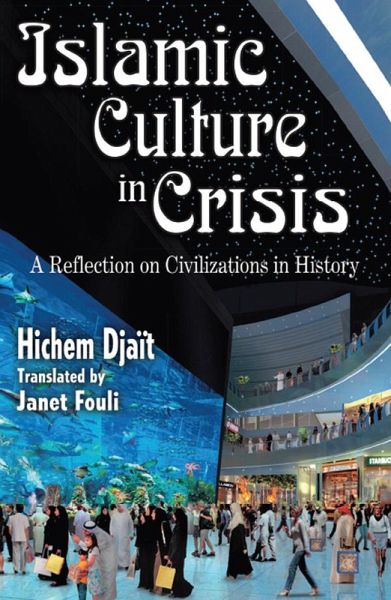
Islamic Culture in Crisis examines efforts by intellectuals and leaders in the Islamic world to adapt to what Hichem Djait calls the "incredible novelty of modernity" that has come to Europe during the past 150 years. The chapters in the work are grouped into three sections, and were written by the author over a twenty-year period. Djait describes the different meanings of modernity, the crisis of Islamic culture in its encounter with modernity, similarities and differences between Arabs and Muslims and other cultures, the politics of the Arabs, and the force of democracy in the Islamic world. In the sphere of politics, the Arabs have been excluded from history for a very long time. Instead, Turks, Mongols, Berbers, Persians, and Caucasians have led the destinies of the Islamic world, a domain that had become politically fragmented. But history has overlooked the concrete developments of that time, although they were full of consequences for the lives of the people. Paradoxically, what remains are the spiritual, trans-historic elements: religion, culture, and science. Contrasting the achievements of other civilizations, both past and present, Djait demonstrates eloquently that Arabs and Muslims will not be able to connect with the modern world unless they are able to be inspired by a supreme ambition to further the causes of high culture-in knowledge, science, art, literature, and other spheres.
Dieser Download kann aus rechtlichen Gründen nur mit Rechnungsadresse in A, B, BG, CY, CZ, D, DK, EW, E, FIN, F, GR, HR, H, IRL, I, LT, L, LR, M, NL, PL, P, R, S, SLO, SK ausgeliefert werden.