18,95 €
inkl. MwSt.
Sofort per Download lieferbar
9 °P sammeln

Andere Kunden interessierten sich auch für
") A History of the Islamic World, 600-1800 (eBook, ePUB)38,95 €
A History of the Islamic World, 600-1800 (eBook, ePUB)38,95 €") Islamic Arts and Crafts (eBook, ePUB)22,95 €
Islamic Arts and Crafts (eBook, ePUB)22,95 €") Reclaiming Islamic Tradition (eBook, ePUB)22,95 €
Reclaiming Islamic Tradition (eBook, ePUB)22,95 €") Rum Seljuq Architecture, 1170-1220 (eBook, ePUB)85,95 €
Rum Seljuq Architecture, 1170-1220 (eBook, ePUB)85,95 €") Muslim Cosmopolitanism (eBook, ePUB)22,95 €
Muslim Cosmopolitanism (eBook, ePUB)22,95 €") Late Ottoman Society (eBook, ePUB)54,95 €
Late Ottoman Society (eBook, ePUB)54,95 €") Islamic Law and Empire in Ottoman Cairo (eBook, PDF)0,00 €
Islamic Law and Empire in Ottoman Cairo (eBook, PDF)0,00 €






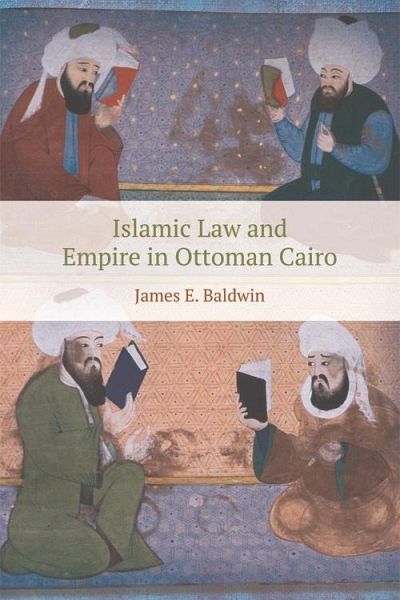
A study of Islamic law and political power in the Ottoman EmpireâEUR(TM)s richest provincial cityWhat did Islamic law mean in the early modern period, a world of great Muslim empires? Often portrayed as the quintessential juristsâEUR(TM) law, to a large extent it was developed by scholars outside the purview of the state. However, for the Sultans of the Ottoman Empire, justice was the ultimate duty of the monarch, and Islamic law was a tool of legitimation and governance. James E. Baldwin examines how the interplay of these two conceptions of Islamic law âEUR" religious scholarship and royal justice âEUR" undergirded legal practice in Cairo, the largest and richest city in the Ottoman provinces. Through detailed studies of the various formal and informal dispute resolution institutions and practices that formed the fabric of law in Ottoman Cairo, his book contributes to key questions concerning the relationship between the shariâEUR~a and political power, the plurality of Islamic legal practice, and the nature of centre-periphery relations in the Ottoman Empire.Key featuresOffers a new interpretation of the relationship between Islamic law and political power Presents law as the key nexus connecting Egypt with the imperial capital Istanbul during the period of Ottoman decentralization Studies judicial institutions such as the governorâEUR(TM)s Diwan and the imperial council that have received little attention in previous scholarship Integrates the study of legal records with an analysis of how legal practice was represented in contemporary chronicles Provides transcriptions and translations of a range of Ottoman legal documents
Dieser Download kann aus rechtlichen Gründen nur mit Rechnungsadresse in A, B, BG, CY, CZ, D, DK, EW, E, FIN, F, GR, HR, H, IRL, I, LT, L, LR, M, NL, PL, P, R, S, SLO, SK ausgeliefert werden.