22,95 €
22,95 €
inkl. MwSt.
Sofort per Download lieferbar

11 °P sammeln
22,95 €
Als Download kaufen
22,95 €
inkl. MwSt.
Sofort per Download lieferbar
11 °P sammeln
Jetzt verschenken
Alle Infos zum eBook verschenken
22,95 €
inkl. MwSt.
Sofort per Download lieferbar
Alle Infos zum eBook verschenken
11 °P sammeln

Andere Kunden interessierten sich auch für
") Architectures of Occupation in the Australian Short Story (eBook, ePUB)42,95 €
Architectures of Occupation in the Australian Short Story (eBook, ePUB)42,95 €") Thomas Keneally's Career and the Literary Machine (eBook, ePUB)29,95 €
Thomas Keneally's Career and the Literary Machine (eBook, ePUB)29,95 €") Patrick White Beyond the Grave (eBook, ePUB)23,95 €
Patrick White Beyond the Grave (eBook, ePUB)23,95 €") Australian Literature in the German Democratic Republic (eBook, ePUB)22,95 €
Australian Literature in the German Democratic Republic (eBook, ePUB)22,95 €") Post-Multicultural Writers as Neo-cosmopolitan Mediators (eBook, ePUB)22,95 €
Post-Multicultural Writers as Neo-cosmopolitan Mediators (eBook, ePUB)22,95 €") Australia as the Antipodal Utopia (eBook, ePUB)29,95 €
Australia as the Antipodal Utopia (eBook, ePUB)29,95 €") Locating Australian Literary Memory (eBook, ePUB)29,95 €
Locating Australian Literary Memory (eBook, ePUB)29,95 €

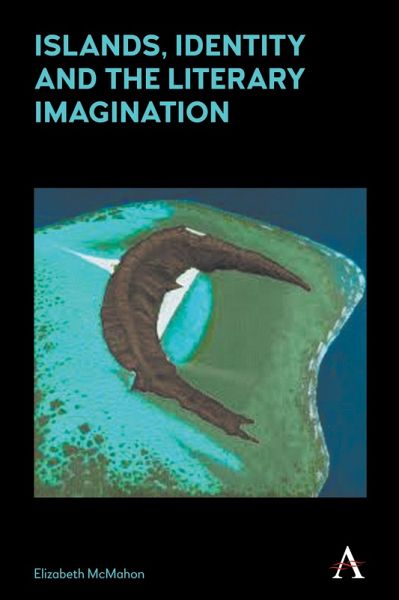
Australia is the planet's sole island continent. This book argues that the uniqueness of this geography has shaped Australian history and culture, including its literature. Further, it shows how the fluctuating definition of the island continent throws new light on the relationship between islands and continents in the mapping of modernity. The book links the historical and geographical conditions of islands with their potent role in the imaginaries of European colonisation. It prises apart the tangled web of geography, fantasy, desire and writing that has framed the Western understanding of islands, both their real and material conditions and their symbolic power, from antiquity into globalised modernity. The book also traces how this spatial imaginary has shaped the modern 'man' who is imagined as being the island's mirror. The inter-relationship of the island fantasy, colonial expansion, and the literary construction of place and history, created a new 'man': the dislocated and alienated subject of post-colonial modernity.
This book looks at the contradictory images of islands, from the allure of the desert island as a paradise where the world can be made anew to their roles as prisons, as these ideas are made concrete at moments of British colonialism. It also considers alternatives to viewing islands as objects of possession in the archipelagic visions of island theorists and writers.
It compares the European understandings of the first and last of the new worlds, the Caribbean archipelago and the Australian island continent, to calibrate the different ways these disparate geographies unifed and fractured the concept of the planetary globe. In particular it examines the role of the island in this process, specifically its capacity to figure a 'graspable globe' in the mind.
The book draws on the colonial archive and ranges across Australian literature from the first novel written and published in Australia (by a convict on the island of Tasmania) to both the ancient dreaming and the burgeoning literature of Aboriginal and Torres Strait Islanders in the twenty-first century. It discusses Australian literature in an international context, drawing on the long traditions of literary islands across a range of cultures. The book's approach is theoretical and engages with contemporary philosophy, which uses the island and the archipleago as a key metaphor. It is also historicist and includes considerable original historical research.
This book looks at the contradictory images of islands, from the allure of the desert island as a paradise where the world can be made anew to their roles as prisons, as these ideas are made concrete at moments of British colonialism. It also considers alternatives to viewing islands as objects of possession in the archipelagic visions of island theorists and writers.
It compares the European understandings of the first and last of the new worlds, the Caribbean archipelago and the Australian island continent, to calibrate the different ways these disparate geographies unifed and fractured the concept of the planetary globe. In particular it examines the role of the island in this process, specifically its capacity to figure a 'graspable globe' in the mind.
The book draws on the colonial archive and ranges across Australian literature from the first novel written and published in Australia (by a convict on the island of Tasmania) to both the ancient dreaming and the burgeoning literature of Aboriginal and Torres Strait Islanders in the twenty-first century. It discusses Australian literature in an international context, drawing on the long traditions of literary islands across a range of cultures. The book's approach is theoretical and engages with contemporary philosophy, which uses the island and the archipleago as a key metaphor. It is also historicist and includes considerable original historical research.
Dieser Download kann aus rechtlichen Gründen nur mit Rechnungsadresse in A, D ausgeliefert werden.