36,95 €
36,95 €
inkl. MwSt.
Sofort per Download lieferbar

18 °P sammeln
36,95 €
Als Download kaufen
36,95 €
inkl. MwSt.
Sofort per Download lieferbar
18 °P sammeln
Jetzt verschenken
Alle Infos zum eBook verschenken
36,95 €
inkl. MwSt.
Sofort per Download lieferbar
Alle Infos zum eBook verschenken
18 °P sammeln

Andere Kunden interessierten sich auch für
") Energiya-Buran (eBook, PDF)72,95 €
Energiya-Buran (eBook, PDF)72,95 €") Solar Sails (eBook, PDF)15,95 €
Solar Sails (eBook, PDF)15,95 €") Spaceplanes (eBook, PDF)26,95 €
Spaceplanes (eBook, PDF)26,95 €") Solar Sails (eBook, PDF)36,95 €
Solar Sails (eBook, PDF)36,95 €") Planetary Spacecraft Navigation (eBook, PDF)72,95 €
Planetary Spacecraft Navigation (eBook, PDF)72,95 €") Planetary Spacecraft Navigation (eBook, PDF)72,95 €
Planetary Spacecraft Navigation (eBook, PDF)72,95 €") Moon Bound (eBook, PDF)36,95 €
Moon Bound (eBook, PDF)36,95 €

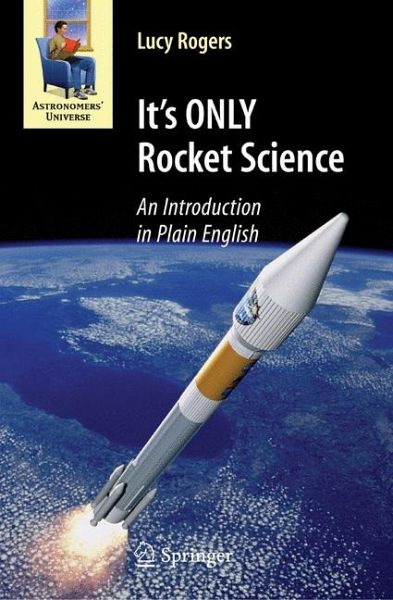
"Space tourism" is fast becoming a reality. Ordinary people around the world are starting to wonder if they could really go to space and what it would be like - among them, many amateur astronomers. Here, the author explains the basics of what is involved in getting into space, from building the rocket and choosing where to go, to planning the mission and getting home again. The beauty of this text, written by an engineer who is also an accomplished science writer, is that it covers the subject comprehensively, and yet is almost entirely descriptive and non-mathematical. It deals with all aspects of space flight, from how to leave the Earth (including the design of the rocket, mission planning, navigation and communication), to life in space and the effects of weightlessness. The book also includes sections describing how an amateur can track satellites and understand their orbital parameters, and on the future of space flight, touching on what is and what is not possible given the present and predicted propulsion technologies.
Dieser Download kann aus rechtlichen Gründen nur mit Rechnungsadresse in A, B, BG, CY, CZ, D, DK, EW, E, FIN, F, GR, HR, H, IRL, I, LT, L, LR, M, NL, PL, P, R, S, SLO, SK ausgeliefert werden.
From the reviews:
"This is a book I've really mixed feelings about - it does what it sets out to do very well. And it does what it says on the tin. It's a plain English introduction to rocket science. ... I would highly recommend it if you want to absorb all the basic facts about rocketry and space travel." (Brian Clegg, PopularScience, June, 2008)
"Lucy Rogers' book It's Only Rocket Science: An Introduction in Plain English tries to demystify what is a notoriously complicated subject. ... I have a feeling that students and young aerospace professionals will find this book useful. When they don't quite understand what their lecturers are trying to tell them, Rogers will be there to help them out." (Piers Bizony, BBC Sky at Night, September, 2008)
"The term 'rocket science' implies that one needs a very sophisticated level of technological and scientific knowledge to understand the principles of this field. However, Rogers (Isle of Wight, UK) attempts to explain these seemingly complex phenomena in relatively simple terms, i.e., without reference to mathematics. ... Rogers does a good job in explaining ... topics in accessible language. The chapters include line drawings and half-tone and color photographs; technical appendixes and a glossary augment the text. Summing Up: Recommended. General readers." (J. Z. Kiss, CHOICE, Vol. 46 (01), September, 2008)
"This is a book I've really mixed feelings about - it does what it sets out to do very well. And it does what it says on the tin. It's a plain English introduction to rocket science. ... I would highly recommend it if you want to absorb all the basic facts about rocketry and space travel." (Brian Clegg, PopularScience, June, 2008)
"Lucy Rogers' book It's Only Rocket Science: An Introduction in Plain English tries to demystify what is a notoriously complicated subject. ... I have a feeling that students and young aerospace professionals will find this book useful. When they don't quite understand what their lecturers are trying to tell them, Rogers will be there to help them out." (Piers Bizony, BBC Sky at Night, September, 2008)
"The term 'rocket science' implies that one needs a very sophisticated level of technological and scientific knowledge to understand the principles of this field. However, Rogers (Isle of Wight, UK) attempts to explain these seemingly complex phenomena in relatively simple terms, i.e., without reference to mathematics. ... Rogers does a good job in explaining ... topics in accessible language. The chapters include line drawings and half-tone and color photographs; technical appendixes and a glossary augment the text. Summing Up: Recommended. General readers." (J. Z. Kiss, CHOICE, Vol. 46 (01), September, 2008)