22,95 €
22,95 €
inkl. MwSt.
Sofort per Download lieferbar

11 °P sammeln
22,95 €
Als Download kaufen
22,95 €
inkl. MwSt.
Sofort per Download lieferbar
11 °P sammeln
Jetzt verschenken
Alle Infos zum eBook verschenken
22,95 €
inkl. MwSt.
Sofort per Download lieferbar
Alle Infos zum eBook verschenken
11 °P sammeln

Andere Kunden interessierten sich auch für
") The Road to Redemption (eBook, ePUB)22,95 €
The Road to Redemption (eBook, ePUB)22,95 €") The Invention of Party Politics (eBook, ePUB)22,95 €
The Invention of Party Politics (eBook, ePUB)22,95 €") Democracy in America (eBook, ePUB)4,99 €
Democracy in America (eBook, ePUB)4,99 €") Imagining the American Polity (eBook, ePUB)25,95 €
Imagining the American Polity (eBook, ePUB)25,95 €") The Permanent Under-Secretary for Foreign Affairs, 1854-1946 (eBook, ePUB)43,95 €
The Permanent Under-Secretary for Foreign Affairs, 1854-1946 (eBook, ePUB)43,95 €") To Lead the Free World (eBook, ePUB)22,95 €
To Lead the Free World (eBook, ePUB)22,95 €") American Lion (eBook, ePUB)8,95 €
American Lion (eBook, ePUB)8,95 €




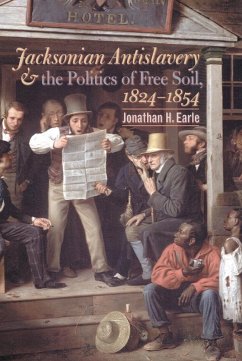
Taking our understanding of political antislavery into largely unexplored terrain, Jonathan H. Earle counters conventional wisdom and standard historical interpretations that view the ascendance of free-soil ideas within the antislavery movement as an explicit retreat from the goals of emancipation or even as an essentially proslavery ideology. These claims, he notes, fail to explain free soil’s real contributions to the antislavery cause: its incorporation of Jacksonian ideas about property and political equality and its transformation of a struggling crusade into a mass political movement. Democratic free soilers' views on race occupied a wide spectrum, but they were able to fashion new and vital arguments against slavery and its expansion based on the party’s long-standing commitment to egalitarianism and hostility to centralized power. Linking their antislavery stance to a land-reform agenda that pressed for free land for poor settlers in addition to land free of slavery, Free Soil Democrats forced major political realignments in New York, New Hampshire, Massachusetts, and Ohio. Democratic politicians such as David Wilmot, Marcus Morton, John Parker Hale, and even former president Martin Van Buren were transformed into antislavery leaders. As Earle shows, these political changes at the local, state, and national levels greatly intensified the looming sectional crisis and paved the way for the Civil War.
Dieser Download kann aus rechtlichen Gründen nur mit Rechnungsadresse in A, D ausgeliefert werden.