49,95 €
inkl. MwSt.
Sofort per Download lieferbar
25 °P sammeln

Andere Kunden interessierten sich auch für
") Journalists, Sources, and Credibility (eBook, PDF)41,95 €
Journalists, Sources, and Credibility (eBook, PDF)41,95 €") International News in the Digital Age (eBook, PDF)48,95 €
International News in the Digital Age (eBook, PDF)48,95 €") Race and News (eBook, PDF)52,95 €
Race and News (eBook, PDF)52,95 €") Economic News (eBook, PDF)41,95 €
Economic News (eBook, PDF)41,95 €") Living Media Ethics (eBook, PDF)73,95 €
Living Media Ethics (eBook, PDF)73,95 €") Global Journalism Collaborations (eBook, PDF)24,95 €
Global Journalism Collaborations (eBook, PDF)24,95 €") How Media Inform Democracy (eBook, PDF)48,95 €
How Media Inform Democracy (eBook, PDF)48,95 €

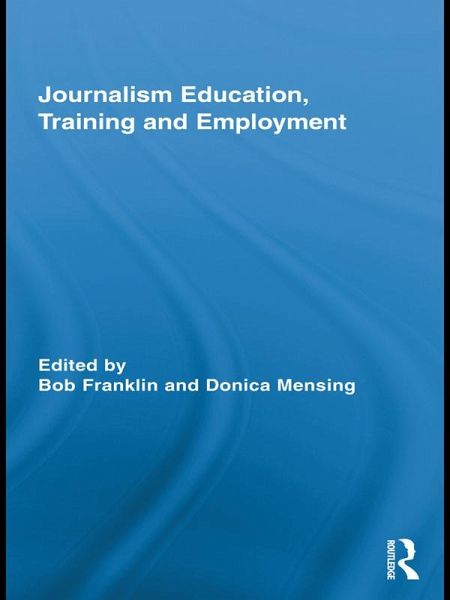
During this period of rapid and significant change in journalistic practices, journalism educators are re-examining their own profession and contributing to the invention of new models and practices. This edited volume of studies by respected international scholars describes the diverse issues journalism educators are grappling with and the changes they are making in purpose and practice. The book is organized into three sections -- education, training and employment - that explore common themes:
An introductory essay and section summaries provide context for the thirteen chapters that constitute the collection. The section on journalism education explores fundamental ways educators are seeking to make their institutions and practices stronger and more responsive. The section on training includes case studies of journalism training programs in sub-Saharan Africa, Turkey, Sweden and the U.S. The final section examines the job prospects and employment market for journalism students with data from the U.S., U.K, Australia, and Sweden.
The scope of issues considered in the book makes it a valuable resource for journalism scholars from around the world, as well as doctoral students, journalism and communication administrators in universities, organizations that fund journalism training programs, and practitioners interested in understanding employment and education trends.
- How the assumptions embedded in journalism education are being examined and revised in the light of transformative changes in communication;
- How the definitions of journalism and journalists are broadening in scope and what this means for educators;
- How newsrooms and training programs around the world are being re-examined and made more effective.
An introductory essay and section summaries provide context for the thirteen chapters that constitute the collection. The section on journalism education explores fundamental ways educators are seeking to make their institutions and practices stronger and more responsive. The section on training includes case studies of journalism training programs in sub-Saharan Africa, Turkey, Sweden and the U.S. The final section examines the job prospects and employment market for journalism students with data from the U.S., U.K, Australia, and Sweden.
The scope of issues considered in the book makes it a valuable resource for journalism scholars from around the world, as well as doctoral students, journalism and communication administrators in universities, organizations that fund journalism training programs, and practitioners interested in understanding employment and education trends.
Dieser Download kann aus rechtlichen Gründen nur mit Rechnungsadresse in A, B, BG, CY, CZ, D, DK, EW, E, FIN, F, GR, HR, H, IRL, I, LT, L, LR, M, NL, PL, P, R, S, SLO, SK ausgeliefert werden.