103,95 €
inkl. MwSt.
Sofort per Download lieferbar
52 °P sammeln

Andere Kunden interessierten sich auch für
") Agora Bone Well (eBook, PDF)51,95 €
Agora Bone Well (eBook, PDF)51,95 €") Landscape Archaeology and the Medieval Countryside (eBook, PDF)103,95 €
Landscape Archaeology and the Medieval Countryside (eBook, PDF)103,95 €") A History of Medieval Europe (eBook, PDF)60,95 €
A History of Medieval Europe (eBook, PDF)60,95 €") Target Corinth Canal (eBook, PDF)16,95 €
Target Corinth Canal (eBook, PDF)16,95 €") Mycenaean Settlement on Tsoungiza Hill (eBook, PDF)103,95 €
Mycenaean Settlement on Tsoungiza Hill (eBook, PDF)103,95 €") East of the Theater (eBook, PDF)111,95 €
East of the Theater (eBook, PDF)111,95 €") Der Handel mit korinthischer Keramik vom 8.-6. Jh. v. Chr. (eBook, PDF)18,99 €
Der Handel mit korinthischer Keramik vom 8.-6. Jh. v. Chr. (eBook, PDF)18,99 €





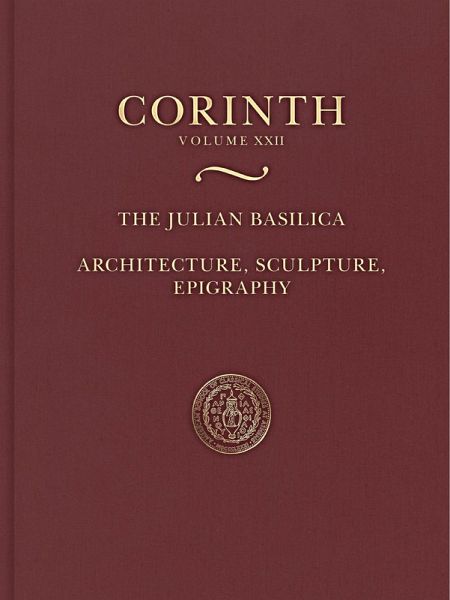
Early-20th-century explorations of the Roman Forum at Ancient Corinth revealed a massive early imperial building now known as the Julian Basilica. The structure stood on a podium over four meters high, and it dominated the east end of the forum in size, aspect, and function until its destruction in the 4th century A.D. Within it was one of the largest known shrines to the imperial cult and the likely site of the imperial court of law for the Roman province of Achaia. The basilica housed 11 or more large-scale statues most likely to members of the Julio-Claudian family (including Augustus, Augustus''s heirs Gaius and Lucius, and arguably Divus Iulius, Germanicus, Nero Caesar, and Claudius), as well as an altar to Divus Augustus and dedications to the genius Augusti, the gens Augusta, and other family members. This richly illustrated volume provides a contextual study of this important building, the remains of which were first published by Saul Weinberg in 1960 (Corinth I.5). Scotton treats the architectural remains, Vanderpool the sculptural remains, and Roncaglia the epigraphical material, each providing extensive catalogues with new photos, in addition to color reconstructions of the basilica and its grand interior.
Dieser Download kann aus rechtlichen Gründen nur mit Rechnungsadresse in A, B, BG, CY, CZ, D, DK, EW, E, FIN, F, GR, HR, H, IRL, I, LT, L, LR, M, NL, PL, P, R, S, SLO, SK ausgeliefert werden.