6,99 €
6,99 €
inkl. MwSt.
Sofort per Download lieferbar

0 °P sammeln
6,99 €
Als Download kaufen
6,99 €
inkl. MwSt.
Sofort per Download lieferbar
0 °P sammeln
Jetzt verschenken
Alle Infos zum eBook verschenken
6,99 €
inkl. MwSt.
Sofort per Download lieferbar
Alle Infos zum eBook verschenken
0 °P sammeln

Andere Kunden interessierten sich auch für
") Celestina (eBook, ePUB)6,99 €
Celestina (eBook, ePUB)6,99 €") Ivanov (eBook, ePUB)6,49 €
Ivanov (eBook, ePUB)6,49 €") Faust: Parts I & II (eBook, ePUB)22,49 €
Faust: Parts I & II (eBook, ePUB)22,49 €") Three Sisters (eBook, ePUB)15,49 €
Three Sisters (eBook, ePUB)15,49 €") Faust Parts 1 & 2 (eBook, ePUB)8,49 €
Faust Parts 1 & 2 (eBook, ePUB)8,49 €") Six Characters in Search of an Author (eBook, ePUB)6,99 €
Six Characters in Search of an Author (eBook, ePUB)6,99 €") The Wild Duck (eBook, ePUB)5,49 €
The Wild Duck (eBook, ePUB)5,49 €

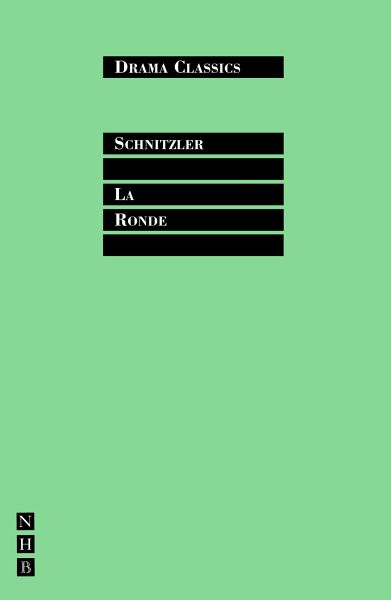
Drama Classics: The World's Great Plays at a Great Little Price Arthur Schnitzler's famous 'daisy-chain' play of sexual coupling, set in Vienna in the 1890s. La Ronde is a play of ten scenes, each depicting a couple in a sexual liaison. There are ten characters altogether, each appearing in two adjacent scenes, forming an endless chain of sexual links across all the layers of Viennese society. This edition, in the Nick Hern Books Drama Classics series, features a translation by Stephen Unwin and Peter Zombory-Moldovan.
Dieser Download kann aus rechtlichen Gründen nur mit Rechnungsadresse in A, B, BG, CY, CZ, D, DK, EW, E, FIN, F, GR, H, IRL, I, LT, L, LR, M, NL, PL, P, R, S, SLO, SK ausgeliefert werden.