Sie sind bereits eingeloggt. Klicken Sie auf 2. tolino select Abo, um fortzufahren.
Bitte loggen Sie sich zunächst in Ihr Kundenkonto ein oder registrieren Sie sich bei bücher.de, um das eBook-Abo tolino select nutzen zu können.
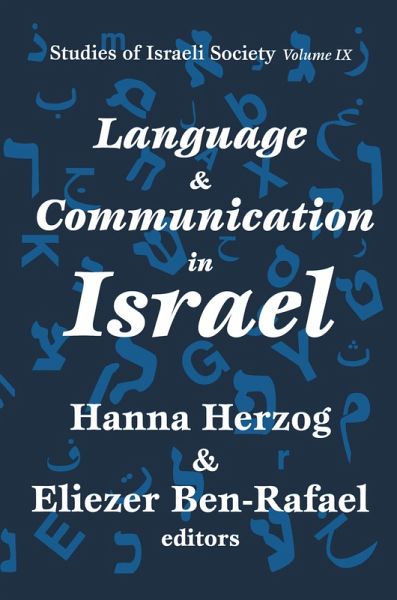
This volume presents a broad range of the various approaches and questions that preoccupy Israel's sociologists of language and communication. It covers the relation of language and communication to daily life, to social and cultural pluralism, and to politics and elections.
This volume presents a broad range of the various approaches and questions that preoccupy Israel's sociologists of language and communication. It covers the relation of language and communication to daily life, to social and cultural pluralism, and to politics and elections.
Dieser Download kann aus rechtlichen Gründen nur mit Rechnungsadresse in A, B, BG, CY, CZ, D, DK, EW, E, FIN, F, GR, HR, H, IRL, I, LT, L, LR, M, NL, PL, P, R, S, SLO, SK ausgeliefert werden.
Die Herstellerinformationen sind derzeit nicht verfügbar.
Autorenporträt
Hanna Herzog
Inhaltsangabe
1: Introduction 1: The Study of Language and Communication in Israeli Social Sciences 2: Language and Communication in Daily Life 2: Lefargen: A Study in Israeli Semantics of Social Relations 3: That's How We Were: Individual, Group, and Collective in the Tel Aviv of "Late Summer Blues" 4: "You Gotta Know How to Tell a Story": Telling Tales, and Tellers in American and Israeli Narrative Events at Dinner 5: In-Group Humor of Immigrants from the Former Soviet Union to Israel 6: A Symbolic Interactionist User's Guide to the Answering Machine: 22 Reflections on Vocal Encounters in an Emerging Social World 3: Language in a Pluralistic Society 7: A Sociological Paradigm of Bilingualism: English, French, Yiddish, and Arabic in Israel 1 8: Attitudes toward Foreign Words in Contemporary Hebrew 9: Bilingualism in a Moroccan Settlement in the South of Israel 1 10: "Secularism Is the Root of All Evil": The Haredi Response to Crime and Delinquency 11: The Construction of Identity in a Divided Palestinian Village: Sociolinguistic Evidence 12: Jews and Arabs in Israel: The Cultural Convergence of Divergent Identities 4: Electronic Media and Social Diversity 13: Twenty Years of Television in Israel: Are There Long-Run Effects on Values and Cultural Practices? 14: Video Watching and Its Societal Functions for Small-Town Adolescents in Israel 15: VCR Narrowcasting in the Kibbutz * 5: In Times of Elections 16: Voters as Consumers: Audience Perspectives on the Election Broadcasts 17: Was It on the Agenda? The Hidden Agenda of the 1988 Campaign 18: The Silenced Majority: Women in Israel's 1988 Television Election Campaign 6: In the Shadow of the Israeli-Arab Conflict 19: Decoding Television News: The Political Discourse of Israeli Hawks and Doves 20: The Intifada as a Meta-Televisual Dialogue 21: One of the Bloodiest Days: A Comparative Analysis of Open and Closed Television News 22: Terrorism as Theater: Mass Media and Redefinition of Image 7: Society, State, and Mass Media 23: Protest, Television, Newspapers, and the Public: Who Influences Whom? 24: Inherent Contradictions of Democracy: Illustrations from National Broadcasting Corporations 25: The In/Outsiders-Political Control on Media in Israel: A Theoretical Framework 26: Speech Presentation in the Israeli News: Ideological Constraints and Rhetorical Strategies 1 27: The Rabin Myth and the Press: Reconstruction of the Israeli Collective Identity 8: Thinking about the Future 28: Greetings from a Viewer from Afar: The Objectives of Israel's Sociology of Language 29: An Agenda for the Sociology of Communication in Israel
1: Introduction 1: The Study of Language and Communication in Israeli Social Sciences 2: Language and Communication in Daily Life 2: Lefargen: A Study in Israeli Semantics of Social Relations 3: That's How We Were: Individual, Group, and Collective in the Tel Aviv of "Late Summer Blues" 4: "You Gotta Know How to Tell a Story": Telling Tales, and Tellers in American and Israeli Narrative Events at Dinner 5: In-Group Humor of Immigrants from the Former Soviet Union to Israel 6: A Symbolic Interactionist User's Guide to the Answering Machine: 22 Reflections on Vocal Encounters in an Emerging Social World 3: Language in a Pluralistic Society 7: A Sociological Paradigm of Bilingualism: English, French, Yiddish, and Arabic in Israel 1 8: Attitudes toward Foreign Words in Contemporary Hebrew 9: Bilingualism in a Moroccan Settlement in the South of Israel 1 10: "Secularism Is the Root of All Evil": The Haredi Response to Crime and Delinquency 11: The Construction of Identity in a Divided Palestinian Village: Sociolinguistic Evidence 12: Jews and Arabs in Israel: The Cultural Convergence of Divergent Identities 4: Electronic Media and Social Diversity 13: Twenty Years of Television in Israel: Are There Long-Run Effects on Values and Cultural Practices? 14: Video Watching and Its Societal Functions for Small-Town Adolescents in Israel 15: VCR Narrowcasting in the Kibbutz * 5: In Times of Elections 16: Voters as Consumers: Audience Perspectives on the Election Broadcasts 17: Was It on the Agenda? The Hidden Agenda of the 1988 Campaign 18: The Silenced Majority: Women in Israel's 1988 Television Election Campaign 6: In the Shadow of the Israeli-Arab Conflict 19: Decoding Television News: The Political Discourse of Israeli Hawks and Doves 20: The Intifada as a Meta-Televisual Dialogue 21: One of the Bloodiest Days: A Comparative Analysis of Open and Closed Television News 22: Terrorism as Theater: Mass Media and Redefinition of Image 7: Society, State, and Mass Media 23: Protest, Television, Newspapers, and the Public: Who Influences Whom? 24: Inherent Contradictions of Democracy: Illustrations from National Broadcasting Corporations 25: The In/Outsiders-Political Control on Media in Israel: A Theoretical Framework 26: Speech Presentation in the Israeli News: Ideological Constraints and Rhetorical Strategies 1 27: The Rabin Myth and the Press: Reconstruction of the Israeli Collective Identity 8: Thinking about the Future 28: Greetings from a Viewer from Afar: The Objectives of Israel's Sociology of Language 29: An Agenda for the Sociology of Communication in Israel
Es gelten unsere Allgemeinen Geschäftsbedingungen: www.buecher.de/agb
Impressum
www.buecher.de ist ein Internetauftritt der buecher.de internetstores GmbH
Geschäftsführung: Monica Sawhney | Roland Kölbl | Günter Hilger
Sitz der Gesellschaft: Batheyer Straße 115 - 117, 58099 Hagen
Postanschrift: Bürgermeister-Wegele-Str. 12, 86167 Augsburg
Amtsgericht Hagen HRB 13257
Steuernummer: 321/5800/1497
USt-IdNr: DE450055826