41,95 €
inkl. MwSt.
Sofort per Download lieferbar
21 °P sammeln

Andere Kunden interessierten sich auch für
") Language, Gender and Feminism (eBook, ePUB)39,95 €
Language, Gender and Feminism (eBook, ePUB)39,95 €") The Routledge Handbook of Language, Gender, and Sexuality (eBook, PDF)47,95 €
The Routledge Handbook of Language, Gender, and Sexuality (eBook, PDF)47,95 €") Globalisation, Geopolitics, and Gender in Professional Communication (eBook, PDF)0,00 €
Globalisation, Geopolitics, and Gender in Professional Communication (eBook, PDF)0,00 €") The Routledge Handbook of Linguistic Ethnography (eBook, PDF)44,95 €
The Routledge Handbook of Linguistic Ethnography (eBook, PDF)44,95 €") Language, Gender, and Sexuality (eBook, PDF)27,95 €
Language, Gender, and Sexuality (eBook, PDF)27,95 €") The Routledge Handbook of Language and Superdiversity (eBook, PDF)49,95 €
The Routledge Handbook of Language and Superdiversity (eBook, PDF)49,95 €") Discourse and Digital Practices (eBook, PDF)0,00 €
Discourse and Digital Practices (eBook, PDF)0,00 €

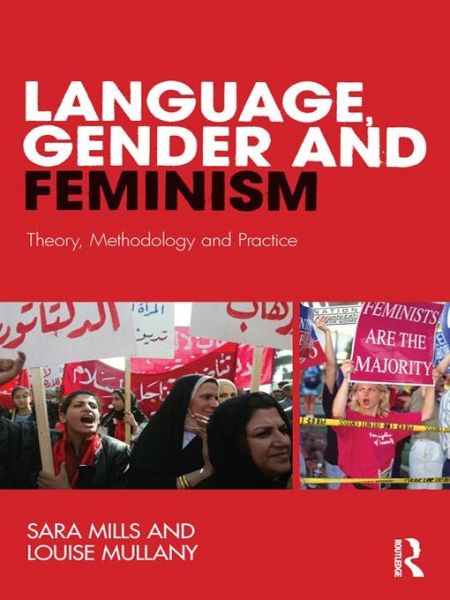
Language, Gender and Feminism presents students and researchers with key contemporary theoretical perspectives, methodologies and analytical frameworks in the field of feminist linguistic analysis.
Mills and Mullany cover a wide range of contemporary feminist theories and emphasise the importance of an interdisciplinary approach. Topics covered include: power, language and sexuality, sexism and an exploration of the difference between second and third wave feminist analysis.
Each chapter presents examples from research conducted in different cultural and linguistic contexts which allows students to observe practical applications of all current theories and approaches. Throughout oral and written language data, from a wealth of different contexts, settings and sources, is thoroughly analysed. The book concludes with a discussion of how the field could advance and a overview of the various research methods, pertinent for future work in language and gender study.
Language, Gender and Feminism is an invaluable text for students new to the discipline of Language and Gender studies within English Language, Linguistics, Communication Studies and Women's Studies, as well as being an up-to-date resource for more established researchers and scholars.
Mills and Mullany cover a wide range of contemporary feminist theories and emphasise the importance of an interdisciplinary approach. Topics covered include: power, language and sexuality, sexism and an exploration of the difference between second and third wave feminist analysis.
Each chapter presents examples from research conducted in different cultural and linguistic contexts which allows students to observe practical applications of all current theories and approaches. Throughout oral and written language data, from a wealth of different contexts, settings and sources, is thoroughly analysed. The book concludes with a discussion of how the field could advance and a overview of the various research methods, pertinent for future work in language and gender study.
Language, Gender and Feminism is an invaluable text for students new to the discipline of Language and Gender studies within English Language, Linguistics, Communication Studies and Women's Studies, as well as being an up-to-date resource for more established researchers and scholars.
Dieser Download kann aus rechtlichen Gründen nur mit Rechnungsadresse in A, B, BG, CY, CZ, D, DK, EW, E, FIN, F, GR, HR, H, IRL, I, LT, L, LR, M, NL, PL, P, R, S, SLO, SK ausgeliefert werden.
'Finally, a book that puts the "F" word (feminism, that is) back into Gender and Language. Mills and Mullany offer us a fresh perspective on a field that started out in second wave feminism and that has by and large abandoned the notion of feminism and how it fits into women's ways with words. The volume takes us through the various epistemological, theoretical, and methodological issues that need to be re-examined against a backdrop of feminist theory within in this very dynamic arena of scholarship. A must read for scholars and students working in the intersection of linguistics, anthropology, sociology, psychology, communication studies, Women's Studies, and gender.'
Diana Boxer, University of Florida, USA
'An important and timely book, Language, Gender and Feminism emphasizes feminism, as a political ideology and practice, at the heart of gender and language research. Mills and Mullany persuasively argue for the continued relevance of feminism in contemporary societies, and the need for gender and language scholars to be theoretically and methodologically informed in order to navigate the complexities in current discursive constructions of gender, sexuality and power, and to produce nuanced and self-reflexive analyses. A must-read for feminist gender and language scholars!'
Michelle Lazar, National University of Singapore, Singapore
'An excellent book at just the right time! The authors remind us of the feminist roots of language and gender studies and argue for the importance of investigating the role that language plays in creating and sustaining unequal gender relations. This book should be on every linguist's bookshelf.'
Jennifer Coates, Emeritus Professor, Roehampton University, UK
'Gender and language research has needed this book for some time. It restates the political purpose of feminist linguistic studies and offers readers a thoughtful and clear account of complex theoretical and methodological issues as they relate to current developments in the field.'
Sylvia Shaw, Middlesex University, UK
Diana Boxer, University of Florida, USA
'An important and timely book, Language, Gender and Feminism emphasizes feminism, as a political ideology and practice, at the heart of gender and language research. Mills and Mullany persuasively argue for the continued relevance of feminism in contemporary societies, and the need for gender and language scholars to be theoretically and methodologically informed in order to navigate the complexities in current discursive constructions of gender, sexuality and power, and to produce nuanced and self-reflexive analyses. A must-read for feminist gender and language scholars!'
Michelle Lazar, National University of Singapore, Singapore
'An excellent book at just the right time! The authors remind us of the feminist roots of language and gender studies and argue for the importance of investigating the role that language plays in creating and sustaining unequal gender relations. This book should be on every linguist's bookshelf.'
Jennifer Coates, Emeritus Professor, Roehampton University, UK
'Gender and language research has needed this book for some time. It restates the political purpose of feminist linguistic studies and offers readers a thoughtful and clear account of complex theoretical and methodological issues as they relate to current developments in the field.'
Sylvia Shaw, Middlesex University, UK