21,95 €
21,95 €
inkl. MwSt.
Sofort per Download lieferbar

11 °P sammeln
21,95 €
Als Download kaufen
21,95 €
inkl. MwSt.
Sofort per Download lieferbar
11 °P sammeln
Jetzt verschenken
Alle Infos zum eBook verschenken
21,95 €
inkl. MwSt.
Sofort per Download lieferbar
Alle Infos zum eBook verschenken
11 °P sammeln

Andere Kunden interessierten sich auch für
") Boyhood (eBook, ePUB)21,95 €
Boyhood (eBook, ePUB)21,95 €") Rock around the Clock (eBook, ePUB)19,95 €
Rock around the Clock (eBook, ePUB)19,95 €") Flee (eBook, ePUB)21,95 €
Flee (eBook, ePUB)21,95 €") American Graffiti (eBook, ePUB)18,95 €
American Graffiti (eBook, ePUB)18,95 €") LO: TECH: POP: CULT (eBook, ePUB)45,95 €
LO: TECH: POP: CULT (eBook, ePUB)45,95 €") Film Genre (eBook, ePUB)19,95 €
Film Genre (eBook, ePUB)19,95 €") Clueless (eBook, ePUB)21,95 €
Clueless (eBook, ePUB)21,95 €

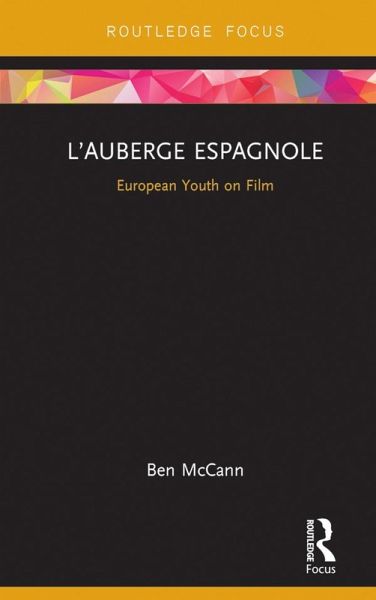
Part romantic comedy, part sitcom, part social drama, L'Auberge espagnole (The Spanish Apartment) recounts a familiar 'youth' ritual - the move from university to 'the real world', the often complicated personal, romantic and cultural encounters that ensue, and the moral uncertainties that characterize that key biological and physiological developmental stage between adolescence and adulthood. French director Cédric Klapisch showcases the extraordinary colour and beauty of Barcelona's architecture, and places his hero Xavier at the heart of this smartly written film, which makes a series of wry observations on educational exchange programmes, multi-culturalism, and the direction European youth might take in the twenty-first century.
This book addresses the topic of Europe's youth generation, paying particular attention to the ways in which the film depicts the transition from adolescence to adulthood as allegory for the experiences of European society as it moves through periods of readjustment towards uncertain futures. It also looks into the ecosystem of contemporary French cinema, the Erasmus programme and its influence on youth experience, and identity politics in relation to 'nationhood' and 'European-ness'. The book also examines the two sequels to the film - Russian Dolls (2005) and Chinese Puzzle (2013) - and how the complications faced by the main characters across the trilogy suggest that the move to adulthood is a never-ending process of growing up and reaching a level of self-actualization.
This book addresses the topic of Europe's youth generation, paying particular attention to the ways in which the film depicts the transition from adolescence to adulthood as allegory for the experiences of European society as it moves through periods of readjustment towards uncertain futures. It also looks into the ecosystem of contemporary French cinema, the Erasmus programme and its influence on youth experience, and identity politics in relation to 'nationhood' and 'European-ness'. The book also examines the two sequels to the film - Russian Dolls (2005) and Chinese Puzzle (2013) - and how the complications faced by the main characters across the trilogy suggest that the move to adulthood is a never-ending process of growing up and reaching a level of self-actualization.
Dieser Download kann aus rechtlichen Gründen nur mit Rechnungsadresse in A, B, BG, CY, CZ, D, DK, EW, E, FIN, F, GR, HR, H, IRL, I, LT, L, LR, M, NL, PL, P, R, S, SLO, SK ausgeliefert werden.