14,95 €
14,95 €
inkl. MwSt.
Sofort per Download lieferbar

7 °P sammeln
14,95 €
Als Download kaufen
14,95 €
inkl. MwSt.
Sofort per Download lieferbar
7 °P sammeln
Jetzt verschenken
Alle Infos zum eBook verschenken
14,95 €
inkl. MwSt.
Sofort per Download lieferbar
Alle Infos zum eBook verschenken
7 °P sammeln

Andere Kunden interessierten sich auch für
") Conversations with Michael Eigen (eBook, ePUB)34,95 €
Conversations with Michael Eigen (eBook, ePUB)34,95 €") Psychoanalytic Conversations (eBook, ePUB)60,95 €
Psychoanalytic Conversations (eBook, ePUB)60,95 €") Hidden Conversations (eBook, ePUB)41,95 €
Hidden Conversations (eBook, ePUB)41,95 €") Conversations at the Frontier of Dreaming (eBook, ePUB)37,95 €
Conversations at the Frontier of Dreaming (eBook, ePUB)37,95 €") REAL Conversations (eBook, ePUB)7,99 €
REAL Conversations (eBook, ePUB)7,99 €") Therapeutic Conversations with Adolescents (eBook, ePUB)28,95 €
Therapeutic Conversations with Adolescents (eBook, ePUB)28,95 €") Practical Counselling and Helping (eBook, ePUB)34,95 €
Practical Counselling and Helping (eBook, ePUB)34,95 €




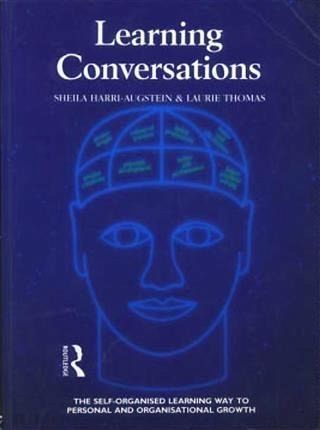
The book examines personal learning myths which imprison learners, and shows how given support such myths can be overcome as they gain awareness and become engaged in developing their learning competence. The learner is encouraged to model their learning process and to act as their own scientist creating their own learning experiments and evaluating their progress by primarily generating their own feedback. The formulation of a clear purpose, strategy and tactics is crucial. As learning proceeds these are reviewed, refined and revised as an iterative process and only when the learning outcome meets the criteria arising out of this process is self organised-learning achieved. They learn to engage in Learning Conversations with themselves and others expanding their horizons of learning. The method the Learning Conversation is fully described and a Taxonomy of Conversational, Experiential and Behavioural Tools is introduced which augment its power. With practice the Learning Conversation, with its emphasis on process rather than product, becomes internalised as part oflearners' natural language for negotiating change in their capacity to learn. Rather than embarking on Course after Course they continue to learn from experience, on-the-job and in life. The Learning Conversation has no end and they continue to progress their skills, competence and creativity. The book introduces the Learning Coach, and the Learning Manager as new functions and shows how teachers, tutors, and therapists can reformulate their roles to encourage and support the self-organising process. Procedures such as; Personal Learning Contracts, Personal Learning Biographies, SOL Spreadsheets and Multi-dimensional Conversational Evaluations collect evidences of learning that can be reflected on and reviewed for learning effectiveness. These become the tools of the Learning Coach and their client learners as they engage in Learning Conversations. Gradually, learners are empowered to act independently exploring all possible resources for their learning in education, work and life. A SOL System for installing Learning Conversations within a whole department or organisation is also outlined, which requires the support of the Learning Manager. Examples indicate how this can be introduced in educational and commercial establishments. Individuals, teams and whole organisations become self-organised learning entities capable of taking on responsibility for their own learning. Evidences for the effectiveness ofthis radical approach includes; 'reading to learn', 'understanding command words in mathematics ', 'student learning of intellectually complex matter', 'officers learning complex sonar and air intercept control skills in the Ministry of Defence', 'managers supporting quality of service, cost-effectiveness and improved delivery of mail in the Parcel Force and the Royal Mail,' 'company executives improving their performance', 'marketing and production teams working together', and many more examples. The final chapter explores the possible futures for Self-Organised-Learning in our society. What might a Self-Organised Society achieve? Psychologists are best seen as tool-makers for SOL, teachers as Learning Coaches, and providers of an SOL System for groups and organisations as Learning Managers. SOL conveys a vision that we can all bootstrap ourselves securely and compassionately to an emergent future and how SOL and its Advanced Learning Technology (ALT) can be made available globally. Local SOL HUBS can be digitally managed by a SOL central HUB. SOL virtual friends create learning communities across nations to negotiate deep change in society. This will be the ultimate educational evolution or revolution and this book points to one way that this can be achieved.
Dieser Download kann aus rechtlichen Gründen nur mit Rechnungsadresse in A, B, BG, CY, CZ, D, DK, EW, E, FIN, F, GR, HR, H, IRL, I, LT, L, LR, M, NL, PL, P, R, S, SLO, SK ausgeliefert werden.