39,95 €
39,95 €
inkl. MwSt.
Sofort per Download lieferbar

20 °P sammeln
39,95 €
Als Download kaufen
39,95 €
inkl. MwSt.
Sofort per Download lieferbar
20 °P sammeln
Jetzt verschenken
Alle Infos zum eBook verschenken
39,95 €
inkl. MwSt.
Sofort per Download lieferbar
Alle Infos zum eBook verschenken
20 °P sammeln

Andere Kunden interessierten sich auch für
") Learning from Picturebooks (eBook, ePUB)43,95 €
Learning from Picturebooks (eBook, ePUB)43,95 €") Learning to be a Person in Society (eBook, ePUB)46,95 €
Learning to be a Person in Society (eBook, ePUB)46,95 €") The Science of Expertise (eBook, ePUB)52,95 €
The Science of Expertise (eBook, ePUB)52,95 €") Developmental Psychology and Young Children's Religious Education (eBook, ePUB)37,95 €
Developmental Psychology and Young Children's Religious Education (eBook, ePUB)37,95 €") Learning and Behavior (eBook, ePUB)196,95 €
Learning and Behavior (eBook, ePUB)196,95 €") An Introduction to Theories of Learning (eBook, ePUB)72,95 €
An Introduction to Theories of Learning (eBook, ePUB)72,95 €") Growing Minds (eBook, ePUB)37,95 €
Growing Minds (eBook, ePUB)37,95 €



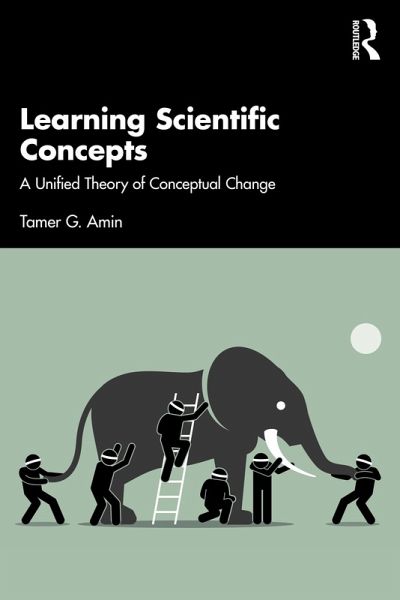
Understanding important scientific concepts like matter, energy, force, and species is central to scientific literacy. But how do we learn scientific concepts? This book explains what research across distinct theoretical perspectives has taught us and then cuts through the diversity to offer a novel integrated account and a unified theory of conceptual change.
Theoretical perspectives from science education, cognitive science, developmental psychology, the learning sciences, and the history and philosophy of science are often seen as competing alternatives and practical pedagogical recommendations diverge, sometimes even contradicting one another. Learning Scientific Concepts responds by explaining and evaluating prominent theoretical perspectives: the nature of concepts and conceptual development, in general, as understood in cognitive and developmental psychology; and theory change, knowledge-in-pieces, and situated/embodied/distributed perspectives on science concept learning, in particular. It then integrates these perspectives and proposes the Unified Theory of Conceptual Change (UTCC), building on Susan Carey's foundational account of concepts and conceptual development in developmental psychology and Edwin Hutchins' multilevel approach to analyzing cognitive systems in cognitive anthropology. The UTCC outlines a comprehensive modeling toolkit for making sense of how we learn scientific concepts at different levels of analysis.
This book serves as a comprehensive guide for researchers, advanced students, and practitioners to the most important research on learning scientific concepts. In proposing a novel theoretical synthesis, it also suggests a way forward for researchers and offers practitioners a coherent and comprehensive story of what kind of instruction and curricular design is effective and why.
Theoretical perspectives from science education, cognitive science, developmental psychology, the learning sciences, and the history and philosophy of science are often seen as competing alternatives and practical pedagogical recommendations diverge, sometimes even contradicting one another. Learning Scientific Concepts responds by explaining and evaluating prominent theoretical perspectives: the nature of concepts and conceptual development, in general, as understood in cognitive and developmental psychology; and theory change, knowledge-in-pieces, and situated/embodied/distributed perspectives on science concept learning, in particular. It then integrates these perspectives and proposes the Unified Theory of Conceptual Change (UTCC), building on Susan Carey's foundational account of concepts and conceptual development in developmental psychology and Edwin Hutchins' multilevel approach to analyzing cognitive systems in cognitive anthropology. The UTCC outlines a comprehensive modeling toolkit for making sense of how we learn scientific concepts at different levels of analysis.
This book serves as a comprehensive guide for researchers, advanced students, and practitioners to the most important research on learning scientific concepts. In proposing a novel theoretical synthesis, it also suggests a way forward for researchers and offers practitioners a coherent and comprehensive story of what kind of instruction and curricular design is effective and why.
Dieser Download kann aus rechtlichen Gründen nur mit Rechnungsadresse in A, B, BG, CY, CZ, D, DK, EW, E, FIN, F, GR, HR, H, IRL, I, LT, L, LR, M, NL, PL, P, R, S, SLO, SK ausgeliefert werden.