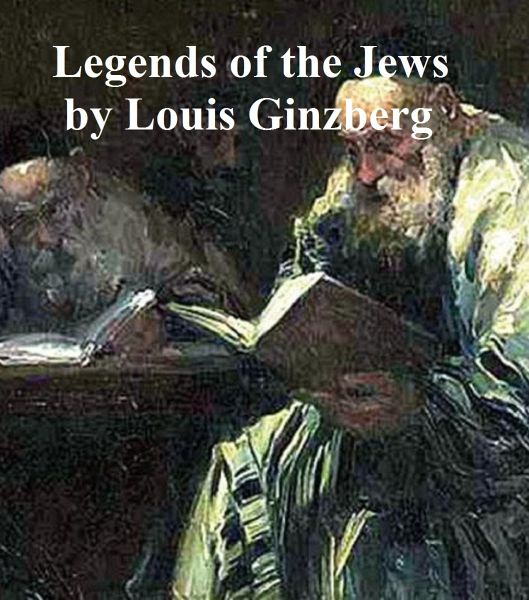
0,91 €
0,91 €
inkl. MwSt.
Sofort per Download lieferbar

0 °P sammeln
0,91 €
Als Download kaufen
0,91 €
inkl. MwSt.
Sofort per Download lieferbar
0 °P sammeln
Jetzt verschenken
Alle Infos zum eBook verschenken
0,91 €
inkl. MwSt.
Sofort per Download lieferbar
Alle Infos zum eBook verschenken
0 °P sammeln

Andere Kunden interessierten sich auch für
") The Legends of the Jews - Volume 2 (eBook, ePUB)4,49 €
The Legends of the Jews - Volume 2 (eBook, ePUB)4,49 €") The Legends of the Jews - Volume 1 (eBook, ePUB)3,49 €
The Legends of the Jews - Volume 1 (eBook, ePUB)3,49 €") The Antiquities of the Jews (eBook, ePUB)0,91 €
The Antiquities of the Jews (eBook, ePUB)0,91 €") The Jews of Windsor, 1790-1990 (eBook, ePUB)5,99 €
The Jews of Windsor, 1790-1990 (eBook, ePUB)5,99 €") Psalm 22 And The Cross: Or, One Reason So Many of the First Christians Were Jews (eBook, ePUB)0,99 €
Psalm 22 And The Cross: Or, One Reason So Many of the First Christians Were Jews (eBook, ePUB)0,99 €") The Jews in America (eBook, ePUB)13,95 €
The Jews in America (eBook, ePUB)13,95 €") Why the Jews Rejected Jesus (eBook, ePUB)6,99 €
Why the Jews Rejected Jesus (eBook, ePUB)6,99 €





Bible times and characters from creation to Esther. The introduction begins: "The term Rabbinic was applied to the Jewish Literature of post-Biblical times by those who conceived the Judaism of the later epoch to be something different from the Judaism of the Bible, something actually opposed to it. Such observers held that the Jewish nation ceased to exist with the moment when its political independence was destroyed. For them the Judaism of the later epoch has been a Judaism of the Synagogue, the spokesmen of which have been the scholars, the Rabbis. And what this phase of Judaism brought forth has been considered by them to be the product of the schools rather than the product of practical, pulsating life. Poetic phantasmagoria, frequently the vaporings of morbid visionaries, is the material out of which these scholars construct the theologic system of the Rabbis, and fairy tales, the spontaneous creations of the people, which take the form of sacred legend in Jewish literature, are denominated the Scriptural exegesis of the Rabbis, and condemned incontinently as nugae rabbinorum."
Dieser Download kann aus rechtlichen Gründen nur mit Rechnungsadresse in A, B, BG, CY, CZ, D, DK, EW, E, FIN, F, GR, H, IRL, I, LT, L, LR, M, NL, PL, P, R, S, SLO, SK ausgeliefert werden.