0,49 €
inkl. MwSt.
Sofort per Download lieferbar
0 °P sammeln

Andere Kunden interessierten sich auch für
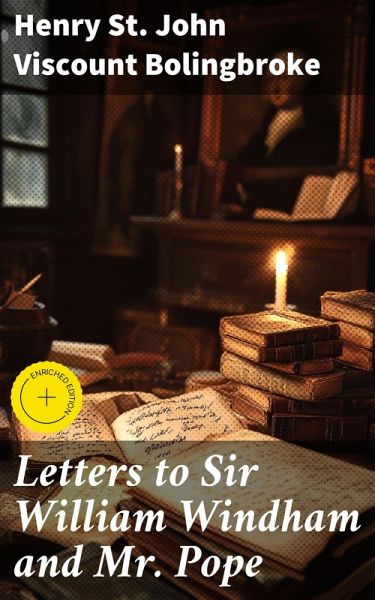
") Letters to Sir William Windham and Mr. Pope (eBook, ePUB)0,49 €
Letters to Sir William Windham and Mr. Pope (eBook, ePUB)0,49 €") José Martí Reader (eBook, ePUB)8,95 €
José Martí Reader (eBook, ePUB)8,95 €") The Labour Theory of Value (eBook, ePUB)55,95 €
The Labour Theory of Value (eBook, ePUB)55,95 €") Letters from a Farmer in Pennsylvania, to the Inhabitants of the British Colonies (eBook, ePUB)0,49 €
Letters from a Farmer in Pennsylvania, to the Inhabitants of the British Colonies (eBook, ePUB)0,49 €") William Jefferson Clinton's Eighth State of the Union Address (eBook, ePUB)1,99 €
William Jefferson Clinton's Eighth State of the Union Address (eBook, ePUB)1,99 € (eBook, ePUB)") THOMAS PAINE Ultimate Collection: Political Works, Philosophical Writings, Speeches, Letters & Biography (Including Common Sense, The Rights of Man & The Age of Reason) (eBook, ePUB)1,99 €
THOMAS PAINE Ultimate Collection: Political Works, Philosophical Writings, Speeches, Letters & Biography (Including Common Sense, The Rights of Man & The Age of Reason) (eBook, ePUB)1,99 €") The Fireside Chats of Franklin Delano Roosevelt (eBook, ePUB)2,49 €
The Fireside Chats of Franklin Delano Roosevelt (eBook, ePUB)2,49 €



In "Letters to Sir William Windham and Mr. Pope," Henry St. John, Viscount Bolingbroke, presents a compelling collection of correspondence that weaves together personal reflections, political philosophy, and literary critique. Written in a prose style marked by rhetorical elegance, these letters illuminate the complexities of Bolingbroke's political ideals and his intimate relationships with prominent figures of his time. The text reflects the rich socio-political context of early 18th-century England, offering insight into the Whig-Tory divide and the evolving nature of public discourse amid burgeoning Enlightenment thought. Bolingbroke, a man of dual conviction both in political reform and literary achievement, was shaped by his experiences in the tumultuous realm of British politics, where he navigated roles as a statesman, diplomat, and exile. His exchanges with Windham, a fellow statesman, and Pope, the eminent poet, encapsulate his views on governance and the moral obligations of leadership, drawing on his own fall from grace and subsequent reflections during his years in self-imposed exile. This book is a must-read for those intrigued by the interplay of political power and literary craft in the Enlightenment period. Bolingbroke's expertise and reflective tone elevate the letters beyond mere correspondence, making them a profound commentary on the nature of society and governance. Readers seeking an understanding of this critical period in history will find Bolingbroke's insights both engaging and enlightening. In this enriched edition, we have carefully created added value for your reading experience: - A comprehensive Introduction outlines these selected works' unifying features, themes, or stylistic evolutions. - A Historical Context section situates the works in their broader era-social currents, cultural trends, and key events that underpin their creation. - A concise Synopsis (Selection) offers an accessible overview of the included texts, helping readers navigate plotlines and main ideas without revealing critical twists. - A unified Analysis examines recurring motifs and stylistic hallmarks across the collection, tying the stories together while spotlighting the different work's strengths. - Reflection questions inspire deeper contemplation of the author's overarching message, inviting readers to draw connections among different texts and relate them to modern contexts. - Lastly, our hand-picked Memorable Quotes distill pivotal lines and turning points, serving as touchstones for the collection's central themes.
Dieser Download kann aus rechtlichen Gründen nur mit Rechnungsadresse in A, B, BG, CY, CZ, D, DK, EW, E, FIN, F, GR, H, IRL, I, LT, L, LR, M, NL, PL, P, R, S, SLO, SK ausgeliefert werden.