39,95 €
39,95 €
inkl. MwSt.
Sofort per Download lieferbar

20 °P sammeln
39,95 €
Als Download kaufen
39,95 €
inkl. MwSt.
Sofort per Download lieferbar
20 °P sammeln
Jetzt verschenken
Alle Infos zum eBook verschenken
39,95 €
inkl. MwSt.
Sofort per Download lieferbar
Alle Infos zum eBook verschenken
20 °P sammeln

Andere Kunden interessierten sich auch für
") LGBTQIA+ Communities, Pandemics, and Policy Responses (eBook, PDF)39,95 €
LGBTQIA+ Communities, Pandemics, and Policy Responses (eBook, PDF)39,95 €") The Routledge Handbook of LGBTQIA Administration and Policy (eBook, ePUB)43,95 €
The Routledge Handbook of LGBTQIA Administration and Policy (eBook, ePUB)43,95 €") Marriage and Values in Public Policy (eBook, ePUB)45,95 €
Marriage and Values in Public Policy (eBook, ePUB)45,95 €") The Routledge Handbook of LGBTQIA Administration and Policy (eBook, PDF)43,95 €
The Routledge Handbook of LGBTQIA Administration and Policy (eBook, PDF)43,95 €") The Coloniality of Humanitarian Intervention (eBook, ePUB)42,95 €
The Coloniality of Humanitarian Intervention (eBook, ePUB)42,95 €") Routledge Handbook of Queer Development Studies (eBook, ePUB)46,95 €
Routledge Handbook of Queer Development Studies (eBook, ePUB)46,95 €") Feminisms (eBook, ePUB)18,95 €
Feminisms (eBook, ePUB)18,95 €







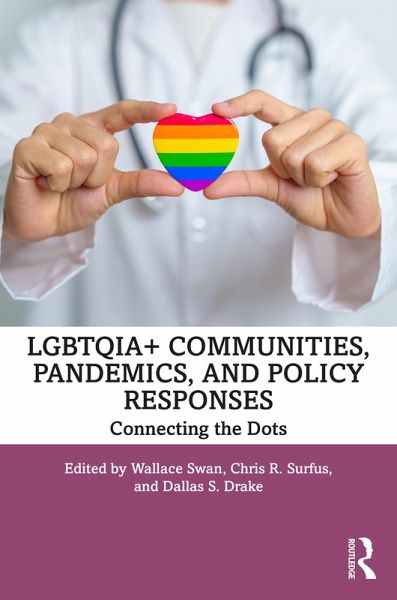
In this groundbreaking volume, editor Wallace Swan and co-editors Chris R. Surfus and Dallas S. Drake assemble an impressive collection of scholarly perspectives examining the complex relationship between LGBTQIA+ communities and public health crises. From the AIDS epidemic of the 1980s to COVID-19 and Mpox, this comprehensive work analyzes how outbreaks, epidemics, and pandemics disproportionately impact marginalized populations and how institutional responses have evolved over time. Contributors explore the critical intersection of public health policy, social equity, and community resilience through a multidisciplinary lens.
Drawing on extensive research and firsthand experiences, the book reveals how LGBTQIA+ communities have mobilized in response to inadequate governmental action, creating their own support systems and advocacy networks. Chapters examine intersectional health disparities, the role of nonprofit organizations, bureaucratic responses, and the political dimensions of public health funding. By "connecting the dots" between multiple pandemics affecting LGBTQIA+ populations, the contributors provide a framework for understanding how social marginalization shapes health outcomes and how inclusive, evidence-based approaches can create more equitable responses to public health emergencies.
Highlighting both historical failures and emerging best practices in pandemic response, the book offers valuable insights for policymakers, healthcare professionals, and community advocates. It further stands as an essential resource for anyone seeking to understand the unique challenges faced by LGBTQIA+ communities during health crises and the path toward more just and effective public health systems.
Drawing on extensive research and firsthand experiences, the book reveals how LGBTQIA+ communities have mobilized in response to inadequate governmental action, creating their own support systems and advocacy networks. Chapters examine intersectional health disparities, the role of nonprofit organizations, bureaucratic responses, and the political dimensions of public health funding. By "connecting the dots" between multiple pandemics affecting LGBTQIA+ populations, the contributors provide a framework for understanding how social marginalization shapes health outcomes and how inclusive, evidence-based approaches can create more equitable responses to public health emergencies.
Highlighting both historical failures and emerging best practices in pandemic response, the book offers valuable insights for policymakers, healthcare professionals, and community advocates. It further stands as an essential resource for anyone seeking to understand the unique challenges faced by LGBTQIA+ communities during health crises and the path toward more just and effective public health systems.
Dieser Download kann aus rechtlichen Gründen nur mit Rechnungsadresse in A, B, BG, CY, CZ, D, DK, EW, E, FIN, F, GR, HR, H, IRL, I, LT, L, LR, M, NL, PL, P, R, S, SLO, SK ausgeliefert werden.