67,95 €
inkl. MwSt.
Sofort per Download lieferbar
34 °P sammeln

Andere Kunden interessierten sich auch für
") Public Libraries, Public Policies, and Political Processes (eBook, ePUB)57,95 €
Public Libraries, Public Policies, and Political Processes (eBook, ePUB)57,95 €") Transforming Libraries, Building Communities (eBook, ePUB)57,95 €
Transforming Libraries, Building Communities (eBook, ePUB)57,95 €") Digital Preservation for Libraries, Archives, and Museums (eBook, ePUB)55,95 €
Digital Preservation for Libraries, Archives, and Museums (eBook, ePUB)55,95 €") Adding Value to Libraries, Archives, and Museums (eBook, ePUB)46,95 €
Adding Value to Libraries, Archives, and Museums (eBook, ePUB)46,95 €") Small Libraries, Big Impact (eBook, ePUB)37,95 €
Small Libraries, Big Impact (eBook, ePUB)37,95 €") Tribal Libraries, Archives, and Museums (eBook, ePUB)57,95 €
Tribal Libraries, Archives, and Museums (eBook, ePUB)57,95 €") Metadata Standards and Web Services in Libraries, Archives, and Museums (eBook, ePUB)49,95 €
Metadata Standards and Web Services in Libraries, Archives, and Museums (eBook, ePUB)49,95 €






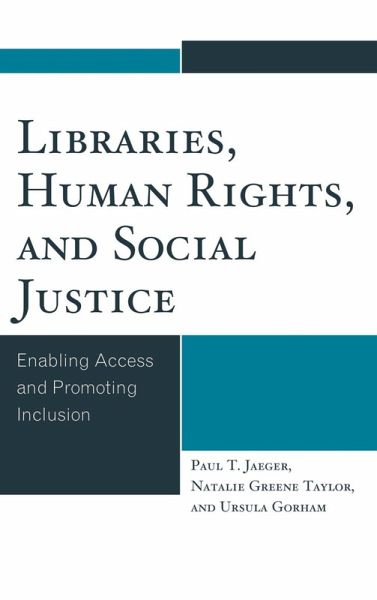
Libraries, Human Rights, and Social Justice: Enabling Access and Promoting Inclusion examines the interrelationships between digital literacy, digital inclusion, and public policy, emphasizing the impacts of these policy decisions on the ability of individuals and communities to successfully participate in the information society. It is the first large-scale consideration of digital literacy and digital inclusion as policy problems and provides policy recommendations to promote digital literacy and digital inclusion. This book is intended to help librarians better understand and articulate their roles in promoting human rights and social justice, as well as to educate policymakers, government officials, professionals in other fields, and researchers in other disciplines about the contributions of libraries to human rights and social justice. It explores the intersections of information, human rights, and social justice from a range of perspectives and addresses the differing roles of library institutions (public, school, academic, and special libraries), library professionals, professional organizations, governments, and library patrons. Discussion focuses on the practical side of human rights and avoids most of the philosophical discussions of the term. Similarly, this book emphasizes the practical nature of social justice and the social and societal structures that foster equality. Related issues of digital literacy and digital inclusion are considered as essential to providing information in human rights and social justice contexts. Digital literacy, the ability to use the Internet to meet information, combines with access to the Internet in order to successfully apply the skills of digital literacy is discussed under the topic of digital inclusion. These topics are discussed through legal, policy, social, cultural, and economic lenses. Issues are examined both in terms of efforts to support equity in communities as a whole and the efforts intended to promote equity in specific disadvantaged or marginalized populations, such as the homeless, immigrants, people with disabilities, and the socioeconomically disadvantaged. Many examples of the issues discussed are drawn from the original research that the authors have conducted. The ideas and suggestions in this book should help members of the library community understand where their roles related to human rights and social justice originate, how they fit within the broader policy context, how to improve their related services and practices, and how to advocate for better support of these roles. The authors of this book have been involved in this research for many years and this breadth allows the book to offer comprehensive policy recommendations, solutions, and best practices for an area that is currently extremely fragmented. The writing is at a level to make it useful to undergraduate and postgraduate students, researchers, and policy makers.