0,99 €
inkl. MwSt.
Sofort per Download lieferbar

payback
0 °P sammeln
  • Format: ePub

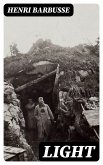
Henri Barbusse's novel, Light, is about an office worker who, while serving in the army, begins to realize that the imperialist war is a crime.

  • Geräte: eReader
  • ohne Kopierschutz
  • eBook Hilfe
  • Größe: 0.96MB
  • FamilySharing(5)
Produktbeschreibung
Henri Barbusse's novel, Light, is about an office worker who, while serving in the army, begins to realize that the imperialist war is a crime.

Dieser Download kann aus rechtlichen Gründen nur mit Rechnungsadresse in A, B, BG, CY, CZ, D, DK, EW, E, FIN, F, GR, HR, H, IRL, I, LT, L, LR, M, NL, PL, P, R, S, SLO, SK ausgeliefert werden.

Autorenporträt
French novelist and a fervent pacifist, Henri Barbusse (1873-1935) was a figure whose literary achievements mirror the turbulent times and ideological currents of early 20th-century Europe. Born in Asnières-sur-Seine, France, Barbusse first began his career as a journalist before delving into the world of literature. His most renowned work, 'Le Feu' ('Under Fire'), published in 1916, drew from his direct experiences in World War I and earned him the esteemed Prix Goncourt. It starkly portrays the harrowing life of French soldiers in the trenches, prefiguring his subsequent advocacy for socialism and against the brutalities of war. Beyond 'Under Fire', Barbusse's novel 'Light' (1919), originally 'Clarté' in French, extends his exploration of human suffering and the quest for truth. His literary style is marked by a profound humanism, often blended with a sense of revolutionary zeal. As an intellectual, he engaged with the Communist Party and was involved in leftist political activism, influences that permeate his writing. Barbusse's oeuvre offers a poignant reflection on the human condition, rendered through a balance of naturalistic detail and ideological exploration. His legacy lies as much in his political activism as in his contributions to 20th-century literature.