42,95 €
42,95 €
inkl. MwSt.
Sofort per Download lieferbar

21 °P sammeln
42,95 €
Als Download kaufen
42,95 €
inkl. MwSt.
Sofort per Download lieferbar
21 °P sammeln
Jetzt verschenken
Alle Infos zum eBook verschenken
42,95 €
inkl. MwSt.
Sofort per Download lieferbar
Alle Infos zum eBook verschenken
21 °P sammeln

Andere Kunden interessierten sich auch für
") Liminal Spaces and Spatial Practices in Byzantium (eBook, PDF)42,95 €
Liminal Spaces and Spatial Practices in Byzantium (eBook, PDF)42,95 €") Studies in Byzantine Monasticism (eBook, ePUB)42,95 €
Studies in Byzantine Monasticism (eBook, ePUB)42,95 €") Essence and Energies: Being and Naming God in St Gregory Palamas (eBook, ePUB)41,95 €
Essence and Energies: Being and Naming God in St Gregory Palamas (eBook, ePUB)41,95 €") The Symbolism of Medieval Churches (eBook, ePUB)39,95 €
The Symbolism of Medieval Churches (eBook, ePUB)39,95 €") Christians under the Crescent and Muslims under the Cross c.630 - 1923 (eBook, ePUB)39,95 €
Christians under the Crescent and Muslims under the Cross c.630 - 1923 (eBook, ePUB)39,95 €") Liturgy and Architecture (eBook, ePUB)39,95 €
Liturgy and Architecture (eBook, ePUB)39,95 €") Modern Architecture and Religious Communities, 1850-1970 (eBook, ePUB)44,95 €
Modern Architecture and Religious Communities, 1850-1970 (eBook, ePUB)44,95 €

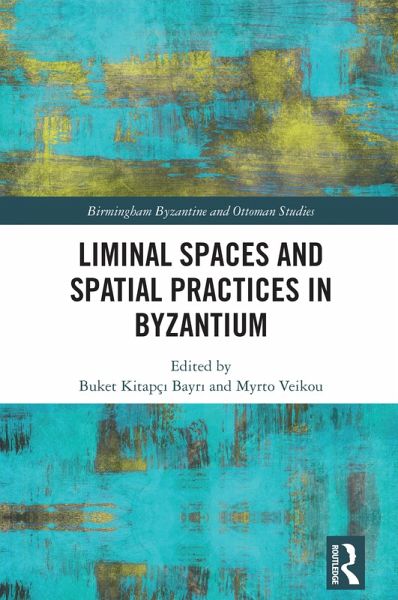
Liminal Spaces and Spatial Practices in Byzantium offers a novel twist, combining intra-/inter-disciplinary research across the humanities and social sciences by transforming two distinct disciplinary concepts (liminality from social anthropology and space from cultural geography) into methodological devices for historical investigation. The focus has been an investigation of conceptions of spatial liminality in the Byzantine world.
This book showcases alternatives to binary oppositions such as inside/outside, core/periphery, isolation/connectedness, stability/instability, known/unknown, earthly/heavenly, self/other, and good/bad through delineating liminality as an epistemological tool. In this volume, the authors were invited to offer an analysis of Byzantine spatial experiences (attested through material remains or texts) as a sort of working platform from which to assess in due course the presence of a liminal dimension in medieval spatiotemporal situations. They have sought to understand whether certain types of spaces such as rivers, deserts, islands, forests, mountains, houses, thresholds, gates, monasteries, lighthouses, and bridges accommodate-or even create-liminal situations in the eyes of the people experiencing them.
This book will appeal to students and scholars alike interested in Byzantine history and culture.
This book showcases alternatives to binary oppositions such as inside/outside, core/periphery, isolation/connectedness, stability/instability, known/unknown, earthly/heavenly, self/other, and good/bad through delineating liminality as an epistemological tool. In this volume, the authors were invited to offer an analysis of Byzantine spatial experiences (attested through material remains or texts) as a sort of working platform from which to assess in due course the presence of a liminal dimension in medieval spatiotemporal situations. They have sought to understand whether certain types of spaces such as rivers, deserts, islands, forests, mountains, houses, thresholds, gates, monasteries, lighthouses, and bridges accommodate-or even create-liminal situations in the eyes of the people experiencing them.
This book will appeal to students and scholars alike interested in Byzantine history and culture.
Dieser Download kann aus rechtlichen Gründen nur mit Rechnungsadresse in A, B, BG, CY, CZ, D, DK, EW, E, FIN, F, GR, HR, H, IRL, I, LT, L, LR, M, NL, PL, P, R, S, SLO, SK ausgeliefert werden.