Sie sind bereits eingeloggt. Klicken Sie auf 2. tolino select Abo, um fortzufahren.
Bitte loggen Sie sich zunächst in Ihr Kundenkonto ein oder registrieren Sie sich bei bücher.de, um das eBook-Abo tolino select nutzen zu können.
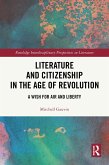
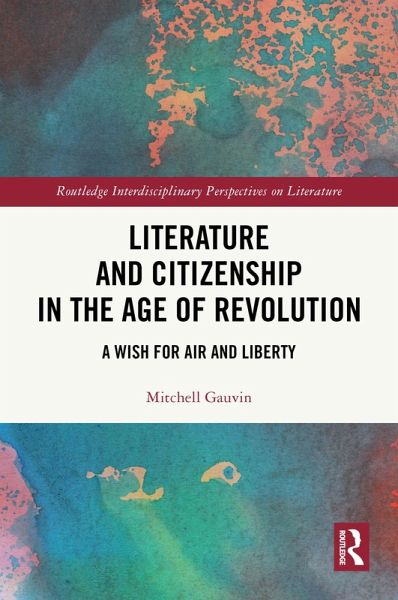
Citizenship is at the forefront of popular imagination as political movements and state governments around the world traffic in anti-immigrant rhetoric and call for increased policing of borders. Literature and Citizenship in the Age of Revolution: A Wish for Air and Liberty looks back to a critical historical juncture in the development of citizenship to uncover how literature contoured and contested imaginings of citizenship. While territory and the nation-state often frame our understanding of citizenship, this book focuses on how non-citizens, foreigners, and strangers have long been…mehr
Citizenship is at the forefront of popular imagination as political movements and state governments around the world traffic in anti-immigrant rhetoric and call for increased policing of borders. Literature and Citizenship in the Age of Revolution: A Wish for Air and Liberty looks back to a critical historical juncture in the development of citizenship to uncover how literature contoured and contested imaginings of citizenship. While territory and the nation-state often frame our understanding of citizenship, this book focuses on how non-citizens, foreigners, and strangers have long been central to citizenship's coherence. Rather than rootedness, literary texts exposed the circulations of persons, ideas, and affections at the heart of citizenship. This book brings together an unlikely combination of writers-Olaudah Equiano, Jane Austen, Mary Shelley, and Herman Melville-to show how literature in the Age of Revolution exposed contradictions in notions of liberty and slavery that impacted how citizenship was conceived and practiced.
Dieser Download kann aus rechtlichen Gründen nur mit Rechnungsadresse in A, B, BG, CY, CZ, D, DK, EW, E, FIN, F, GR, HR, H, IRL, I, LT, L, LR, M, NL, PL, P, R, S, SLO, SK ausgeliefert werden.
Die Herstellerinformationen sind derzeit nicht verfügbar.
Autorenporträt
Mitchell Gauvin is a Canadian scholar who focuses on the intersection between literature and citizenship. Focusing on both the contemporary period and the long eighteenth century, his research approaches citizenship from transnational, transhistorical, and postcolonial perspectives. He holds PhD from York University in Toronto and served as a Social Science and Humanities Research Council Postdoctoral Fellow in the Department of English and Linguistics at Johannes-Gutenberg Universität Mainz in Germany (2022-24).
Inhaltsangabe
Acknowledgments
Introduction
1. "Where My Heart Had Always Been": Cosmopolitan Citizenship and Religious Community in Olaudah Equiano's The Interesting Narrative
1.1. "Feeling global": Equiano's Cosmopolitan, Sentimental, and Evangelical Politics
1.2. Citizenship in the Ecclesial World: Conversion, Imperialism, and Indigeneity
1.3. Antityrannism, Violent Revolution, and John Milton
2. Authority, Anti-Citizenship, and the State in Jane Austen's Mansfield Park
2.1. Authority, Paternalism, and Sexual Politics
2.2. Austen's Anti-Citizenship and "State Romanticism"
2.3. Slavery and Despotism in Mansfield Park
3. The Politics of Mobility in Mary Shelley's Travelogues and Frankenstein
3.1. Travel Restrictions and Passports in Shelley's Travelogues
3.2. Mobility in Frankenstein
3.3. Irregular Arrivals, Race, and Revolution
4. The Law, Fugitive Slavery, and Herman Melville's Benito Cereno
4.1. "Sight without Inisght": The Plot Aboard the San Dominick
4.2. Babo and the Legitimacy of Violence
4.3. The Fugitive Slave
Epilogue
Index
Acknowledgments Introduction 1. "Where My Heart Had Always Been": Cosmopolitan Citizenship and Religious Community in Olaudah Equiano's The Interesting Narrative 1.1. "Feeling global": Equiano's Cosmopolitan, Sentimental, and Evangelical Politics 1.2. Citizenship in the Ecclesial World: Conversion, Imperialism, and Indigeneity 1.3. Antityrannism, Violent Revolution, and John Milton 2. Authority, Anti-Citizenship, and the State in Jane Austen's Mansfield Park 2.1. Authority, Paternalism, and Sexual Politics 2.2. Austen's Anti-Citizenship and "State Romanticism" 2.3. Slavery and Despotism in Mansfield Park 3. The Politics of Mobility in Mary Shelley's Travelogues and Frankenstein 3.1. Travel Restrictions and Passports in Shelley's Travelogues 3.2. Mobility in Frankenstein 3.3. Irregular Arrivals, Race, and Revolution 4. The Law, Fugitive Slavery, and Herman Melville's Benito Cereno 4.1. "Sight without Inisght": The Plot Aboard the San Dominick 4.2. Babo and the Legitimacy of Violence 4.3. The Fugitive Slave Epilogue Index
1. "Where My Heart Had Always Been": Cosmopolitan Citizenship and Religious Community in Olaudah Equiano's The Interesting Narrative
1.1. "Feeling global": Equiano's Cosmopolitan, Sentimental, and Evangelical Politics
1.2. Citizenship in the Ecclesial World: Conversion, Imperialism, and Indigeneity
1.3. Antityrannism, Violent Revolution, and John Milton
2. Authority, Anti-Citizenship, and the State in Jane Austen's Mansfield Park
2.1. Authority, Paternalism, and Sexual Politics
2.2. Austen's Anti-Citizenship and "State Romanticism"
2.3. Slavery and Despotism in Mansfield Park
3. The Politics of Mobility in Mary Shelley's Travelogues and Frankenstein
3.1. Travel Restrictions and Passports in Shelley's Travelogues
3.2. Mobility in Frankenstein
3.3. Irregular Arrivals, Race, and Revolution
4. The Law, Fugitive Slavery, and Herman Melville's Benito Cereno
4.1. "Sight without Inisght": The Plot Aboard the San Dominick
4.2. Babo and the Legitimacy of Violence
4.3. The Fugitive Slave
Epilogue
Index
Acknowledgments Introduction 1. "Where My Heart Had Always Been": Cosmopolitan Citizenship and Religious Community in Olaudah Equiano's The Interesting Narrative 1.1. "Feeling global": Equiano's Cosmopolitan, Sentimental, and Evangelical Politics 1.2. Citizenship in the Ecclesial World: Conversion, Imperialism, and Indigeneity 1.3. Antityrannism, Violent Revolution, and John Milton 2. Authority, Anti-Citizenship, and the State in Jane Austen's Mansfield Park 2.1. Authority, Paternalism, and Sexual Politics 2.2. Austen's Anti-Citizenship and "State Romanticism" 2.3. Slavery and Despotism in Mansfield Park 3. The Politics of Mobility in Mary Shelley's Travelogues and Frankenstein 3.1. Travel Restrictions and Passports in Shelley's Travelogues 3.2. Mobility in Frankenstein 3.3. Irregular Arrivals, Race, and Revolution 4. The Law, Fugitive Slavery, and Herman Melville's Benito Cereno 4.1. "Sight without Inisght": The Plot Aboard the San Dominick 4.2. Babo and the Legitimacy of Violence 4.3. The Fugitive Slave Epilogue Index
Es gelten unsere Allgemeinen Geschäftsbedingungen: www.buecher.de/agb
Impressum
www.buecher.de ist ein Internetauftritt der buecher.de internetstores GmbH
Geschäftsführung: Monica Sawhney | Roland Kölbl | Günter Hilger
Sitz der Gesellschaft: Batheyer Straße 115 - 117, 58099 Hagen
Postanschrift: Bürgermeister-Wegele-Str. 12, 86167 Augsburg
Amtsgericht Hagen HRB 13257
Steuernummer: 321/5800/1497
USt-IdNr: DE450055826