4,99 €
inkl. MwSt.
Sofort per Download lieferbar
0 °P sammeln

Andere Kunden interessierten sich auch für
") October (eBook, ePUB)4,99 €
October (eBook, ePUB)4,99 €") Little Harvest Song (eBook, ePUB)4,99 €
Little Harvest Song (eBook, ePUB)4,99 €") Spring song: simplified version (eBook, ePUB)4,99 €
Spring song: simplified version (eBook, ePUB)4,99 €") Autumn Mood (eBook, ePUB)4,99 €
Autumn Mood (eBook, ePUB)4,99 €") Triumphal March (eBook, ePUB)4,99 €
Triumphal March (eBook, ePUB)4,99 €") März - Adagio (eBook, ePUB)4,99 €
März - Adagio (eBook, ePUB)4,99 €") Prelude Op.2No.3 (eBook, ePUB)4,99 €
Prelude Op.2No.3 (eBook, ePUB)4,99 €



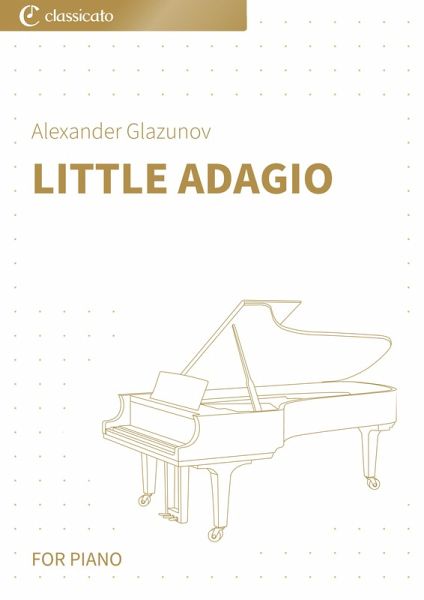
This simplified version of the piano sheet music for the "Little Adagio" from Alexander Glazunov's "The Seasons (Autumn)" in A major in 4/4 time (Andante mosso) is intended for beginners and slightly advanced pianists. It allows for effortless learning of the poetic and soulful music of this piece. This version preserves the delicate, flowing melodies and autumnal, melancholic character of the original, but is optimally tailored to players with basic to intermediate technical skills. The "Little Adagio" invites you to discover Glazunov's pictorial and romantic musical language and is ideal for beginners and slightly advanced players who want to deepen their musical expression on the piano. It perfectly captures the contemplative, golden shimmering mood of autumn and is a wonderful choice for the fall season. The scores and layout have been specially developed and optimized for digital reading devices and eReaders.
Dieser Download kann aus rechtlichen Gründen nur mit Rechnungsadresse in A, B, BG, CY, CZ, D, DK, EW, E, FIN, F, GR, HR, H, IRL, I, LT, L, LR, M, NL, PL, P, R, S, SLO, SK ausgeliefert werden.