0,49 €
inkl. MwSt.
Sofort per Download lieferbar
0 °P sammeln

Andere Kunden interessierten sich auch für
") WESTERN CLASSICS Ultimate Collection - 11 Novels in One Volume: Complete Leatherstocking Tales, The Littlepage Manuscripts Series, Wynadotte, The Wept Of Wish-Ton-Wish and more (eBook, ePUB)1,99 €
WESTERN CLASSICS Ultimate Collection - 11 Novels in One Volume: Complete Leatherstocking Tales, The Littlepage Manuscripts Series, Wynadotte, The Wept Of Wish-Ton-Wish and more (eBook, ePUB)1,99 € (eBook, ePUB)") The Littlepage Manuscripts (Illustrated) (eBook, ePUB)1,99 €
The Littlepage Manuscripts (Illustrated) (eBook, ePUB)1,99 €") Satanstoe, or, the Littlepage Manuscripts (eBook, ePUB)3,49 €
Satanstoe, or, the Littlepage Manuscripts (eBook, ePUB)3,49 €") WESTERN CLASSICS Ultimate Collection - 11 Novels in One Volume: Complete Leatherstocking Tales, The Littlepage Manuscripts Series, Wynadotte, The Wept Of Wish-Ton-Wish and more (eBook, ePUB)1,99 €
WESTERN CLASSICS Ultimate Collection - 11 Novels in One Volume: Complete Leatherstocking Tales, The Littlepage Manuscripts Series, Wynadotte, The Wept Of Wish-Ton-Wish and more (eBook, ePUB)1,99 €") The Chainbearer; Or, The Littlepage Manuscripts (eBook, ePUB)0,49 €
The Chainbearer; Or, The Littlepage Manuscripts (eBook, ePUB)0,49 €") Littlepage Manuscripts Trilogy (eBook, ePUB)2,99 €
Littlepage Manuscripts Trilogy (eBook, ePUB)2,99 €") The Chainbearer; Or, The Littlepage Manuscripts (eBook, ePUB)0,99 €
The Chainbearer; Or, The Littlepage Manuscripts (eBook, ePUB)0,99 €







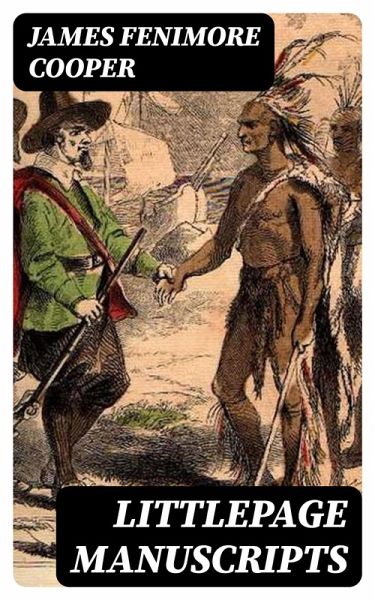
In "Littlepage Manuscripts," James Fenimore Cooper intricately weaves a tapestry of early American life through the lens of fictional memoirs, presenting a narrative that juxtaposes realism with romantic ideals. The text unfolds as a series of stories penned by the characters, reflecting the tensions of social class, frontier life, and the encroaching modernity of America during Cooper's time. His literary style, characterized by dense prose and rich symbolism, invites readers into a world where personal ambitions collide with collective identity, ultimately questioning the values that underlie the American experience. James Fenimore Cooper, a seminal figure in American literature, was profoundly influenced by his experiences in the burgeoning United States. Born into an aristocratic family in 1789, Cooper's engagement with themes of democracy and individualism stemmed from his own identity as an early American citizen. His keen observations of societal changes, as well as his profound understanding of native cultures and colonial history, underscore the impetus for compiling the "Littlepage Manuscripts," emphasizing the complexities of heritage and self-discovery. This book is highly recommended for readers interested in the evolution of American literature and the foundational narratives that shaped national identity. It is a compelling exploration of the American spirit, a must-read for those seeking to understand the undercurrents of cultural dialogue that continue to resonate today. In this enriched edition, we have carefully created added value for your reading experience: - An Introduction draws the threads together, discussing why these diverse authors and texts belong in one collection. - Historical Context explores the cultural and intellectual currents that shaped these works, offering insight into the shared (or contrasting) eras that influenced each writer. - A combined Synopsis (Selection) briefly outlines the key plots or arguments of the included pieces, helping readers grasp the anthology's overall scope without giving away essential twists. - A collective Analysis highlights common themes, stylistic variations, and significant crossovers in tone and technique, tying together writers from different backgrounds. - Reflection questions encourage readers to compare the different voices and perspectives within the collection, fostering a richer understanding of the overarching conversation.
Dieser Download kann aus rechtlichen Gründen nur mit Rechnungsadresse in A, B, BG, CY, CZ, D, DK, EW, FIN, F, GR, H, IRL, I, LT, L, LR, M, NL, PL, P, R, S, SLO, SK ausgeliefert werden.