25,95 €
25,95 €
inkl. MwSt.
Sofort per Download lieferbar

13 °P sammeln
25,95 €
Als Download kaufen
25,95 €
inkl. MwSt.
Sofort per Download lieferbar
13 °P sammeln
Jetzt verschenken
Alle Infos zum eBook verschenken
25,95 €
inkl. MwSt.
Sofort per Download lieferbar
Alle Infos zum eBook verschenken
13 °P sammeln

Andere Kunden interessierten sich auch für
") Cross-border Interactions and Encounters between Germany and Korea (eBook, ePUB)64,95 €
Cross-border Interactions and Encounters between Germany and Korea (eBook, ePUB)64,95 €") From Sweatshop to Fashion Shop (eBook, ePUB)64,95 €
From Sweatshop to Fashion Shop (eBook, ePUB)64,95 €") Pachappa Camp (eBook, ePUB)25,95 €
Pachappa Camp (eBook, ePUB)25,95 €") Understanding Korean Americans' Mental Health (eBook, ePUB)29,95 €
Understanding Korean Americans' Mental Health (eBook, ePUB)29,95 €") Newcomers and Global Migration in Contemporary South Korea (eBook, ePUB)86,95 €
Newcomers and Global Migration in Contemporary South Korea (eBook, ePUB)86,95 €") Digital Humanities in the India Rim (eBook, ePUB)4,99 €
Digital Humanities in the India Rim (eBook, ePUB)4,99 €") Darjeeling (eBook, ePUB)39,95 €
Darjeeling (eBook, ePUB)39,95 €







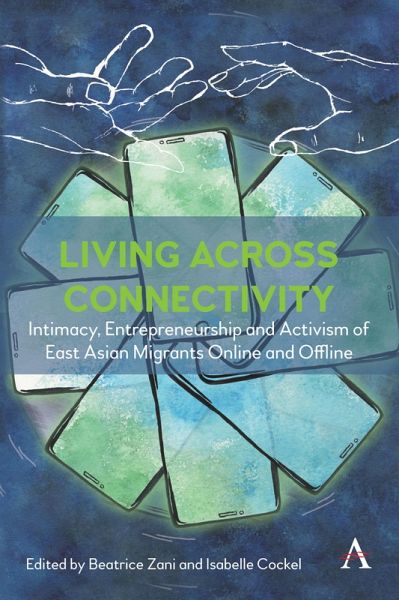
The use of smartphones displays many facets of contemporary mobility. Smartphones and those applications downloaded to the device enhance connectivity in regard to socialisation, entertainment, transactions, networking, activism, and mobilisation. While the device and applications help community building and boost a sense of belonging, they also generate alienation, exclusion and marginalisation. Such online mobility of capital, commodity, idea and emotion visualised on smartphones cannot take place without the parallel existence of technological, sociopolitical and economic infrastructure that is established in the physical world offline. In this light, this book argues that the use of smartphones, and the constant switch between online and offline, has meshed virtual, social and physical mobilities together. However, such inseparability is yet to break down the boundary that marks their distinctive and discrete existence. Put simply, the absence, loss, outage, switch-off, unaffordability, or confiscation of the device can easily obstruct this meshed mobility. Interrogating what causes these obstructions will highlight the indispensable role played by the material and social infrastructure in this meshed mobility as well as the embedded structural constraints. It is equally important to look at migration and mobility beyond the points of departure and destination and trace the process in between, as scholarship in migration studies has advocated. Thus, this book offers an insight into the compression and tension between online and offline and the interlaced modes of mobility. On the whole, the articles included in this book aim to answer two critical questions: (1) How does the use of smartphones by migrants and the people connected with them generate new modes of mobility? (2) How do online activities and offline infrastructure interact and result in this compression?
In answering these two questions, the authors seek to understand how the online-offline divide and the shift between physical and virtual worlds affect East Asian migrants' activities. They investigate how these migrants' mobility patterns are changing through such compression and tension between online and offline. The book will show how smartphones and the associated applications facilitate the expression of emotions and search for intimate relationships, expedite the movement of capital and commodity, enable public communication and social action and solicit political allegiance to the state or political parties. This spontaneous mobility in the virtual space visualised on smartphones obscures the physical separation between origin and destination. It also generates the space in between for network making and mobilisation. On the other hand, physical and virtual mobilities continue to be constrained by the tangible and intangible infrastructure created and administered by the state and the market. That is, not only is the ability of people, capital, commodities and ideas to cross borders regulated by the state, but the transmission of data related to these movements, in the forms of text, sound, image, graphics, or video, is also at the mercy of the operation of the infrastructure built by the state and the market. In sum, opportunities and resources emerge from this parallel between online and offline. However, their constant compression also limits personal agency and generates new restrictions or reifies existing constraints.
Lockdown, a measure enforced by governments around the world to suppress the spread of Covid-19, has made the compression between online and offline a daily reality. Whilse contemporary mobility continues to be overshadowed by this 'new normal', this edited volume seeks to re-examine the mobility and migration in the increasingly overlapping virtual, social and physical spaces. To achieve this goal, this volume offers an interdisciplinary lens through which to grasp the symbiosis between migration and ICT and underlines how countries in East Asia, Europe and North America are connected via migrants' use of smartphones. Owing to this compression between the virtual and physical worlds, migrants, with their various skills, class, gender, sexuality and age, perform their intimacy, entrepreneurship and activism in relation to their fellow migrants, family members, partners, clients and the state at the crossroads between online and offline spaces. The use of smartphones enables them to exert their agency, empower others and conduct businesses not only for financial gains but also to satisfy their sense of care and morality, and interact with their governments' political agendas. Presenting these cutting-edge findings drawn from East Asian migrants' everyday experiences and practices, this book will make a lasting contribution to an emerging migration scholarship intersecting transnationalism, virtuality and mobility.
In answering these two questions, the authors seek to understand how the online-offline divide and the shift between physical and virtual worlds affect East Asian migrants' activities. They investigate how these migrants' mobility patterns are changing through such compression and tension between online and offline. The book will show how smartphones and the associated applications facilitate the expression of emotions and search for intimate relationships, expedite the movement of capital and commodity, enable public communication and social action and solicit political allegiance to the state or political parties. This spontaneous mobility in the virtual space visualised on smartphones obscures the physical separation between origin and destination. It also generates the space in between for network making and mobilisation. On the other hand, physical and virtual mobilities continue to be constrained by the tangible and intangible infrastructure created and administered by the state and the market. That is, not only is the ability of people, capital, commodities and ideas to cross borders regulated by the state, but the transmission of data related to these movements, in the forms of text, sound, image, graphics, or video, is also at the mercy of the operation of the infrastructure built by the state and the market. In sum, opportunities and resources emerge from this parallel between online and offline. However, their constant compression also limits personal agency and generates new restrictions or reifies existing constraints.
Lockdown, a measure enforced by governments around the world to suppress the spread of Covid-19, has made the compression between online and offline a daily reality. Whilse contemporary mobility continues to be overshadowed by this 'new normal', this edited volume seeks to re-examine the mobility and migration in the increasingly overlapping virtual, social and physical spaces. To achieve this goal, this volume offers an interdisciplinary lens through which to grasp the symbiosis between migration and ICT and underlines how countries in East Asia, Europe and North America are connected via migrants' use of smartphones. Owing to this compression between the virtual and physical worlds, migrants, with their various skills, class, gender, sexuality and age, perform their intimacy, entrepreneurship and activism in relation to their fellow migrants, family members, partners, clients and the state at the crossroads between online and offline spaces. The use of smartphones enables them to exert their agency, empower others and conduct businesses not only for financial gains but also to satisfy their sense of care and morality, and interact with their governments' political agendas. Presenting these cutting-edge findings drawn from East Asian migrants' everyday experiences and practices, this book will make a lasting contribution to an emerging migration scholarship intersecting transnationalism, virtuality and mobility.
Dieser Download kann aus rechtlichen Gründen nur mit Rechnungsadresse in A, D ausgeliefert werden.