13,95 €
inkl. MwSt.
Sofort per Download lieferbar
7 °P sammeln

Andere Kunden interessierten sich auch für
") Logging in Mason County (eBook, ePUB)13,95 €
Logging in Mason County (eBook, ePUB)13,95 €") Logging in Grays Harbor (eBook, ePUB)13,95 €
Logging in Grays Harbor (eBook, ePUB)13,95 €") Glenn County (eBook, ePUB)13,95 €
Glenn County (eBook, ePUB)13,95 €") Mexican American Baseball in Orange County (eBook, ePUB)13,95 €
Mexican American Baseball in Orange County (eBook, ePUB)13,95 €") Jewish Community of Solano County (eBook, ePUB)13,95 €
Jewish Community of Solano County (eBook, ePUB)13,95 €") Hot Rodding in Santa Barbara County (eBook, ePUB)13,95 €
Hot Rodding in Santa Barbara County (eBook, ePUB)13,95 €") Hot Rodding in Ventura County (eBook, ePUB)13,95 €
Hot Rodding in Ventura County (eBook, ePUB)13,95 €

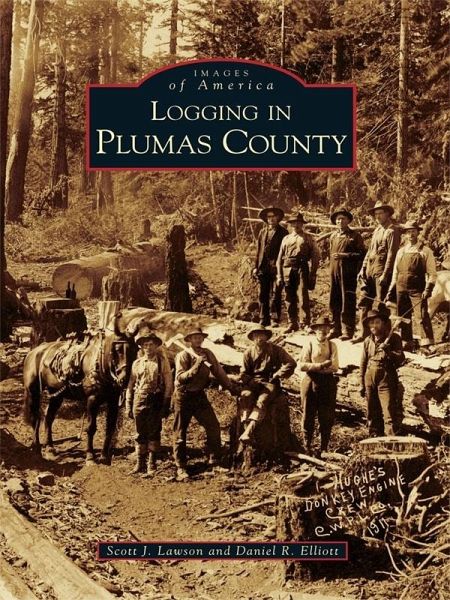
Located within the northern Sierra Nevada mountain range, the forests of Plumas County were once seen as a source of endless timber. Lumber was needed during the Gold Rush for water flumes, mine timbers, and an array of buildings. While timber was abundant, the abilities of the early settlers to harvest, transport, and mill the logs were often very limited. Markets remained relatively local throughout the second half of the 19th century until the completion of the Western Pacific Railroad in 1909. This sparked a new rush of industry into the region. Vast tracts of untapped Plumas County timber were bought up by speculators, and many sawmills were erected. Logging in the western United States moved from animal power to steam engines to internal combustion in the space of about 50 years. While Plumas County¿s lumber industry was reflective of these developments, it also found its own identity as a timber-producing region that was nearly unequaled.
Dieser Download kann aus rechtlichen Gründen nur mit Rechnungsadresse in A, B, BG, CY, CZ, D, DK, EW, E, FIN, F, GR, HR, H, IRL, I, LT, L, LR, M, NL, PL, P, R, S, SLO, SK ausgeliefert werden.