Sie sind bereits eingeloggt. Klicken Sie auf 2. tolino select Abo, um fortzufahren.
Bitte loggen Sie sich zunächst in Ihr Kundenkonto ein oder registrieren Sie sich bei bücher.de, um das eBook-Abo tolino select nutzen zu können.
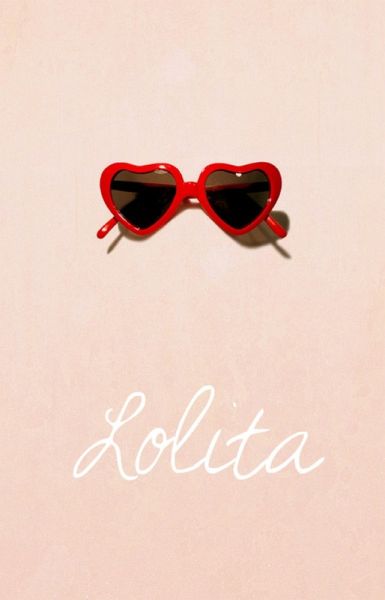
One of the most controversial novels of the twentieth century, Vladimir Nabokov's Lolita is a strange, troubling love story told by the one of the most unreliable narrators in literature. This Penguin Modern Classics edition includes an afterword by Craig Raine. Poet and pervert, Humbert Humbert becomes obsessed by twelve-year-old Lolita and seeks to possess her, first carnally and then artistically, out of love, 'to fix once for all the perilous magic of nymphets'. Is he in love or insane? A silver-tongued poet or a pervert? A tortured soul or a monster? Or is he all of these? Humbert…mehr
One of the most controversial novels of the twentieth century, Vladimir Nabokov's Lolita is a strange, troubling love story told by the one of the most unreliable narrators in literature. This Penguin Modern Classics edition includes an afterword by Craig Raine. Poet and pervert, Humbert Humbert becomes obsessed by twelve-year-old Lolita and seeks to possess her, first carnally and then artistically, out of love, 'to fix once for all the perilous magic of nymphets'. Is he in love or insane? A silver-tongued poet or a pervert? A tortured soul or a monster? Or is he all of these? Humbert Humbert's seduction is one of many dimensions in Nabokov's dizzying masterpiece, which is suffused with a savage humour and rich, elaborate verbal textures. Filmed by Stanley Kubrick in 1962 starring James Mason and Peter Sellers, and again in 1997 by Adrian Lyne starring Jeremy Irons and Melanie Griffith, Lolita has lost none of its power to shock and awe.
Dieser Download kann aus rechtlichen Gründen nur mit Rechnungsadresse in A, B, BG, CY, CZ, D, DK, EW, E, FIN, F, GR, HR, H, IRL, I, LT, L, LR, M, NL, PL, P, R, S, SLO, SK ausgeliefert werden.
Die Herstellerinformationen sind derzeit nicht verfügbar.
Autorenporträt
VLADIMIR NABOKOV was born on April 23, 1899, in St. Petersburg, Russia. The Nabokovs were known for their high culture and commitment to public service, and the elder Nabokov was an outspoken opponent of antisemitism and one of the leaders of the opposition party, the Kadets. In 1919, following the Bolshevik revolution, he took his family into exile. Four years later he was shot and killed at a political rally in Berlin while trying to shield the speaker from right-wing assassins. The Nabokov household was trilingual, and as a child Nabokov was already reading Wells, Poe, Browning, Keats, Flaubert, Verlaine, Rimbaud, Tolstoy, and Chekhov, alongside the popular entertainments of Sir Arthur Conan Doyle and Jules Verne. As a young man, he studied Slavic and romance languages at Trinity College, Cambridge, taking his honors degree in 1922. For the next eighteen years he lived in Berlin and Paris, writing prolifically in Russian under the pseudonym Sirin and supporting himself through translations, lessons in English and tennis, and by composing the first crossword puzzles in Russian. In 1925 he married Vera Slonim, with whom he had one child, a son, Dmitri. Having already fled Russia and Germany, Nabokov became a refugee once more in 1940, when he was forced to leave France for the United States. There he taught at Wellesley, Harvard, and Cornell. He also gave up writing in Russian and began composing fiction in English. In his afterword to Lolita he claimed: "My private tragedy, which cannot, and indeed should not, be anybody's concern, is that I had to abandon my natural idiom, my untrammeled, rich, and infinitely docile Russian tongue for a second-rate brand of English, devoid of any of those apparatuses–the baffling mirror, the black velvet backdrop, the implied associations and traditions–which the native illusionist, frac-tails flying, can magically use to transcend the heritage in his own way." [p. 317] Yet Nabokov's American period saw the creation of what are arguably his greatest works, Bend Sinister (1947), Lolita (1955), Pnin (1957), and Pale Fire (1962), as well as the translation of his earlier Russian novels into English. He also undertook English translations of works by Lermontov and Pushkin and wrote several books of criticism. Vladimir Nabokov died in Montreux, Switzerland, in 1977.
Rezensionen
He did us all an honour by electing to use, and transform, our language. Anthony Burgess
Es gelten unsere Allgemeinen Geschäftsbedingungen: www.buecher.de/agb
Impressum
www.buecher.de ist ein Internetauftritt der buecher.de internetstores GmbH
Geschäftsführung: Monica Sawhney | Roland Kölbl | Günter Hilger
Sitz der Gesellschaft: Batheyer Straße 115 - 117, 58099 Hagen
Postanschrift: Bürgermeister-Wegele-Str. 12, 86167 Augsburg
Amtsgericht Hagen HRB 13257
Steuernummer: 321/5800/1497
USt-IdNr: DE450055826