Sie sind bereits eingeloggt. Klicken Sie auf 2. tolino select Abo, um fortzufahren.
Bitte loggen Sie sich zunächst in Ihr Kundenkonto ein oder registrieren Sie sich bei bücher.de, um das eBook-Abo tolino select nutzen zu können.
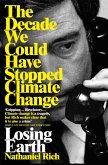
A Vanity Fair Best Book of the Year: "Gripping... revelatory... Climate change is a tragedy, but Rich makes clear that it is also a crime." - The New York Times Book Review Finalist, PEN/E.O. Wilson Literary Science Writing Award By 1979, we knew nearly everything we understand today about climate change-including how to stop it. Over the next decade, a handful of scientists, politicians, and strategists, led by two unlikely heroes, risked their careers in a desperate, escalating campaign to convince the world to act before it was too late. Losing Earth is their story, and ours. The New York…mehr
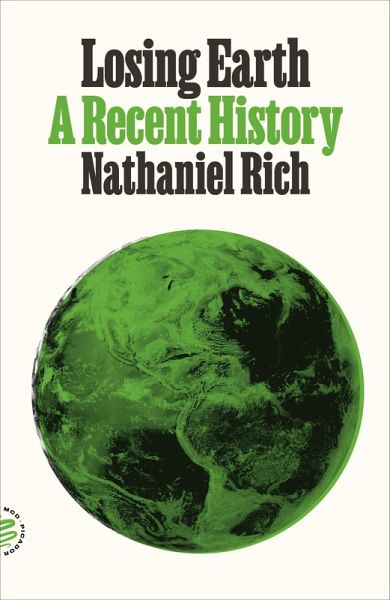
A Vanity Fair Best Book of the Year: "Gripping... revelatory... Climate change is a tragedy, but Rich makes clear that it is also a crime." - The New York Times Book Review Finalist, PEN/E.O. Wilson Literary Science Writing Award By 1979, we knew nearly everything we understand today about climate change-including how to stop it. Over the next decade, a handful of scientists, politicians, and strategists, led by two unlikely heroes, risked their careers in a desperate, escalating campaign to convince the world to act before it was too late. Losing Earth is their story, and ours. The New York Times Magazine devoted an entire issue to Nathaniel Rich's groundbreaking chronicle of that decade, which became an instant journalistic phenomenon sparking coverage and conversations around the world. Emphasizing the lives of those who grappled with the great existential threat of our age, it made vivid the moral dimensions of our shared plight. Now expanded into book form, Losing Earth tells the human story of climate change in even richer, more intimate terms. It reveals, in previously unreported detail, the birth of climate denialism and the genesis of the fossil fuel industry's coordinated effort to thwart climate policy through misinformation, propaganda, and political influence. The book carries the story into the present day, wrestling with the long shadow of our past failures and asking crucial questions about how we make sense of our past, our future, and ourselves. Like John Hersey's Hiroshima and Jonathan Schell's The Fate of the Earth, Losing Earth is that rare achievement: a riveting work of dramatic history that articulates a moral framework for understanding how we got here, and how we must go forward. "Absorbing... a well-told tale." - Newsday "How to explain the mess we're in? Nathaniel Rich recounts how a crucial decade was squandered... an important contribution to the record of our heedless age." -Elizabeth Kolbert, author of The Sixth Extinction
Dieser Download kann aus rechtlichen Gründen nur mit Rechnungsadresse in D ausgeliefert werden.
Die Herstellerinformationen sind derzeit nicht verfügbar.
Autorenporträt
Nathaniel Rich
Inhaltsangabe
Introduction i: Introduction Unit ii: Part I: Shouts in the Street:1979 1982 Chapter 1: The Whole Banana: Spring 1979 Chapter 2: Mirror Worlds: Spring 1979 Chapter 3: Between Clambake and Chaos: July 1979 Chapter 4: Enter Cassandra, Raving: 1979 1980 Chapter 5: A Very Aggressive Defensive Program: 1979 1980 Chapter 6: Tiger on the Road: October 1980 Chapter 7: A Deluge Most Unnatural: November 1980 September 1981 Chapter 8: Heroes and Villains: March 1982 Chapter 9: The Direction of an Impending Catastrophe: 1982 Unit iii: Part II: Bad Science Fiction: 1983 1988 Chapter 10: Caution Not Panic: 1983 1984 Chapter 11: The World of Action: 1985 Chapter 12: The Ozone in October: Fall 1985 Summer 1986 Chapter 13: Atmospheric Scientist, New York, N.Y.: Fall 1987 Spring 1988 Unit iv: Part III: You Will See Things That You Shall Believe: 1988 1989 Chapter 14: Nothing but Bonfires: Summer 1988 Chapter 15: Signal Weather: June 1988 Chapter 16: Woodstock for Climate Change: June 1988 April 1989 Chapter 17: Fragmented World: Fall 1988 Chapter 18: The Great Includer and the Old Engineer: Spring 1989 Chapter 19: Natural Processes: May 1989 Chapter 20: The White House Effect: Fall 1989 Chapter 21: Skunks at the Garden Party: November 1989 Section v: Afterword: Glass Bottomed Boats Section vi: A Note on the Sources Acknowledgements vii: Acknowledgements
Rezensionen
[Rich's] gripping, depressing, revelatory book makes it clear that not only is climate change a tragedy, but that it is also a crime - a thing that bad people knowingly made worse, for their personal gain. John Lanchester New York Times
Es gelten unsere Allgemeinen Geschäftsbedingungen: www.buecher.de/agb
Impressum
www.buecher.de ist ein Internetauftritt der buecher.de internetstores GmbH
Geschäftsführung: Monica Sawhney | Roland Kölbl | Günter Hilger
Sitz der Gesellschaft: Batheyer Straße 115 - 117, 58099 Hagen
Postanschrift: Bürgermeister-Wegele-Str. 12, 86167 Augsburg
Amtsgericht Hagen HRB 13257
Steuernummer: 321/5800/1497
USt-IdNr: DE450055826