25,99 €
25,99 €
inkl. MwSt.
Sofort per Download lieferbar

0 °P sammeln
25,99 €
Als Download kaufen
25,99 €
inkl. MwSt.
Sofort per Download lieferbar
0 °P sammeln
Jetzt verschenken
Alle Infos zum eBook verschenken
25,99 €
inkl. MwSt.
Sofort per Download lieferbar
Alle Infos zum eBook verschenken
0 °P sammeln

Andere Kunden interessierten sich auch für
") Mobilities, Networks, Geographies (eBook, PDF)47,95 €
Mobilities, Networks, Geographies (eBook, PDF)47,95 €") Geographies of Science (eBook, PDF)112,95 €
Geographies of Science (eBook, PDF)112,95 €") Other Geographies (eBook, PDF)20,99 €
Other Geographies (eBook, PDF)20,99 €") Planning in the USA (eBook, PDF)58,95 €
Planning in the USA (eBook, PDF)58,95 €") The Measurement and Analysis of Housing Preference and Choice (eBook, PDF)112,95 €
The Measurement and Analysis of Housing Preference and Choice (eBook, PDF)112,95 €") Redundant Masculinities? (eBook, PDF)20,99 €
Redundant Masculinities? (eBook, PDF)20,99 €") Geographies of the Haitian Diaspora (eBook, PDF)49,95 €
Geographies of the Haitian Diaspora (eBook, PDF)49,95 €


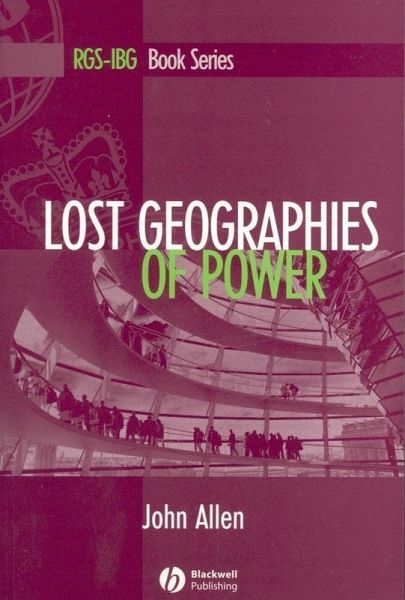
This original study explores the difference that space and spatiality make to the understanding of power. * * Explores the difference that space and spatiality makes to an understanding of power. * Moves forward the incorporation of ideas of space into social theory. * Presents a new understanding of the exercise, uses and manifestations of cultural, economic and political power in the second half of the twentieth century. * Illustrated with cases and examples.
Dieser Download kann aus rechtlichen Gründen nur mit Rechnungsadresse in D ausgeliefert werden.
"Allen moves the debate on power into the everyday effects ofhuman social action. In so doing he not only enriches the debate innumerous ways but also shows how theoretical discussion of powercan no longer avoid addressing power's inherentspatiality."
John Agnew, Department of Geography, UCLA
"John Allen provides new maps of the spatiality of power.The wonderful thing is not just that some familiar accounts arerevitalised, but also that new forms of understanding power areborn."
Professor Nigel Thrift
John Allen offers us a refreshing and provocative account ofpower in social theory, attending in particular to one of itsmissing dimensions, that of space ... this is an attractive book,welcome in particular for its attention to the complexities andmultiple modalities of power."
American Journal of Sociology
"Lost Geographies of Powers is a subtle and well arguedbook. It deserves a wider readership than its title suggests andshould be read by social scientists in general, not justgeographers."
Area
John Agnew, Department of Geography, UCLA
"John Allen provides new maps of the spatiality of power.The wonderful thing is not just that some familiar accounts arerevitalised, but also that new forms of understanding power areborn."
Professor Nigel Thrift
John Allen offers us a refreshing and provocative account ofpower in social theory, attending in particular to one of itsmissing dimensions, that of space ... this is an attractive book,welcome in particular for its attention to the complexities andmultiple modalities of power."
American Journal of Sociology
"Lost Geographies of Powers is a subtle and well arguedbook. It deserves a wider readership than its title suggests andshould be read by social scientists in general, not justgeographers."
Area