0,49 €
inkl. MwSt.
Sofort per Download lieferbar
0 °P sammeln

Andere Kunden interessierten sich auch für
") Love in Excess (eBook, ePUB)1,99 €
Love in Excess (eBook, ePUB)1,99 €") Regency Romance Classics - Eliza Haywood Collection (eBook, ePUB)0,49 €
Regency Romance Classics - Eliza Haywood Collection (eBook, ePUB)0,49 €") Regency Romance Classics - Eliza Haywood Collection (eBook, ePUB)1,99 €
Regency Romance Classics - Eliza Haywood Collection (eBook, ePUB)1,99 €") Valentine (eBook, ePUB)11,95 €
Valentine (eBook, ePUB)11,95 €") Valentine (eBook, ePUB)2,13 €
Valentine (eBook, ePUB)2,13 €") Valentine (eBook, ePUB)1,99 €
Valentine (eBook, ePUB)1,99 € (eBook, ePUB)") Self-Control (Summarized Edition) (eBook, ePUB)0,49 €
Self-Control (Summarized Edition) (eBook, ePUB)0,49 €





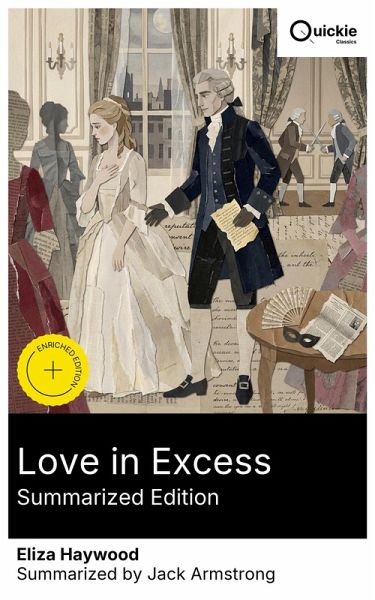
Love in Excess (1719-20) plunges readers into a maze of desire among the Parisian elite: the rakish Count D'Elmont, the ardent Alovisa, the virtuous Melliora, and the compromised Amena. Misdirected letters, clandestine meetings, and jealous surveillance drive reversals that test reputation, consent, and duty. Haywood fuses the heightened rhetoric of amatory romance with the observational textures of the emergent novel, staging theatrical set-pieces yet pausing for moral analysis; its serial pace and access to female interiority anticipate sentimental and psychological fiction. An actress turned prolific novelist, editor, and translator, Haywood was a chief architect of early amatory fiction. Writing amid competing conduct books and libertine tales, she calibrated her narratives to women's anxieties about reputation and choice. Stage training shapes her attention to gesture; later ventures like The Female Spectator signal the didactic impulse already germinating in this runaway, three-part bestseller. Readers of eighteenth-century literature, gender studies, or the history of the novel will find here both intellectual provocation and unabashed narrative pleasure. Love in Excess repays close study in the classroom and beyond, especially for admirers of Richardson and Burney seeking the genre's origins, and for anyone curious about how passion collides with social power. Quickie Classics summarizes timeless works with precision, preserving the author's voice and keeping the prose clear, fast, and readable-distilled, never diluted. Enriched Edition extras: Introduction · Synopsis · Historical Context · Brief Analysis · 4 Reflection Q&As · Editorial Footnotes.
Dieser Download kann aus rechtlichen Gründen nur mit Rechnungsadresse in A, B, BG, CY, CZ, D, DK, EW, E, FIN, F, GR, H, IRL, I, LT, L, LR, M, NL, PL, P, R, S, SLO, SK ausgeliefert werden.