Sie sind bereits eingeloggt. Klicken Sie auf 2. tolino select Abo, um fortzufahren.
Bitte loggen Sie sich zunächst in Ihr Kundenkonto ein oder registrieren Sie sich bei bücher.de, um das eBook-Abo tolino select nutzen zu können.
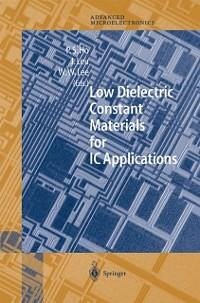
Low dielectric materials are an important component of microelectronic devices. In this carefully edited volume the leading researchers give an introduction to and a survey of the various fields of dielectrics for IC integration. The book appeals to materials reserachers, electrical engineers and advanced students.
Low dielectric materials are an important component of microelectronic devices. In this carefully edited volume the leading researchers give an introduction to and a survey of the various fields of dielectrics for IC integration. The book appeals to materials reserachers, electrical engineers and advanced students.
Dieser Download kann aus rechtlichen Gründen nur mit Rechnungsadresse in A, B, BG, CY, CZ, D, DK, EW, E, FIN, F, GR, HR, H, IRL, I, LT, L, LR, M, NL, PL, P, R, S, SLO, SK ausgeliefert werden.
Die Herstellerinformationen sind derzeit nicht verfügbar.
Autorenporträt
Paul S. Ho, University of Texas at Austin, Austin, TX, USA / Wei W. Lee, Taiwan Semiconductor Manufacturing Co., Hsin-chu, Taiwan / Jihperng Leu, Intel Corp., Hillsboro, IL, USA
Inhaltsangabe
1 Overview on Low Dielectric Constant Materials for IC Applications.- 1.1 Introduction.- 1.2 Dielectric Constant and Bonding Characteristics.- 1.3 Material Properties and Integration Requirements.- 1.4 Characterization of Low-? Dielectrics.- 1.5 Porous Low-? Materials.- 1.6 Conclusion.- References.- 2 Materials Issues and Characterization of Low-? Dielectric Materials.- 2.1 Introduction.- 2.2 Thin-Film Material Characterization.- 2.3 General Structure-Property Relationships.- 2.4 Fluorinated Polyimide: Effect of Chemical-Structure Modifications on Film Properties.- 2.5 Crosslinked and Thermosetting Materials.- 2.6 Parylene Polymers: Effect of Thermal History on Film Properties.- 2.7 Future Challenges.- References.- 3 Structure and Property Characterization of Low-? Dielectric Porous Thin Films Determined by X-Ray Reflectivity and Small-Angle Neutron Scattering.- 3.1 Introduction.- 3.2 Two-Phase Methodology.- 3.3 Three-Phase Methodology.- 3.4 Films with Ordered Porous Structure.- 3.5 Limits of SANS Characterization Methods.- 3.6 Future Developments.- 3.7 Conclusion.- References.- 4 Vapor Deposition of Low-? Polymeric Dielectrics.- 4.1 Introduction.- 4.2 Vapor-Phase Deposition and Polymerization on Substrates.- 4.3 Parylenes.- 4.4 Polynaphthalene and Its Derivatives.- 4.5 Teflon and Its Derivatives.- 4.6 Vapor-Deposited Polyimides.- 4.7 Prospects for Vapor-Depositable Low-? Polymers.- References.- 5 Plasma-Enhanced Chemical Vapor Deposition of FSG and a-C:F Low-? Materials.- 5.1 Introduction.- 5.2 FSG Films.- 5.3 a-C:F Films.- References.- 6 Porous Organosilicates for On-Chip Applications: Dielectric Generational Extendibility by the Introduction of Porosity.- 6.1 Introduction.- 6.2 Porous Silica.- 6.3 Organosilicates.- 6.4 Porogens.- 6.5 Porous OrganosilicateMatrix Resins.- 6.6 Formation of Nanohybrids.- 6.7 Porous Organosilicates.- 6.8 Characterization of Porous Organosilicates.- 6.9 Conclusion.- References.- 7 Metal/Polymer Interfacial Interactions.- 7.1 Introduction.- 7.2 Experimental Methods.- 7.3 Metallization of Fluoropolymers.- 7.4 Polymers on Metals: Adhesion to Cu.- 7.5 Conclusion.- References.- 8 Diffusion of Metals in Polymers and During Metal/Polymer Interface Formation.- 8.1 Introduction.- 8.2 Thermodynamic Considerations.- 8.3 Effect of Metal-Polymer Interaction on the Mobility of Metal Atoms.- 8.4 Surface Diffusion, Nucleation, and Growth of Metal Films.- 8.5 Diffusion and Aggregation.- 8.6 Atomic Diffusion.- 8.7 Conclusion.- References.- 9 Plasma Etching of Low Dielectric Constant Materials.- 9.1 Introduction.- 9.2 Technological Requirements and Patterning Approaches.- 9.3 Fluorocarbon-Based Etching Processes.- 9.4 Directional Etching of Organic Low-? Materials.- 9.5 Postetch Mask-Stripping and Via-Cleaning Processes.- 9.6 Conclusion.- References.- 10 Integration of SiLK Semiconductor Dielectric.- 10.1 Introduction.- 10.2 SiLK Semiconductor Dielectric.- 10.3 Subtractive Technologies.- 10.4 Damascene Technologies.- 10.5 Cost-of-Ownership.- 10.6 Conclusion.- References.
1 Overview on Low Dielectric Constant Materials for IC Applications.- 1.1 Introduction.- 1.2 Dielectric Constant and Bonding Characteristics.- 1.3 Material Properties and Integration Requirements.- 1.4 Characterization of Low-? Dielectrics.- 1.5 Porous Low-? Materials.- 1.6 Conclusion.- References.- 2 Materials Issues and Characterization of Low-? Dielectric Materials.- 2.1 Introduction.- 2.2 Thin-Film Material Characterization.- 2.3 General Structure-Property Relationships.- 2.4 Fluorinated Polyimide: Effect of Chemical-Structure Modifications on Film Properties.- 2.5 Crosslinked and Thermosetting Materials.- 2.6 Parylene Polymers: Effect of Thermal History on Film Properties.- 2.7 Future Challenges.- References.- 3 Structure and Property Characterization of Low-? Dielectric Porous Thin Films Determined by X-Ray Reflectivity and Small-Angle Neutron Scattering.- 3.1 Introduction.- 3.2 Two-Phase Methodology.- 3.3 Three-Phase Methodology.- 3.4 Films with Ordered Porous Structure.- 3.5 Limits of SANS Characterization Methods.- 3.6 Future Developments.- 3.7 Conclusion.- References.- 4 Vapor Deposition of Low-? Polymeric Dielectrics.- 4.1 Introduction.- 4.2 Vapor-Phase Deposition and Polymerization on Substrates.- 4.3 Parylenes.- 4.4 Polynaphthalene and Its Derivatives.- 4.5 Teflon and Its Derivatives.- 4.6 Vapor-Deposited Polyimides.- 4.7 Prospects for Vapor-Depositable Low-? Polymers.- References.- 5 Plasma-Enhanced Chemical Vapor Deposition of FSG and a-C:F Low-? Materials.- 5.1 Introduction.- 5.2 FSG Films.- 5.3 a-C:F Films.- References.- 6 Porous Organosilicates for On-Chip Applications: Dielectric Generational Extendibility by the Introduction of Porosity.- 6.1 Introduction.- 6.2 Porous Silica.- 6.3 Organosilicates.- 6.4 Porogens.- 6.5 Porous OrganosilicateMatrix Resins.- 6.6 Formation of Nanohybrids.- 6.7 Porous Organosilicates.- 6.8 Characterization of Porous Organosilicates.- 6.9 Conclusion.- References.- 7 Metal/Polymer Interfacial Interactions.- 7.1 Introduction.- 7.2 Experimental Methods.- 7.3 Metallization of Fluoropolymers.- 7.4 Polymers on Metals: Adhesion to Cu.- 7.5 Conclusion.- References.- 8 Diffusion of Metals in Polymers and During Metal/Polymer Interface Formation.- 8.1 Introduction.- 8.2 Thermodynamic Considerations.- 8.3 Effect of Metal-Polymer Interaction on the Mobility of Metal Atoms.- 8.4 Surface Diffusion, Nucleation, and Growth of Metal Films.- 8.5 Diffusion and Aggregation.- 8.6 Atomic Diffusion.- 8.7 Conclusion.- References.- 9 Plasma Etching of Low Dielectric Constant Materials.- 9.1 Introduction.- 9.2 Technological Requirements and Patterning Approaches.- 9.3 Fluorocarbon-Based Etching Processes.- 9.4 Directional Etching of Organic Low-? Materials.- 9.5 Postetch Mask-Stripping and Via-Cleaning Processes.- 9.6 Conclusion.- References.- 10 Integration of SiLK Semiconductor Dielectric.- 10.1 Introduction.- 10.2 SiLK Semiconductor Dielectric.- 10.3 Subtractive Technologies.- 10.4 Damascene Technologies.- 10.5 Cost-of-Ownership.- 10.6 Conclusion.- References.
Rezensionen
From the reviews:
Praise for P.S. Ho, J. Leu, and W.W. Lee, Ed's, Low Dielectric Constant Materials for IC Applications
Electrical Insulation Magazine
"Because this volume contains an excellent overview of the current research and issues with low-k dielectric materials for IC applications along with comprehensive practical information, researches, material scientists, and polymer engineers working in the area of microelectronics will find this book a very valuable addition to their library."
"This text addresses the latest advances in low-k materials, thin film characterization, integration into copper interconnection processing, and reliability for microelectronics applications. ... Because this volume contains an excellent overview of the current research and issues with low-k dielectric materials for IC applications along with comprehensive practical information, researchers, material scientists, and polymer engineers working in the area of microelectronics will find this book a very valuable addition to their library." (IEEE Electrical Insulation Magazine, Vol. 20 (2), March/April, 2004)
"This book addresses issues on the development, characterization and integration of low dielectric constant (k) materials for advanced on-chip interconnects. ... this book illustrates in a comprehensive way the technological challenges brought by the introduction of low-k materials into semiconductor manufacturing. ... Being intended to researchers and engineers active in the field of semiconductor processing, it can be used as an introductory book ... . Highly appreciated." (Jean - Francois de Marneffe, Physicalia, Vol. 25 (4), 2003)