Sie sind bereits eingeloggt. Klicken Sie auf 2. tolino select Abo, um fortzufahren.
Bitte loggen Sie sich zunächst in Ihr Kundenkonto ein oder registrieren Sie sich bei bücher.de, um das eBook-Abo tolino select nutzen zu können.
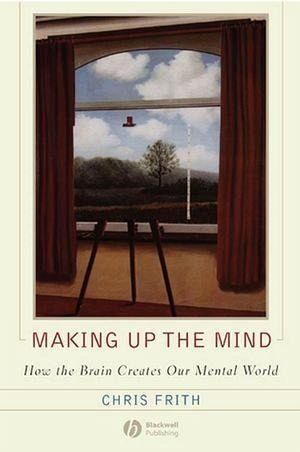
Written by one of the world's leading neuroscientists, Making Up the Mind is the first accessible account of experimental studies showing how the brain creates our mental world. | Uses evidence from brain imaging, psychological experiments and studies of patients to explore the relationship between the mind and the brain | Demonstrates that our knowledge of both the mental and physical comes to us through models created by our brain | Shows how the brain makes communication of ideas from one mind to another possible
Written by one of the world's leading neuroscientists, Making Up the Mind is the first accessible account of experimental studies showing how the brain creates our mental world.
Uses evidence from brain imaging, psychological experiments and studies of patients to explore the relationship between the mind and the brain
Demonstrates that our knowledge of both the mental and physical comes to us through models created by our brain
Shows how the brain makes communication of ideas from one mind to another possible
Dieser Download kann aus rechtlichen Gründen nur mit Rechnungsadresse in D ausgeliefert werden.
Die Herstellerinformationen sind derzeit nicht verfügbar.
Autorenporträt
Chris Frith is Professor in Neuropsychology at the Wellcome Trust Centre for Neuroimaging at University College London. His publications include Schizophrenia: A Very Short Introduction (2003, with Eve C. Johnstone) and The Neuroscience of Social Interaction (2004, edited with Daniel Wolpert).
Inhaltsangabe
List of Abbreviations Preface Acknowledgments Prologue: Real Scientists Don't Study the Mind 1 The Psychologist's Fear of the Party 1 Hard Science and Soft Science 3 Hard Science - Objective; Soft Science - Subjective 5 Can Big Science Save Soft Science? 7 Measuring Mental Activity 9 How Can the Mental Emerge from the Physical? 15 I Can Read Your Mind 16 How the Brain Creates the World 16 Part I Seeing through the Brain's Illusions 19 1 Clues from a Damaged Brain 21 Sensing the Physical World 21 The Mind and the Brain 22 When the Brain Doesn't Know 24 When the Brain Knows, But Doesn't Tell 27 When the Brain Tells Lies 29 How Brain Activity Creates False Knowledge 31 How to Make Your Brain Lie to You 34 Checking the Reality of Our Experiences 36 How Do We Know What's Real? 37 2 What a Normal Brain Tells Us about the World 40 Illusions of Awareness 40 Our Secretive Brain 44 Our Distorting Brain 48 Our Creative Brain 50 3 What the Brain Tells Us about Our Bodies 61 Privileged Access? 61 Where's the Border? 61 We Don't Know What We Are Doing 64 Who's in Control? 66 My Brain Can Act Perfectly Well without Me 68 Phantoms in the Brain 70 Part II How the Brain Does It 83 4 Getting Ahead by Prediction 85 Patterns of Reward and Punishment 85 How the Brain Embeds Us in the World and Then Hides Us 100 The Feeling of Being in Control 105 When the System Fails 107 The Invisible Actor at the Center of the World 109 5 Our Perception of the World Is a Fantasy That Coincides with Reality 111 Our Brain Creates an Effortless Perception of the Physical World 111 The Information Revolution 112 What Can Clever Machines Really Do? 116 A Problem with Information Theory 117 The Reverend Thomas Bayes 119 The Ideal Bayesian Observer 123 How a Bayesian Brain Can Make Models of the World 125 Is There a Rhinoceros in the Room? 125 Where Does Prior Knowledge Come From? 127 How Action Tells Us about the World 130 My Perception Is Not of the World, But of My Brain's Model of the World 132 Color Is in the Brain, Not in the World 134 Perception Is a Fantasy That Coincides with Reality 134 We Are Not the Slaves of Our Senses 135 So How Do We Know What's Real? 136 Imagination Is Extremely Boring 137 6 How Brains Model Minds 139 Biological Motion: The Way Living Things Move 140 How Movements Can Reveal Intentions 141 Imitation 144 The Experience of Agency 151 The Problem with Privileged Access 155 Illusions of Agency 156 Hallucinating Other Agents 157 Part III Culture and the Brain 161 7 Sharing Minds - How the Brain Creates Culture 163 The Problem with Translation 163 Meanings and Goals 165 Solving the Inverse Problem 166 Prior Knowledge and Prejudice 167 What Will He Do Next? 168 Other People Are Contagious 169 Communication Is More Than Just Speaking 170 Teaching Is Not Just a Demonstration To Be Imitated 171 Closing the Loop 173 Fork Handles: The Two Ronnies Close the Loop (Eventually) 174 Fully Closing the Loop 175 Knowledge Can Be Shared 175 Knowledge Is Power 177 The Truth 179 Epilogue: Me and My Brain 184 Chris Frith and I 184 Searching for the Will in the Brain 185 Where Is the Top in Top-Down Control? 186 The Homunculus 188 This Book Is Not About Consciousness 189 Why Are People So Nice (as Long as They Are Treated Fairly)? 190 Even an Illusion Has Responsibilities 191 The Evidence 194 Illustrations and Text Credits 218 Index 226
Rezensionen
"Making up the Mind is an excellent 'big picture' book. Exactly as its subtitle indicates, this book describes how our brains construct an internal model of the world that enables us to successfully interact with others and generally navigate a complex world." (Psychology Learning and Training, Autumn 2008)
"Neuroscience and psychology often struggle to answer the really interesting questions about the mind, but in this fascinating book, Chris Frith shows that science can finally start explaining how and why we experience the world as we do. Anyone interested in human nature - not just the nuts and bolts of neural circuits - will find his storytelling compelling. Frith delves into topics such as delusions, illusions, imagination and imitation, bringing clarity and insight to the simplest abservations and most complex experiments alike." (New Scientist)
"Making up the Mind is an interesting book to everybody who wants to learn more about how the brain gives rise to our mental experiences...As Frith himself depicts in a sort of framing story, you will easily find yourself talking about these ideas at your next dinner party, as well as use it for serious considerations on the brain or as a toolbox for next term's essay. A stimulating new book by a distinguished scientist who knows what he is talking about." ( Metapsychology Online Reviews)
"Frith has produced an enthralling discussion on the subtle links between mind and brain, sometimes with humorous liaisons between himself, as narrator, and others who might be labelled as sceptics, unbelievers."(Psychologist)
"Stands apart from many that have been written lately ... For those who have time to read only one book ... this should be it. Essential."(Choice Reviews)…mehr
Für Leute, die kein Problem damit haben, dass uns unser Hirn ständig Schnippchen schlägt. Superinteressant, auch im Englischen gut lesbar, wenn auch nur für Geübte. (Amazon, Februar 2009)
Es gelten unsere Allgemeinen Geschäftsbedingungen: www.buecher.de/agb
Impressum
www.buecher.de ist ein Internetauftritt der buecher.de internetstores GmbH
Geschäftsführung: Monica Sawhney | Roland Kölbl | Günter Hilger
Sitz der Gesellschaft: Batheyer Straße 115 - 117, 58099 Hagen
Postanschrift: Bürgermeister-Wegele-Str. 12, 86167 Augsburg
Amtsgericht Hagen HRB 13257
Steuernummer: 321/5800/1497
USt-IdNr: DE450055826