22,95 €
22,95 €
inkl. MwSt.
Sofort per Download lieferbar

11 °P sammeln
22,95 €
Als Download kaufen
22,95 €
inkl. MwSt.
Sofort per Download lieferbar
11 °P sammeln
Jetzt verschenken
Alle Infos zum eBook verschenken
22,95 €
inkl. MwSt.
Sofort per Download lieferbar
Alle Infos zum eBook verschenken
11 °P sammeln

Andere Kunden interessierten sich auch für
") Managing Coral Reefs (eBook, PDF)22,95 €
Managing Coral Reefs (eBook, PDF)22,95 €") Coastal Disaster Risk Management in Bangladesh (eBook, ePUB)36,95 €
Coastal Disaster Risk Management in Bangladesh (eBook, ePUB)36,95 €") The Blue Economy in Sub-Saharan Africa (eBook, ePUB)36,95 €
The Blue Economy in Sub-Saharan Africa (eBook, ePUB)36,95 €") The Biology of Coral Reefs (eBook, ePUB)27,95 €
The Biology of Coral Reefs (eBook, ePUB)27,95 €") Coastal Wetlands Restoration (eBook, ePUB)18,95 €
Coastal Wetlands Restoration (eBook, ePUB)18,95 €") In Search of the Canary Tree (eBook, ePUB)12,99 €
In Search of the Canary Tree (eBook, ePUB)12,99 €") The Gulf of Mexico Research Initiative (eBook, ePUB)13,95 €
The Gulf of Mexico Research Initiative (eBook, ePUB)13,95 €



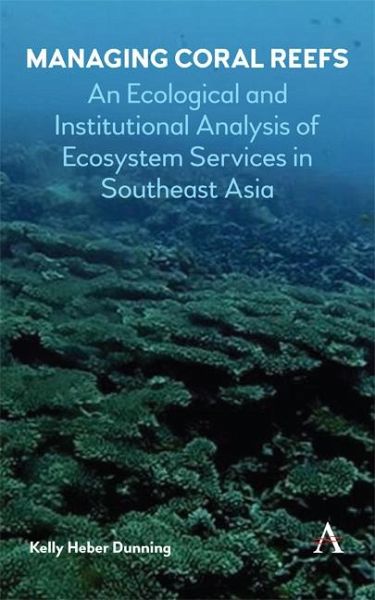
'Managing Coral Reefs' examines Indonesia's and Malaysia's pathways to implementing the international Convention on Biological Diversity (CBD), focusing specifically on how regional and national policies in Southeast Asia have fared when implementing the Aichi Targets of the CBD. These targets include safeguarding ecosystems through protection and ensuring that benefits from ecosystems can be enjoyed by all. Kelly Heber Dunning examines CBD implementation through marine protected areas (MPAs) for corals reefs in Indonesia and Malaysia.
Coral reefs, along with mangroves and seagrass, provide stakeholders with livelihoods in fisheries and tourism; they are also efficient natural barriers against extreme weather and climate change-related hazards. While Indonesia uses a co-managed framework, whereby villages and governments share power, to implement its MPAs, Malaysia uses a top-down network of federally managed Marine Parks. Using mixed methods through interviews and surveys as well as coral reef ecology surveys conducted over a year of fieldwork, Dunning argues that co-managed systems are the current best practice for implementing the CBD's Aichi Targets in tropical developing countries. Not only do they prevent ecosystems from many local forms of degradation, but they also are seen as more legitimate by local resource user stakeholders, allowing them more adaptive capacity to manage the ecosystems under conditions of uncertainty, as well as allowing for a more integrated form of management whereby ecological, economic, and social considerations can be made for management decisions. Centralized MPAs can mimic the successes of co-managed systems through better stakeholder engagement, possibly with greater socio-ecological success in the long run, due to their superior financial, administrative and organizational powers.
Coral reefs, along with mangroves and seagrass, provide stakeholders with livelihoods in fisheries and tourism; they are also efficient natural barriers against extreme weather and climate change-related hazards. While Indonesia uses a co-managed framework, whereby villages and governments share power, to implement its MPAs, Malaysia uses a top-down network of federally managed Marine Parks. Using mixed methods through interviews and surveys as well as coral reef ecology surveys conducted over a year of fieldwork, Dunning argues that co-managed systems are the current best practice for implementing the CBD's Aichi Targets in tropical developing countries. Not only do they prevent ecosystems from many local forms of degradation, but they also are seen as more legitimate by local resource user stakeholders, allowing them more adaptive capacity to manage the ecosystems under conditions of uncertainty, as well as allowing for a more integrated form of management whereby ecological, economic, and social considerations can be made for management decisions. Centralized MPAs can mimic the successes of co-managed systems through better stakeholder engagement, possibly with greater socio-ecological success in the long run, due to their superior financial, administrative and organizational powers.
Dieser Download kann aus rechtlichen Gründen nur mit Rechnungsadresse in A, D ausgeliefert werden.