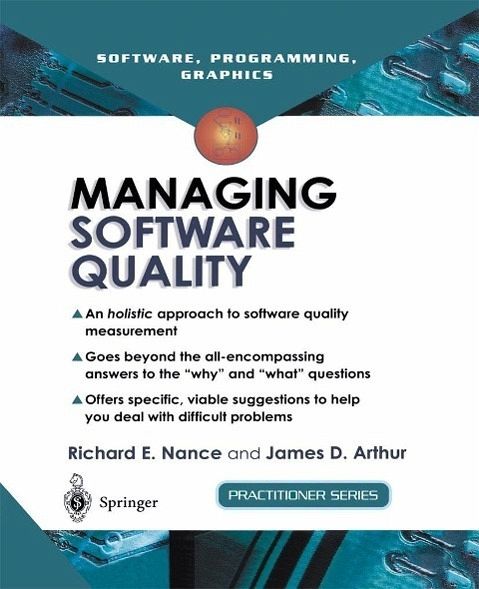
40,95 €
inkl. MwSt.
Sofort per Download lieferbar
20 °P sammeln

Andere Kunden interessierten sich auch für
") Service Research Challenges and Solutions for the Future Internet (eBook, PDF)40,95 €
Service Research Challenges and Solutions for the Future Internet (eBook, PDF)40,95 €") Computer Safety, Reliability, and Security. SAFECOMP 2022 Workshops (eBook, PDF)72,95 €
Computer Safety, Reliability, and Security. SAFECOMP 2022 Workshops (eBook, PDF)72,95 €") Forensic Computing (eBook, PDF)60,95 €
Forensic Computing (eBook, PDF)60,95 €") Run-time Models for Self-managing Systems and Applications (eBook, PDF)40,95 €
Run-time Models for Self-managing Systems and Applications (eBook, PDF)40,95 €") Computer Safety, Reliability, and Security (eBook, PDF)52,95 €
Computer Safety, Reliability, and Security (eBook, PDF)52,95 €") High Confidence Software Reuse in Large Systems (eBook, PDF)40,95 €
High Confidence Software Reuse in Large Systems (eBook, PDF)40,95 €") Computer Safety, Reliability, and Security (eBook, PDF)40,95 €
Computer Safety, Reliability, and Security (eBook, PDF)40,95 €
Describes a process supporting software quality assessment and prediction and how to get there.
Dieser Download kann aus rechtlichen Gründen nur mit Rechnungsadresse in A, B, BG, CY, CZ, D, DK, EW, E, FIN, F, GR, HR, H, IRL, I, LT, L, LR, M, NL, PL, P, R, S, SLO, SK ausgeliefert werden.
From the reviews:
"This is one of the few books in this area that addresses the 'quality' aspect based upon the important aspect of documentation. In addition, the book provides a basis for not only the software manager concerned with measurement implementation, but also the researcher in identifying the current state of the art and practice. This will be a key reference guide for anyone that is concerned with developing quality software." (William H Farr, PhD, Naval Surface Warfare Center Dahlgren Division)
"A thought provoking starter for a metrics professional with time to develop theory into practice. ... good suggestions are made on typical things to measure. The code and test phases are well covered with extensive examples of metrics. The cost of the book is a small price to pay for the ideas it contains for a serious metrics practitioner, and it should provide some ideas for anyone involved in the measurement aspects of ISO 9001:2000." (Brian Peaker, British Computer Society, January, 2003)
"This is one of the few books in this area that addresses the 'quality' aspect based upon the important aspect of documentation. In addition, the book provides a basis for not only the software manager concerned with measurement implementation, but also the researcher in identifying the current state of the art and practice. This will be a key reference guide for anyone that is concerned with developing quality software." (William H Farr, PhD, Naval Surface Warfare Center Dahlgren Division)
"A thought provoking starter for a metrics professional with time to develop theory into practice. ... good suggestions are made on typical things to measure. The code and test phases are well covered with extensive examples of metrics. The cost of the book is a small price to pay for the ideas it contains for a serious metrics practitioner, and it should provide some ideas for anyone involved in the measurement aspects of ISO 9001:2000." (Brian Peaker, British Computer Society, January, 2003)