45,95 €
inkl. MwSt.
Sofort per Download lieferbar
23 °P sammeln

Andere Kunden interessierten sich auch für
") Multipolare Begegnungen (eBook, PDF)69,00 €
Multipolare Begegnungen (eBook, PDF)69,00 €") Postcolonial Theory (eBook, PDF)24,95 €
Postcolonial Theory (eBook, PDF)24,95 €") Reflections on metaReality (eBook, PDF)41,95 €
Reflections on metaReality (eBook, PDF)41,95 €") Stories and Their Limits (eBook, PDF)43,95 €
Stories and Their Limits (eBook, PDF)43,95 €") Georges Bataille (eBook, PDF)71,95 €
Georges Bataille (eBook, PDF)71,95 €") Politics, Philosophy, Culture (eBook, PDF)59,95 €
Politics, Philosophy, Culture (eBook, PDF)59,95 €") A Philosophical Disease (eBook, PDF)45,95 €
A Philosophical Disease (eBook, PDF)45,95 €







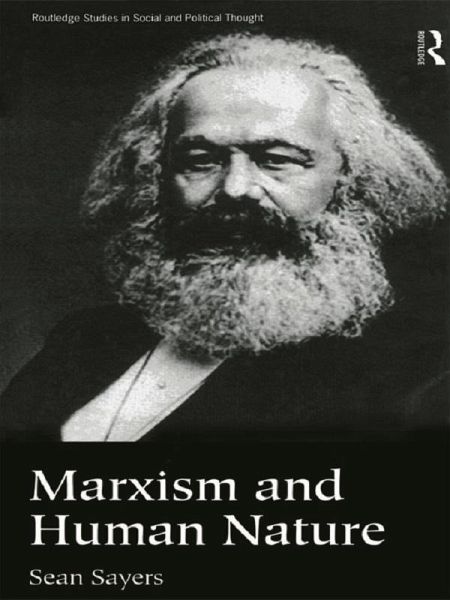
Is there such a thing as human nature? Here Sean Sayers defends the controversial theory that human nature is in fact an historical phenomenon. He gives an ambitious and wide ranging defence of the Marxist and Hegelian historical approach and engages with a wide range of work at the heart of the contemporary debate in social and moral philosophy.
Dieser Download kann aus rechtlichen Gründen nur mit Rechnungsadresse in A, B, BG, CY, CZ, D, DK, EW, E, FIN, F, GR, HR, H, IRL, I, LT, L, LR, M, NL, PL, P, R, S, SLO, SK ausgeliefert werden.
'Sayer's book is an articulate, sophisticated and clear discussion of human nature as a historical phenomenon. It is beautifuly written and has insights into a rich range of topics from the role of work in contemporary society to the ambivalent nature of social progress. Anyone interested in sociology, politics and philosophy of our society will find this book thought-provoking and fruitful.' - Professor David McLellan, University of Kent