2,99 €
inkl. MwSt.
Sofort per Download lieferbar
1 °P sammeln

Andere Kunden interessierten sich auch für
") Marion de Lorme (eBook, ePUB)2,99 €
Marion de Lorme (eBook, ePUB)2,99 €") Esmeralda (eBook, ePUB)2,99 €
Esmeralda (eBook, ePUB)2,99 €") The Mirror and the Light (eBook, ePUB)9,07 €
The Mirror and the Light (eBook, ePUB)9,07 €") Top Girls (eBook, ePUB)9,95 €
Top Girls (eBook, ePUB)9,95 €") Shakespeare (eBook, ePUB)6,99 €
Shakespeare (eBook, ePUB)6,99 €") The Importance of Being Earnest and Other Plays (eBook, ePUB)8,49 €
The Importance of Being Earnest and Other Plays (eBook, ePUB)8,49 €") Fatherland (eBook, ePUB)10,95 €
Fatherland (eBook, ePUB)10,95 €




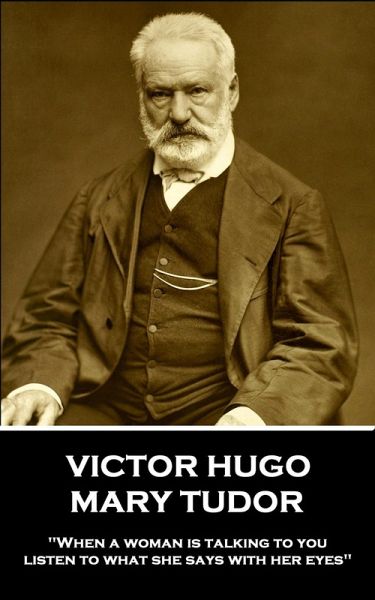
Victor Marie Hugo was born on 26th February 1802 and is revered as the greatest of all French writers. A poet, novelist, dramatist and painter he was a passionate supporter of Republicanism and made a notable contribution to the politics of his Country.
His life was paralleled by the immense political and social movements of the 19th Century. When he was two Napoleon was proclaimed Emperor but before he was eighteen the Bourbon Monarchy was restored.
It was only with his Mother's death in 1821 that he felt confident enough to marry Adele Foucher, a relationship he had kept secret from his mother. Their first child was born inside a year but died in infancy. Leopoldine was born the following year, followed by three further siblings.
Hugo published his first novel the year following year, Han d'Islande, (1823). Three years later his second, Bug-Jargal (1826).
Between 1829 and 1840 he would publish five further volumes of poetry solidifying his reputation as one of the greatest elegiac and lyric poets of his time. His reputation was growing not only in France but across Europe.
In 1841 he was elected to the Académie Française, cementing his position in the world of French arts and letters. Hugo also now began to turn his attention to an involvement in French politics.
Elevated to the peerage by King Louis-Philippe in 1841 he spoke eloquently and at length against the death penalty and social injustice as well as passionately in favour of freedom of the press and self-government for Poland.
When Napoleon III seized power in 1851, and established an anti-parliamentary constitution, Hugo openly declared him a traitor to France and began a long exile, based mainly in Guernsey.
In exile, Hugo published his famous political pamphlets; Napoléon le Petit and Histoire d'un crime. Although the pamphlets were banned in France, they nonetheless made a strong impact there. His exile also seemed to have a creative impetus. He composed or published some of his greatest work including Les Misérables, and three widely honoured collections of poetry (Les Châtiments, 1853; Les Contemplations, 1856; and La Légende des siècles, 1859).
In 1870 the Third Republic was established and Hugo finally returned home, where he was elected to the National Assembly and the Senate. That same year War erupted between France and Prussia and the French were badly beaten.
With the end of the War Hugo began his campaign for a great valuation and protection for the rights of artists and copyright. He was a founding member of the Association Littéraire et Artistique Internationale, which led to the Berne Convention for the Protection of Literary and Artistic Works.
Victor Hugo's death on 22nd May 1885, at the age of 83, generated intense nation-wide mourning. Revered not only as a towering figure in literature, he was a statesman who had helped to shape the Third Republic and democracy in France.
Index of Contents
DRAMATIS PERSONÆ
TIME: LONDON, 1553
MARY TUDOR
FIRST DAY¿A MAN OF THE PEOPLE
SCENE:-Border of the Thames.
SCENE I
SCENE II
SCENE III
SCENE IV
SCENE V
SCENE VI
SCENE VII
SCENE VIII
SCENE IX
SECOND DAY¿THE QUEEN
SCENE:-A Room in the royal apartment.
SCENE I
SCENE II
SCENE III
SCENE IV
SCENE V
SCENE VI
SCENE VII
SCENE VIII
SCENE IX
THIRD DAY¿PART I¿WHICH OF THE TWO?
SCENE:-Hall in the Interior of the Tower of London.
SCENE I
SCENE II
SCENE III
SCENE IV
SCENE V
SCENE VI
SCENE VIII
SCENE IX
SCENE X
THIRD DAY¿PART II
SCENE:-A Hall or Room into Which lead Two Staircases.
SCENE I
SCENE II
VICTOR HUGO - A SHORT BIOGRAPHY
VICTOR HUGO - A CONCISE BIBLIOGRAPHY
His life was paralleled by the immense political and social movements of the 19th Century. When he was two Napoleon was proclaimed Emperor but before he was eighteen the Bourbon Monarchy was restored.
It was only with his Mother's death in 1821 that he felt confident enough to marry Adele Foucher, a relationship he had kept secret from his mother. Their first child was born inside a year but died in infancy. Leopoldine was born the following year, followed by three further siblings.
Hugo published his first novel the year following year, Han d'Islande, (1823). Three years later his second, Bug-Jargal (1826).
Between 1829 and 1840 he would publish five further volumes of poetry solidifying his reputation as one of the greatest elegiac and lyric poets of his time. His reputation was growing not only in France but across Europe.
In 1841 he was elected to the Académie Française, cementing his position in the world of French arts and letters. Hugo also now began to turn his attention to an involvement in French politics.
Elevated to the peerage by King Louis-Philippe in 1841 he spoke eloquently and at length against the death penalty and social injustice as well as passionately in favour of freedom of the press and self-government for Poland.
When Napoleon III seized power in 1851, and established an anti-parliamentary constitution, Hugo openly declared him a traitor to France and began a long exile, based mainly in Guernsey.
In exile, Hugo published his famous political pamphlets; Napoléon le Petit and Histoire d'un crime. Although the pamphlets were banned in France, they nonetheless made a strong impact there. His exile also seemed to have a creative impetus. He composed or published some of his greatest work including Les Misérables, and three widely honoured collections of poetry (Les Châtiments, 1853; Les Contemplations, 1856; and La Légende des siècles, 1859).
In 1870 the Third Republic was established and Hugo finally returned home, where he was elected to the National Assembly and the Senate. That same year War erupted between France and Prussia and the French were badly beaten.
With the end of the War Hugo began his campaign for a great valuation and protection for the rights of artists and copyright. He was a founding member of the Association Littéraire et Artistique Internationale, which led to the Berne Convention for the Protection of Literary and Artistic Works.
Victor Hugo's death on 22nd May 1885, at the age of 83, generated intense nation-wide mourning. Revered not only as a towering figure in literature, he was a statesman who had helped to shape the Third Republic and democracy in France.
Index of Contents
DRAMATIS PERSONÆ
TIME: LONDON, 1553
MARY TUDOR
FIRST DAY¿A MAN OF THE PEOPLE
SCENE:-Border of the Thames.
SCENE I
SCENE II
SCENE III
SCENE IV
SCENE V
SCENE VI
SCENE VII
SCENE VIII
SCENE IX
SECOND DAY¿THE QUEEN
SCENE:-A Room in the royal apartment.
SCENE I
SCENE II
SCENE III
SCENE IV
SCENE V
SCENE VI
SCENE VII
SCENE VIII
SCENE IX
THIRD DAY¿PART I¿WHICH OF THE TWO?
SCENE:-Hall in the Interior of the Tower of London.
SCENE I
SCENE II
SCENE III
SCENE IV
SCENE V
SCENE VI
SCENE VIII
SCENE IX
SCENE X
THIRD DAY¿PART II
SCENE:-A Hall or Room into Which lead Two Staircases.
SCENE I
SCENE II
VICTOR HUGO - A SHORT BIOGRAPHY
VICTOR HUGO - A CONCISE BIBLIOGRAPHY
Dieser Download kann aus rechtlichen Gründen nur mit Rechnungsadresse in D ausgeliefert werden.