38,95 €
38,95 €
inkl. MwSt.
Sofort per Download lieferbar

19 °P sammeln
38,95 €
Als Download kaufen
38,95 €
inkl. MwSt.
Sofort per Download lieferbar
19 °P sammeln
Jetzt verschenken
Alle Infos zum eBook verschenken
38,95 €
inkl. MwSt.
Sofort per Download lieferbar
Alle Infos zum eBook verschenken
19 °P sammeln

Andere Kunden interessierten sich auch für
") Measuring and Managing Information Risk (eBook, ePUB)28,95 €
Measuring and Managing Information Risk (eBook, ePUB)28,95 €") Advanced Persistent Security (eBook, ePUB)26,95 €
Advanced Persistent Security (eBook, ePUB)26,95 €") Security Leader Insights for Information Protection (eBook, ePUB)15,95 €
Security Leader Insights for Information Protection (eBook, ePUB)15,95 €") Threat Forecasting (eBook, ePUB)31,95 €
Threat Forecasting (eBook, ePUB)31,95 €") Designing with the Mind in Mind (eBook, ePUB)28,95 €
Designing with the Mind in Mind (eBook, ePUB)28,95 €") Seven Deadliest Microsoft Attacks (eBook, ePUB)12,95 €
Seven Deadliest Microsoft Attacks (eBook, ePUB)12,95 €") Seven Deadliest Social Network Attacks (eBook, ePUB)15,95 €
Seven Deadliest Social Network Attacks (eBook, ePUB)15,95 €

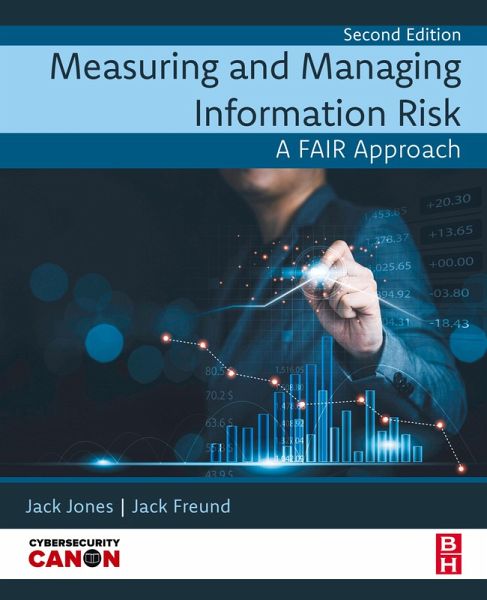
Measuring and Managing Information Risk, second edition provides a proven and credible framework for understanding, measuring, and analyzing information risk of any size or complexity using the Factor Analysis of Information Risk (FAIR) methodology developed over ten years and adopted by corporations worldwide. This thoroughly updated new edition covers such key areas as risk theory, risk calculation, scenario modeling, and communicating risk within the organization, and also includes new chapters and essays from industry professionals. It provides a step-by-step guide to help managers make better business decisions by understanding their organizational risk. In this new edition, the authors discuss the advances in quantitative cyber risk measurement using the FAIR methodology. The field has advanced significantly in the past 10 years and this all-new edition reiterates the importance of the foundations of risk measurement but adds information about modern methods to integrate quantitative risk assessment methods into your security programs. This includes the integration of security telemetry data, outside data sources, approaches to automating FAIR assessments, and how to align methods and programs to security standards and regulations. Further discussed is how such approaches are being used by third-party agencies to provide CRQ data to the investors, underwriters, and regulators. This book is a valuable resource for all those who need the foundations, methods, and techniques for measuring, assessing, and communicating cyber risk to enable an organization to build an organizational IT risk management program. It serves as both a practical how-to guide for those new to the industry as well as tenured professionals that need a formalized guide for implementation. - Uses factor analysis of information risk (FAIR) as a methodology for measuring and managing risk in any organization, with insights on how to apply the FAIR methodology based on over 15 years of applied experience - Balances theory with practical applicability and relevant stories of successful implementation - Includes examples from a wide variety of businesses and situations presented in an accessible writing style - New to this edition: new chapters on Standards and Regulatory Alignment, Building Quantitative Risk Programs, and Assessment Automation, as well as significant revisions to cover the new FAIR-CAM standard and short essays from others in the industry
Dieser Download kann aus rechtlichen Gründen nur mit Rechnungsadresse in A, B, BG, CY, CZ, D, DK, EW, E, FIN, F, GR, HR, H, IRL, I, LT, L, LR, M, NL, PL, P, R, S, SLO, SK ausgeliefert werden.
"...informative and insightful-and surprisingly engaging. Using examples, anecdotes, and metaphors, the writers keep this educational work from becoming difficult... Professionals new to thorough information risk analysis or using more simplified approaches will find this book extremely useful." --Security Management